


Mohammed Al Rubaei: Where Do I Start When Evaluating a Patient With Suspected Hemolysis?
Mohammed Al Rubaei, Internal Medicine Specialist at Sheikh Shakhbout Medical City – SSMC, shared on LinkedIn:
”Not every anemia is due to blood loss or decreased production.
Sometimes the problem is destruction.
Missing hemolytic anemia can delay life-saving treatment and expose patients to devastating complications such as acute kidney injury, thrombosis, organ failure, and even death.
Over the years, I found that many trainees struggle with one question:
‘Where do I start when evaluating a patient with suspected hemolysis?’
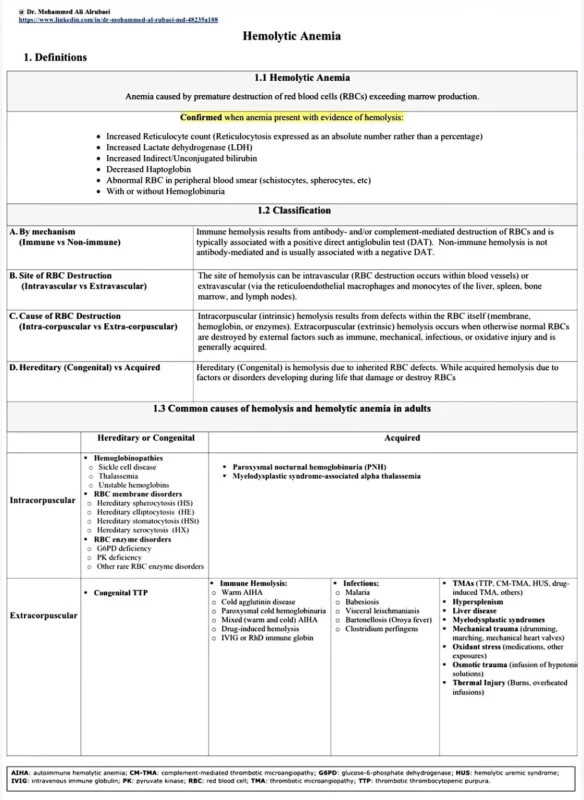
To simplify this, I developed a practical bedside approach that focuses on four key steps:
- Confirm hemolysis
- Identify the mechanism
- Determine the underlying cause
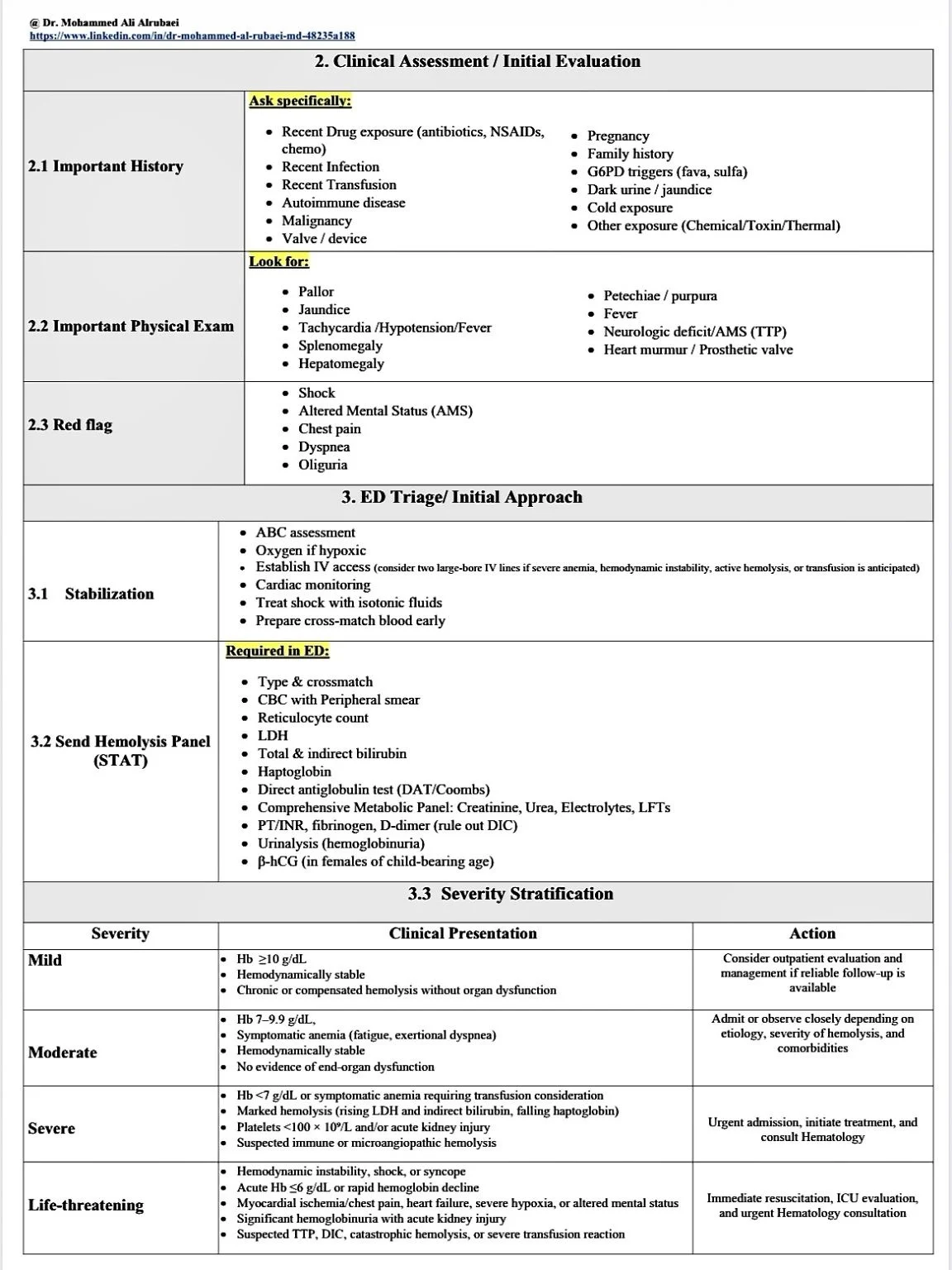
- Assess severity and urgency
Think hemolysis when anemia is accompanied by:
- Reticulocytosis
- Elevated LDH
- Elevated indirect bilirubin
- Low haptoglobin
- Abnormal peripheral smear findings
Never overlook critical diagnoses such as:
- Autoimmune hemolytic anemia (AIHA)
- TTP/HUS
- G6PD-related hemolysis
- Drug-induced hemolysis
- Mechanical valve hemolysis
- Severe infections including malaria
Red flags requiring urgent action:
- Hemodynamic instability
- Neurological symptoms
- Acute kidney injury
- Chest pain or myocardial ischemia
- Rapid hemoglobin decline
A well-performed history, peripheral smear, and DAT (Coombs test) often provide the biggest diagnostic clues.
This infographic focuses on the initial evaluation and early diagnostic approach to hemolytic anemia, particularly in acute care settings.
It represents the first step of a larger project.
Future versions will explore detailed diagnostic algorithms and cause-specific workups to help clinicians progress from recognizing hemolysis to identifying the underlying etiology and guiding definitive management.
I welcome feedback, suggestions, and shared experiences from colleagues.”
Stay updated with Hemostasis Today.
-
Oct 18, 2026, 23:31Rana Al-Hrout: MAHA – More Than Schistocytes
-
Oct 18, 2026, 17:11Owen McCarty: Understanding Prekallikrein and Its Role in Inflammation and Thrombosis
-
Oct 18, 2026, 17:04Emna Gouider Belhadjali: Don’t Miss GPAS 2026 on Bleeding Disorders
-
Oct 18, 2026, 16:53Mehran Ghasemzadeh: Microparticle-Associated Mitochondrial DNA in Stored Platelet Products
-
Oct 18, 2026, 16:38Edward Lee Carter: A 15-Minute Blood Test for Brain Hemorrhage?
-
Oct 18, 2026, 16:29Patrick Taylor: Oral vs Transdermal Estrogen and Cardiovascular Risk in Menopausal Women
-
Oct 18, 2026, 16:19Artangela Henry: A Meaningful Week at the SCDAA National Convention
-
Oct 18, 2026, 16:04Emília Araújo։ New Insights Into the Genetics of Hemophilia B Leyden
-
Oct 18, 2026, 15:43André Marcel Harris: Award-Winning Research on Texas Sickle Cell Data Collection