

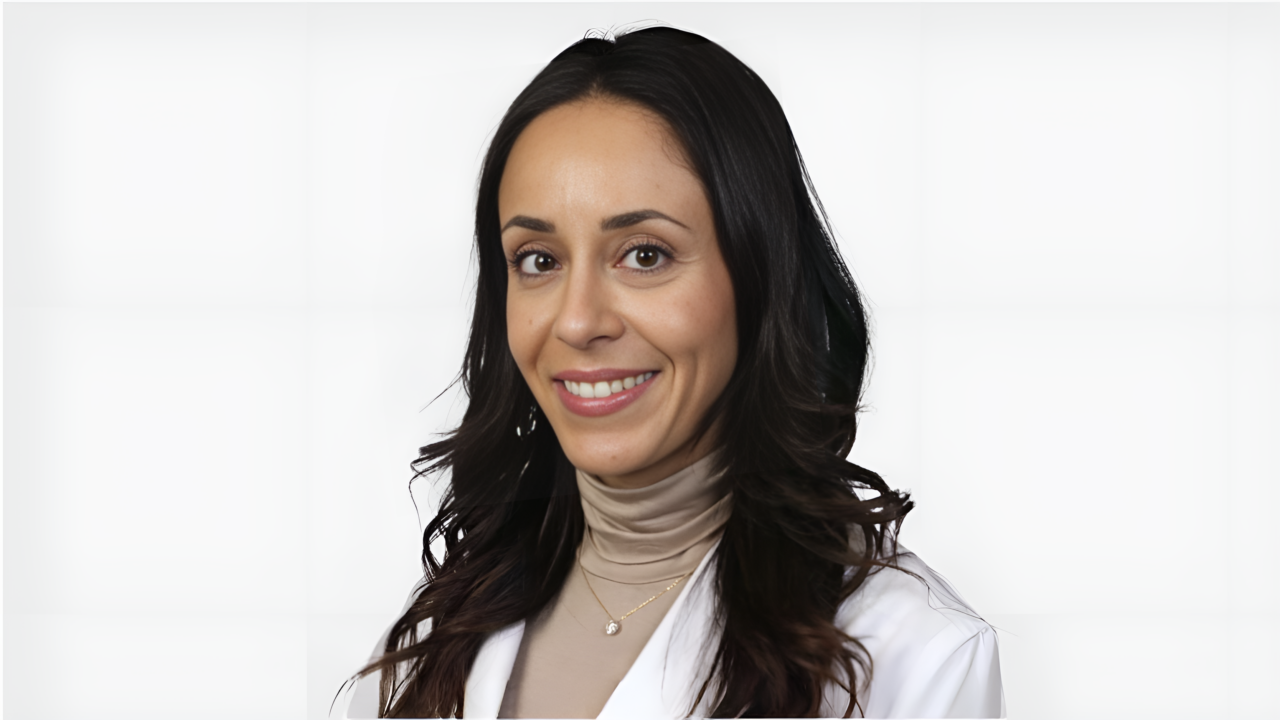
Mona Ahmed on Why Some Calcified Nodules Trigger ACS and Others Do Not
Mona Ahmed, Postdoc Fellow at Brigham and Women’s Hospital, shared on LinkedIn:
”New Publication | Why Some Calcified Nodules Trigger ACS and Others Do Not
Calcified nodules account for a small but dangerous fraction of ACS, yet until now, we’ve lacked a clear mechanistic explanation for why some nodules erupt while others remain silent.
In our new publication from the Vascular Profiling Group at Brigham and Women’s Hospital and Harvard Medical School, we show that the answer is not anatomy alone, but local blood flow biomechanics.
Key insight:
Eruptive calcified nodules live in a fundamentally different hemodynamic environment.
Using OCT-based 3D reconstruction and lesion-specific Computational Fluid Dynamics, we found that:
• Eruptive calcified nodules are surrounded by markedly elevated endothelial shear stress and, most importantly, extreme shear stress gradients
• Non-eruptive nodules look hemodynamically indistinguishable from stable calcified sheets
• Shear stress gradients emerged as the clearest discriminator of eruptive versus non-eruptive calcified nodules, beyond lumen severity or calcium burden alone.
Why this matters:
Shear stress gradients reflect abrupt spatial changes in flow, which are known to:
• Injure the endothelium
• Promote inflammation and matrix breakdown
• Trigger surface disruption and thrombosis
This helps explain why ACS can arise from non-obstructive disease, and why anatomy-only risk assessment falls short.
Take-home:
Calcified nodules don’t become dangerous because they’re large.
They become dangerous because they sit in the wrong flow environment.
Integrating biomechanics with intracoronary imaging may represent the next step toward identifying truly high-risk plaques before they become clinically evident.
While these findings support a biomechanical basis for calcified nodule instability, larger outcome studies are needed to confirm whether established shear stress prognostic signals extend specifically to calcified nodules.
It is exciting to see how vascular biology, biomechanics, and advanced imaging continue to converge to reshape our understanding of CAD risk.
Proud to work with an exceptional team: Dr. Diaa Hakim, Dr. Christopher Koo, Ahmet U. Coskun, Nicholas Cefalo, Kevin J Croce, and Dr. Peter H. Stone, bringing together clinical, vascular biology, engineering, and advanced imaging expertise.”
Read the full article here.
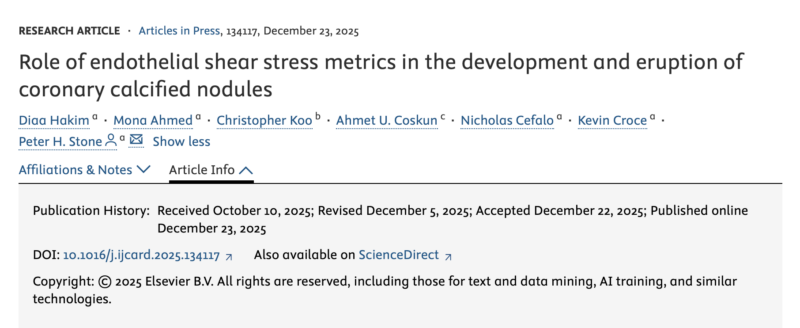
Article: Role of endothelial shear stress metrics in the development and eruption of coronary calcified nodules
Authors: Diaa Hakim, Mona Ahmed, Christopher Koob, Ahmet U. Coskun, Nicholas Cefalo, Kevin Croce, Peter H. Stone
Stay updated on all scientific advances with Hemostasis Today.
-
Oct 4, 2026, 00:33Ashish Pemawat: Can We Protect the Brain while We Restore Blood Flow?
-
Oct 4, 2026, 00:32Marta Nowakowska-Kotas: Could a Small Rise in Creatinine after Thrombectomy in Stroke Patients Be an Early Warning Sign?
-
Oct 4, 2026, 00:26Mohammad Nafeli Shahrestani: CXCL10 Associated With Increased Long-Term Risk of Ischemic Stroke
-
Oct 4, 2026, 00:23Asim Katbeh: Light Spot on the Spectrum of Ischemic Heart Disease in Women
-
Oct 3, 2026, 17:26Karel Kostev։ When First Anticoagulant Prescriptions Are Not Dispensed
-
Oct 3, 2026, 17:11Nabila Hasan: Thalassemia Awareness And Prevention
-
Oct 3, 2026, 17:03Pasinee Sangsiwarit: Neutrophil Dysfunction In β-Thalassemia
-
Oct 3, 2026, 16:18Mira Kassouf: Reactivating An Embryonic Gene To Treat α-Thalassemia
-
Oct 3, 2026, 15:49Behnood Bikdeli: COATED_AIR Trial Design Published as Enrollment Reaches 3,000 Patients