


Muhammet Özbilen: Rivaroxaban vs Apixaban – The Menstrual Bleeding Difference
Muhammet Özbilen, Associate Professor Doctor at Ordu University, shared a post on LinkedIn about a recent article by Stephanie Quon et al., published in Blood Coagulation and Fibrinolysis, adding:
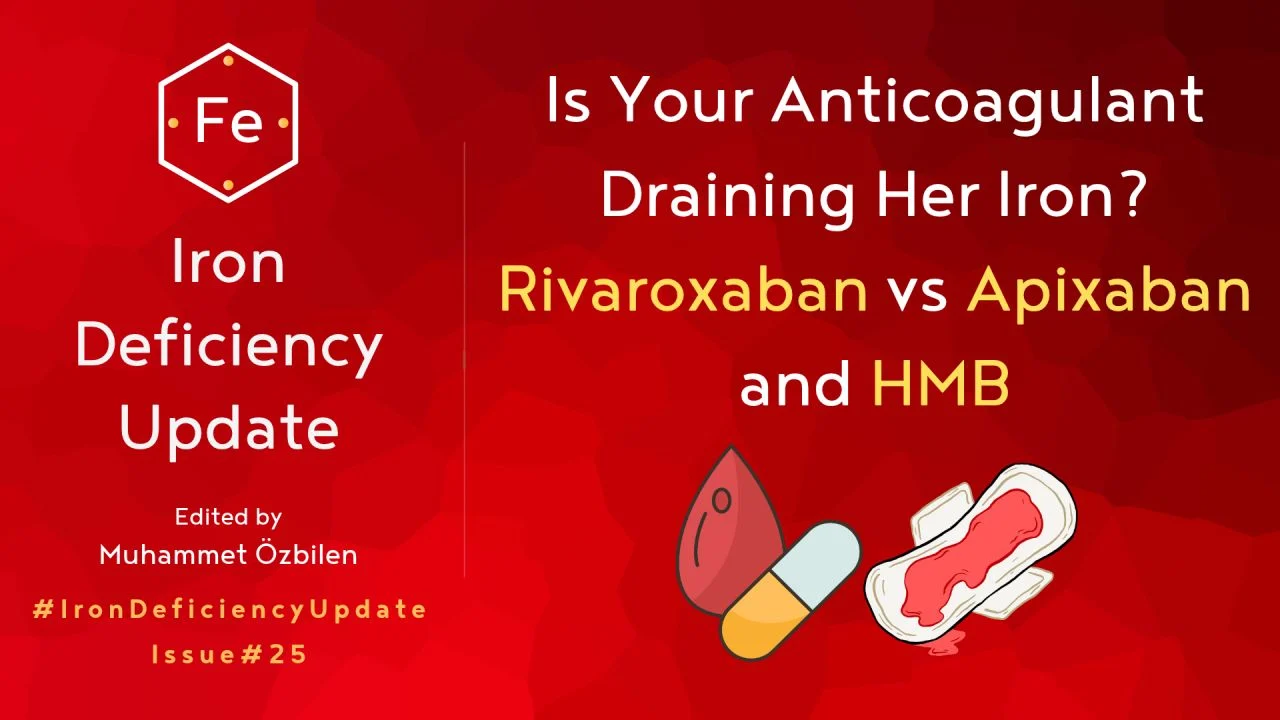
“Is Your Anticoagulant Draining Her Iron? Rivaroxaban vs Apixaban and HMB
A new meta-analysis by Quon, Ma and Tsang (UBC) in Blood Coagulation and Fibrinolysis, 2026, pooled 25 studies on menstrual bleeding with DOACs and VKAs.
Bottom line: for menstrual bleeding, apixaban looks clearly better than rivaroxaban.
- HMB: about 3× higher odds with rivaroxaban (OR 2.83; 95% CI 2.11–3.81)
- Anticoagulant changed or stopped because of menstrual bleeding: about 6× higher (OR 6.05; 1.91–19.19)
- All four studies pointed the same way, as did the HEMBLED registry (HMB in 79% on rivaroxaban vs 53% on apixaban).
What it does not show
- No difference in hospitalisation, transfusion or procedures (OR 1.04; 0.10–11.13), but events were rare, so this does not mean the drugs are equal.
- It does not make apixaban ՛the best DOAC՛. Data on dabigatran and edoxaban are too limited.
- DOACs vs VKA as a class: no clear answer. The risk depends on the drug, not the class.
Why this matters for iron deficiency
ISTH bleeding definitions miss most of this burden. Heavy periods that never reach a hospital still empty iron stores.
The result is fatigue, lower quality of life and quietly skipped doses, which raise VTE risk. Iron status was not measured in this meta-analysis. The authors flag it as a gap for future trials.
Practical takeaways
- Take a menstrual history before starting anticoagulation (PBAC helps)․
- Check CBC and ferritin at baseline and during follow-up․
- Apixaban is a reasonable first choice for menstruating patients, especially with HMB, anaemia or iron deficiency․
- If HMB develops on rivaroxaban, consider switching, plus iron replacement, hormonal therapy and a gynaecologic work-up․
- Tell patients not to stop anticoagulation on their own․
Thrombotic risk, indication, organ function and drug interactions still come first.
Caveats
Mostly observational; 16 of 25 studies at serious risk of bias; no randomised head-to-head trials; each pooled estimate rests on only 2–4 small studies.”
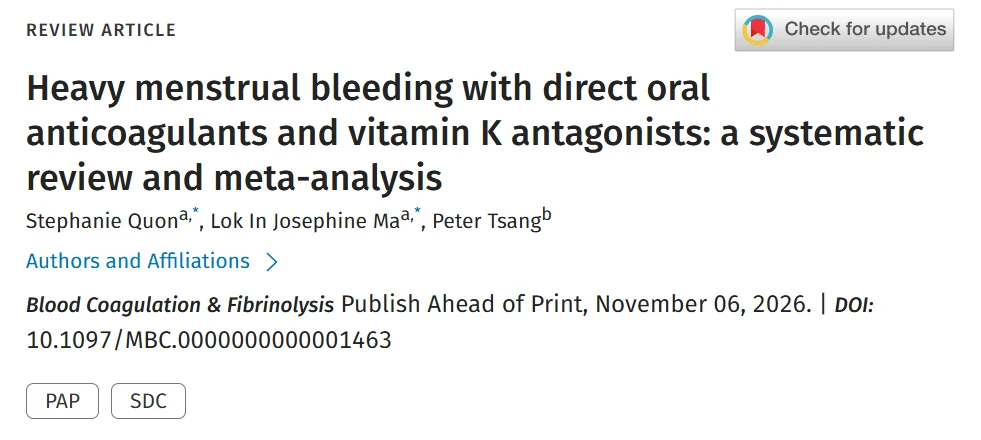
Title: Heavy menstrual bleeding with direct oral anticoagulants and vitamin K antagonists: a systematic review and meta-analysis
Auhtors: Stephanie Quon, Lok In Josephine Ma, Peter Tsang
Stay updated with Hemostasis Today.
-
Nov 20, 2026, 14:54Fostamatinib in Immune Thrombocytopenia: Targeting Spleen Tyrosine Kinase to Reduce Platelet Destruction
-
Nov 20, 2026, 14:37Giuseppe Leone: The Evolving Treatment Landscape of Adult ITP
-
Nov 20, 2026, 14:25Sameer A.: When Heparin Triggers Thrombosis – A Case of HIT
-
Nov 20, 2026, 14:21Chris Oung: Postoperative VTE Risk and Timing Across Surgical Specialties
-
Nov 20, 2026, 14:17Melissa Pickett: HIT Detection Can Miss a Critical Platelet Decline
-
Nov 20, 2026, 14:02Hasan Burak İşleyen։ Thrombocytopenia and Mortality in Critically Ill Cancer Patients
-
Nov 20, 2026, 13:50Louise Maes: CONVINCE Trial Imaging Studies Reveal New Insights Into Carotid Plaque and Vascular Risk
-
Nov 20, 2026, 13:50Lara Kurdi: A Presentation of Triple-Positive Antiphospholipid Syndrome
-
Nov 20, 2026, 13:46Rahul Bohra: Beyond Platelet Counts – The Lived Experience of ITP