

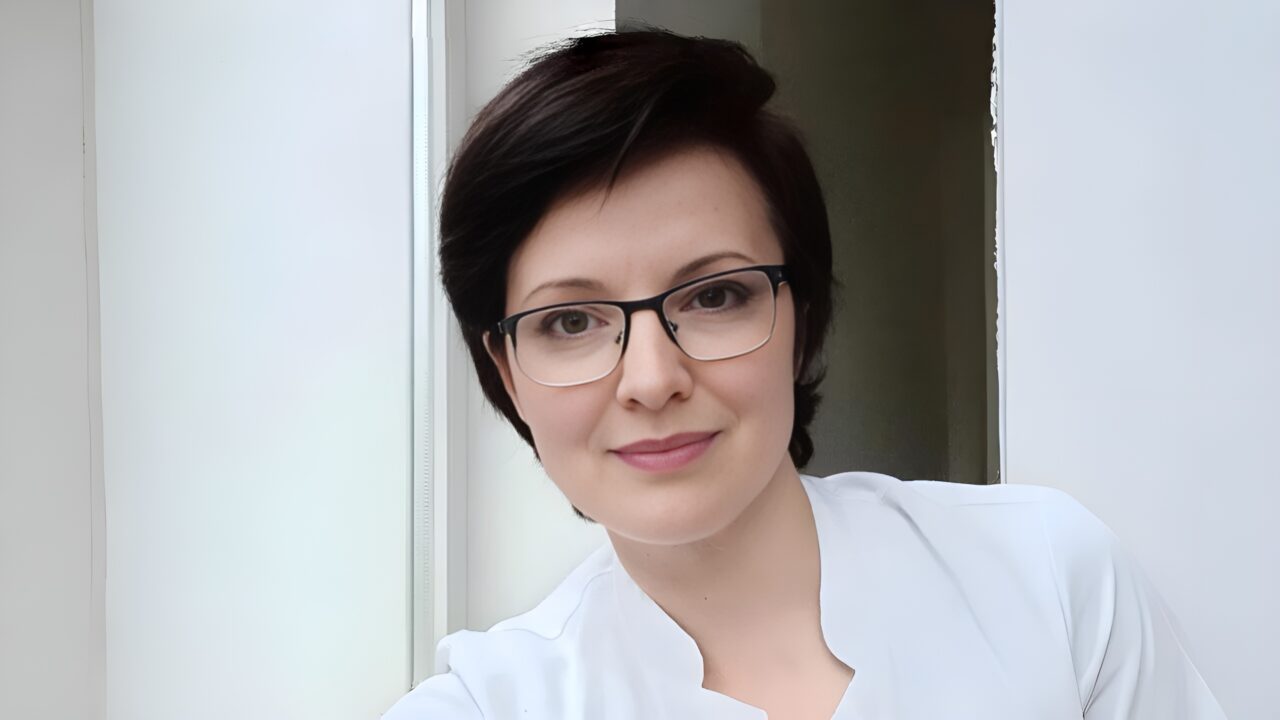
Natalie Arnold: Biomarkers and the Hidden Burden of CHD
Natalie Arnold, Preventive Cardiologist at University Heart and Vascular Center Hamburg, shared a post on LinkedIn about a recent article she and her colleagues co-authored, published in American Journal of Preventive Cardiology, adding:
“These are challenging times for preventive cardiology: two long-awaited randomized CVOTs – one targeting Lp(a), the other IL-6 mediated inflammation – did not meet their primary CV endpoints.
But neutral treatment trials do not make these biomarkers irrelevant.
They remind us that identifying risk does not automatically tell us how to modify it.
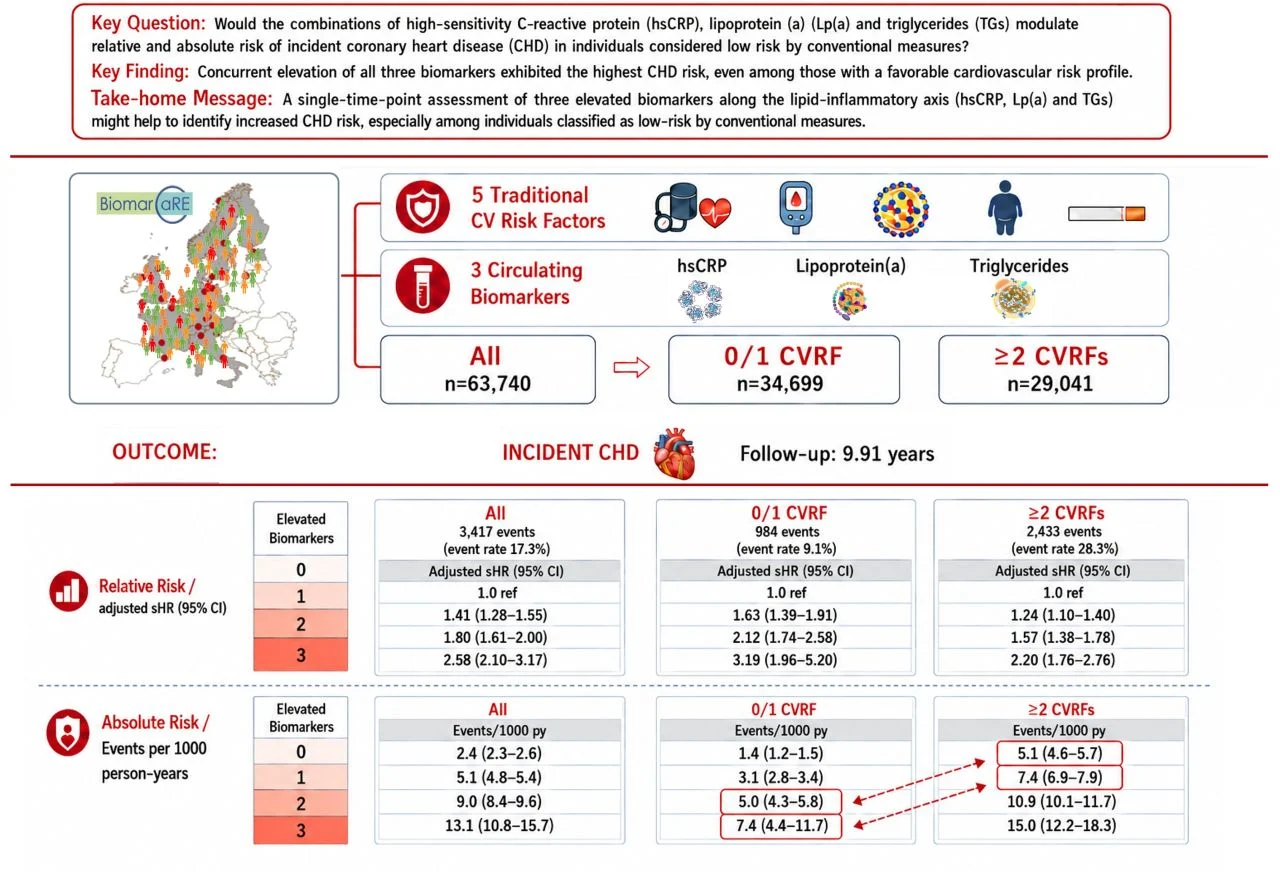
In our new study (just accepted by the American Journal of Preventive Cardiology) we measured Lp(a), hsCRP, and triglycerides in individuals classified as low risk by traditional measures.
The message is simple: the more biomarkers were elevated, the higher the observed CHD risk.
However, individuals classified as low risk but with two or three elevated biomarkers reached absolute event rates comparable to those with multiple conventional risk factors but fewer elevated biomarkers.
Why does this matter?
Low-risk individuals represent a large segment of the population and often remain outside our prevention radar, although they can collectively account for nearly one-third of incident CHD events.
The next challenge is to determine which part of this residual burden is truly modifiable, and in whom…”
Title: Incident coronary heart disease, residual risk and traditional cardiovascular risk factors in the community: The role of the lipid-inflammatory axis
Authors: Natalie Arnold, Christina Magnussen, Jessica Weimann, Alina Goßling, Fabian J. Brunner, Marco M. Ferrario, Paolo Brambilla, Giancarlo Cesana, Valerio Leoni, Luigi Palmieri, Chiara Donfrancesco, Teresa Padró, Jonas Andersson, Pekka Jousilahti, Francisco Ojeda, Tanja Zeller, Allan Linneberg, Stefan Söderberg, Licia Iacoviello, Francesco Gianfagna, Susana Sans, Giovanni Veronesi, Barbara Thorand, Annette Peters, Hugh Tunstall-Pedoe, Frank Kee, Veikko Salomaa, Renate B. Schnabel, Kari Kuulasmaa, Stefan Blankenberg, Raphael Twerenbold, Wolfgang Koenig
Stay updated with Hemostasis Today.
-
Oct 16, 2026, 16:22Shannon Farmer: Driving Patient Blood Management Forward in Australia and New Zealand
-
Oct 16, 2026, 16:01Obi Light Ogbonnia: The Greatest Reward Is Changing Lives, Not Winning Awards
-
Oct 16, 2026, 15:18Carmine Liberatore: Limited Accuracy of VTE Risk Scores in Multiple Myeloma
-
Oct 16, 2026, 14:55Alex Borstein and the Bleeding Phenotype of Hemophilia A Carriers
-
Oct 16, 2026, 13:59Aya Akmal Amin: Antiphospholipid Syndrome Management and Risk Stratification
-
Oct 16, 2026, 13:10Emanuel Sueldo: CAHT 2026 Celebrates Scientific Progress and Team Achievements
-
Oct 16, 2026, 13:05Maha Othman: Queen’s Health Sciences Advances CAT Risk Models and Pediatric ISTH-BAT Cut-Offs
-
Oct 16, 2026, 13:03Thrombosis Awareness Must Lead to Timely Action – Roche
-
Oct 16, 2026, 12:49Wolfgang Miesbach: 5-Year CBDR Data Confirms Emicizumab Safety and Efficacy in Hemophilia A