


Ney Carter Borges: How Polyphenols Influence Endothelial Function
Ney Carter Borges, Member Cardiologist of Global Physician Association at Cleveland Clinic Florida, shared a post on LinkedIn about a recent article by Oualid Sbai et al., published in Nutrients, adding:
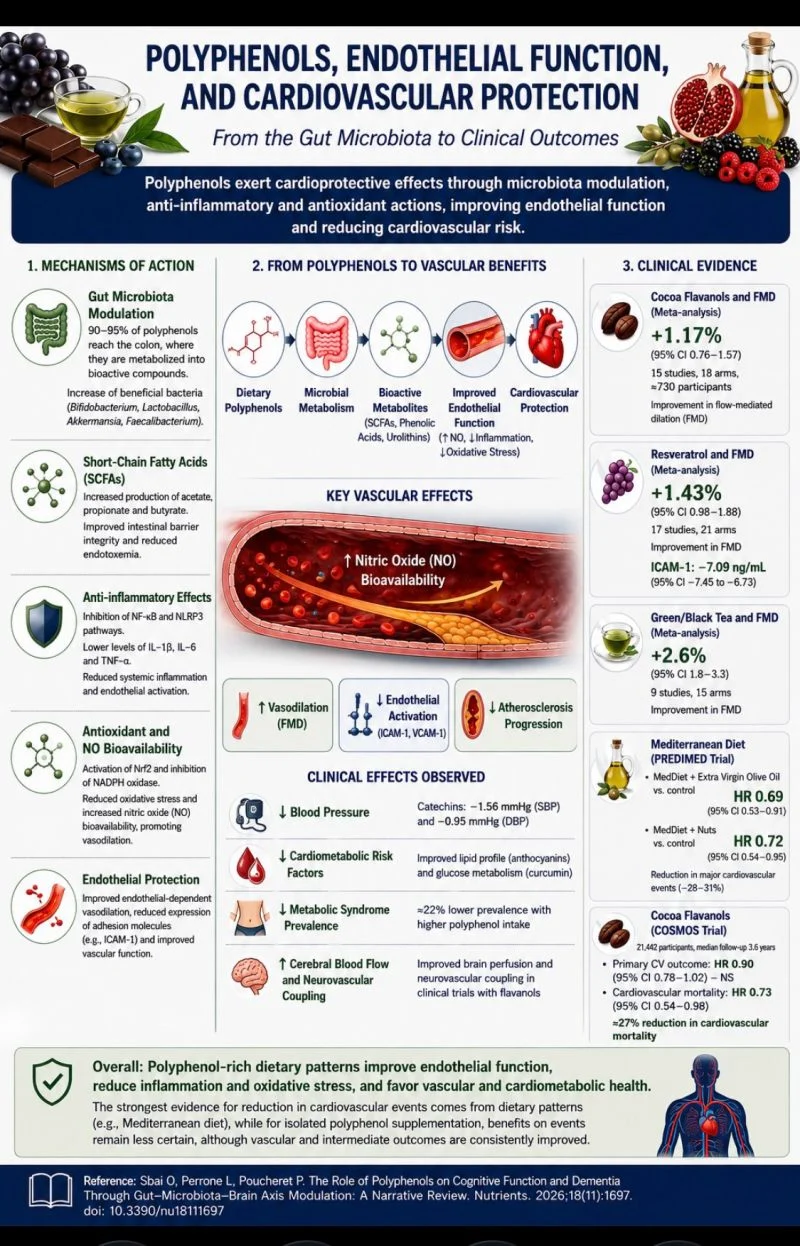
“Polyphenols, Endothelial Function, and Cardiovascular Protection: From the Gut Microbiota to Clinical Outcomes
Polyphenols are increasingly recognized as biologically active components of plant-based diets with potential cardiovascular and neurovascular benefits.
The 2026 review by Sbai, Perrone, and Poucheret emphasizes that their effects extend beyond direct antioxidant activity and involve complex interactions with the gut microbiota, inflammation, metabolism, and vascular function.
Approximately 90–95% of dietary polyphenols escape small-intestinal absorption, reaching the colon, where microbial metabolism generates more bioavailable compounds, including phenolic acids, urolithins, and phenyl-γ-valerolactones.
These metabolites may reduce oxidative stress and inflammatory signaling through Nrf2 activation and inhibition of NF-κB and NADPH oxidase, potentially preserving nitric oxide bioavailability and endothelial-dependent vasodilation.
Polyphenols also promote beneficial microorganisms such as Bifidobacterium, Lactobacillus, Akkermansia muciniphila, and Faecalibacterium prausnitzii, while increasing short-chain fatty acids that support intestinal-barrier integrity and metabolic homeostasis.
Clinical evidence supports measurable vascular effects.
A meta-analysis of 15 studies with 18 intervention arms demonstrated that cocoa flavanols improved flow-mediated dilation (FMD) by 1.17 percentage points (95% CI 0.76–1.57), providing direct evidence of improved endothelial function.
Within the reviewed clinical trials, 609 mg/day of cocoa flavanols for four weeks improved neurovascular coupling in older adults with vascular risk factors, while 900 mg/day increased cerebral blood volume in healthy older individuals.
Cardiometabolic effects are also clinically relevant.
The review reports reductions of approximately 1.56 mmHg in systolic and 0.95 mmHg in diastolic blood pressure with catechins, improved lipid profiles with anthocyanins, improved glucose metabolism with curcumin, and an approximately 22% lower prevalence of metabolic syndrome with higher polyphenol consumption.
Importantly, endothelial improvement does not automatically translate into fewer cardiovascular events.
In COSMOS, cocoa flavanols did not significantly reduce the primary composite cardiovascular endpoint (HR 0.90; 95% CI 0.78–1.02), although cardiovascular mortality was lower (HR 0.73; 95% CI 0.54–0.98).
Thus, current evidence strongly supports improved endothelial and cardiometabolic function, while definitive cardiovascular event reduction from isolated polyphenol supplementation remains less certain.”
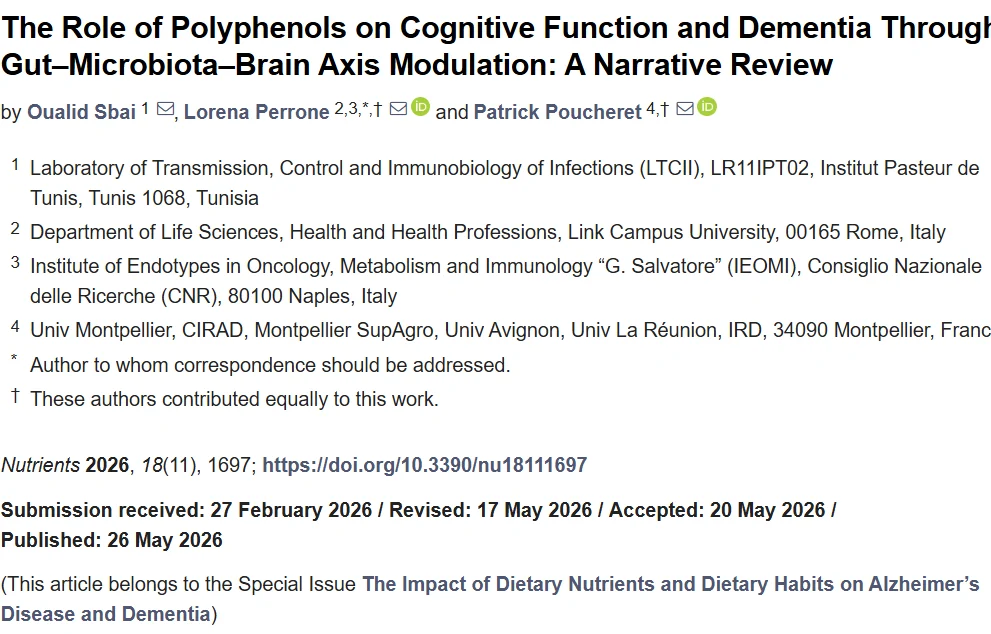
Title: The Role of Polyphenols on Cognitive Function and Dementia Through Gut–Microbiota–Brain Axis Modulation: A Narrative Review
Authors: Oualid Sbai, Lorena Perrone, Patrick Poucheret
Find more posts featuring Ney Carter Borges on Hemostasis Today.
-
Sep 29, 2026, 11:21Richard Davis: Rapid Rescue in Massive Pulmonary Embolism
-
Sep 29, 2026, 11:14Nissan Brown: Every Step Counts for the Hemophilia Community
-
Sep 29, 2026, 11:03Zain Khalpey: SINGLE AF Adds New Evidence to the Anticoagulation Debate
-
Sep 29, 2026, 10:54How Does Haemophilia Affect Motor Development in Infants? – EAHAD
-
Sep 29, 2026, 10:49Alison Davey: The Vital Role of Community Support in Bleeding Disorders
-
Sep 29, 2026, 10:36Abdul Muqtadir Abbasi: 5 Questions to Ask When the CBC Is Abnormal
-
Sep 29, 2026, 10:28Manu Morales Sánchez: DOACs in Intermediate Risk Atrial Fibrillation
-
Sep 29, 2026, 09:59William Sauer: Ablation in Patients With LAAO Devices
-
Sep 29, 2026, 03:53Nahrwan Masaoodi: Iron Deficiency Can Exist Without Anemia