

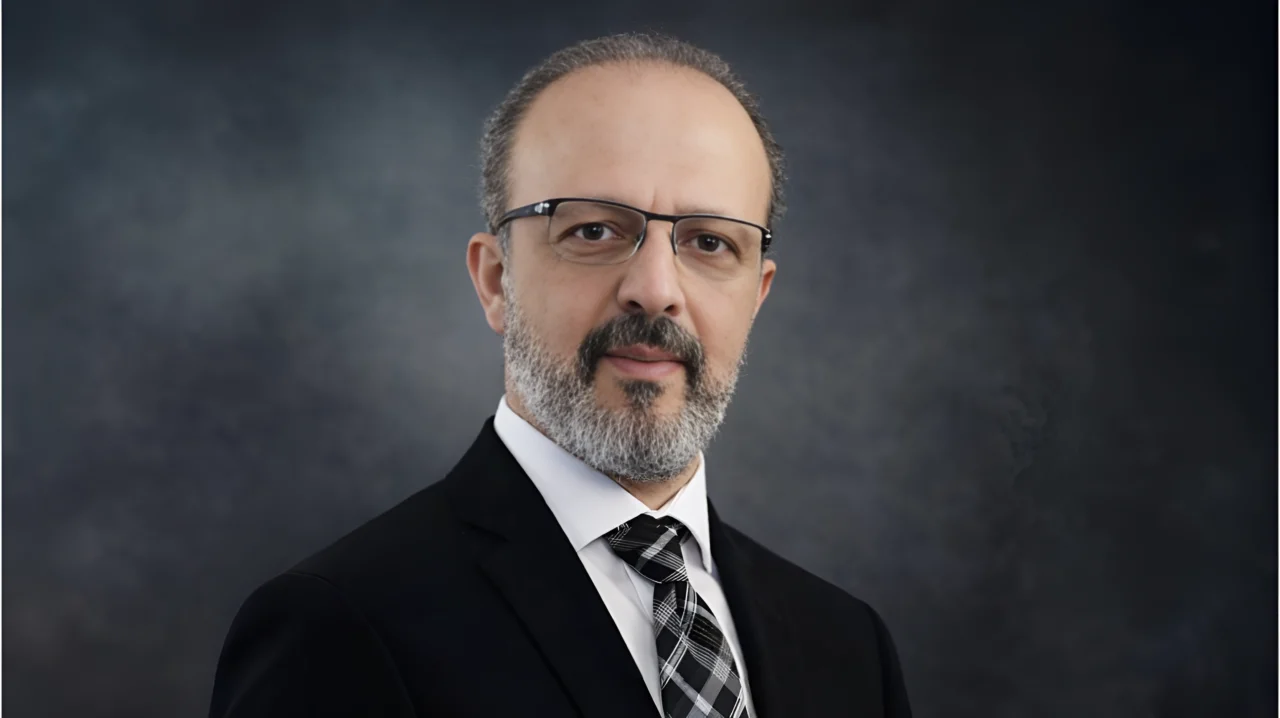
Reza Shojaei: China and the Limits of Replacing Plasma
Reza Shojaei, Chief Operating Officer at Canadian Plasma Resources, shared on LinkedIn:
“What Chinese biotechnology can replace, and what it cannot, in the plasma-derived medicinal product (PDMP) ecosystem
China has developed credible technologies that can replace individual plasma proteins and reduce PDMP use in selected indications.
The evidence does not show that biotechnology can yet reproduce the biological breadth of pooled plasma, especially polyclonal immunoglobulin.
The most likely outcome is selective disruption, not the disappearance of plasma.
The recombinant question is no longer theoretical
The emergence of Chinese recombinant albumin, domestically manufactured coagulation factors, targeted immune biologics, and hemophilia gene therapy has given new credibility to a provocative question: Could recombinant technologies eventually make plasma-derived medicinal products obsolete?
The evidence supports a more disciplined conclusion.
China has developed technologies capable of directly replacing certain plasma-derived proteins, avoiding repeated factor replacement in selected patients and competing with intravenous immunoglobulin (IVIG) in narrowly defined autoimmune indications.
The most consequential development is the Chinese approval of rice-derived recombinant human albumin – an industrial platform that directly challenges plasma-derived albumin without relying on human plasma.
China has also localized recombinant factor VIII production and approved an adeno-associated virus gene therapy for hemophilia B.
In parallel, Chinese-developed fusion proteins such as telitacicept are entering diseases in which IVIG has historically been used.
These developments may reshape individual PDMP markets, pricing and fractionation economics.
They do not establish that biotechnology can reproduce the full biological diversity of human plasma.
The likely future is therefore not plasma versus recombinant technology.
It is a mixed therapeutic ecosystem in which recombinant products replace proteins or functions that can be precisely reproduced, while plasma remains indispensable where polyclonality, protein complexity, biological diversity or rare-disease economics prevent straightforward substitution.
‘China may become highly effective at replacing individual plasma proteins and selected therapeutic functions.
That is not the same as replacing plasma.’
The claim must be defined before it can be tested
The phrase ‘recombinant alternative to a PDMP’ is often applied too broadly.
A recombinant factor VIII product that directly supplies the missing coagulation protein is not equivalent to a fusion protein that modifies B-cell activity.
A gene therapy that enables a patient’s liver to produce factor IX is different again.
All three may reduce demand for a plasma-derived product, but they do so through different biological and commercial mechanisms.
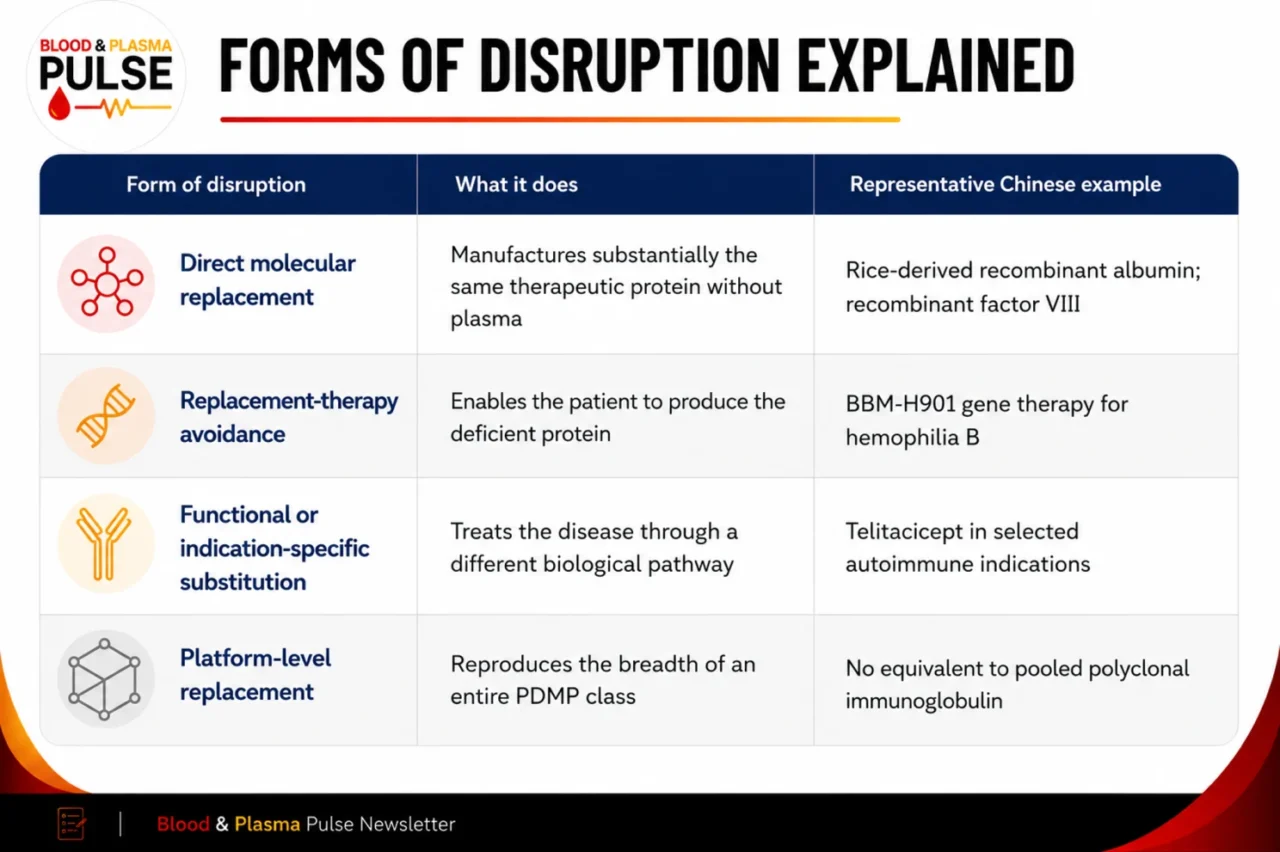
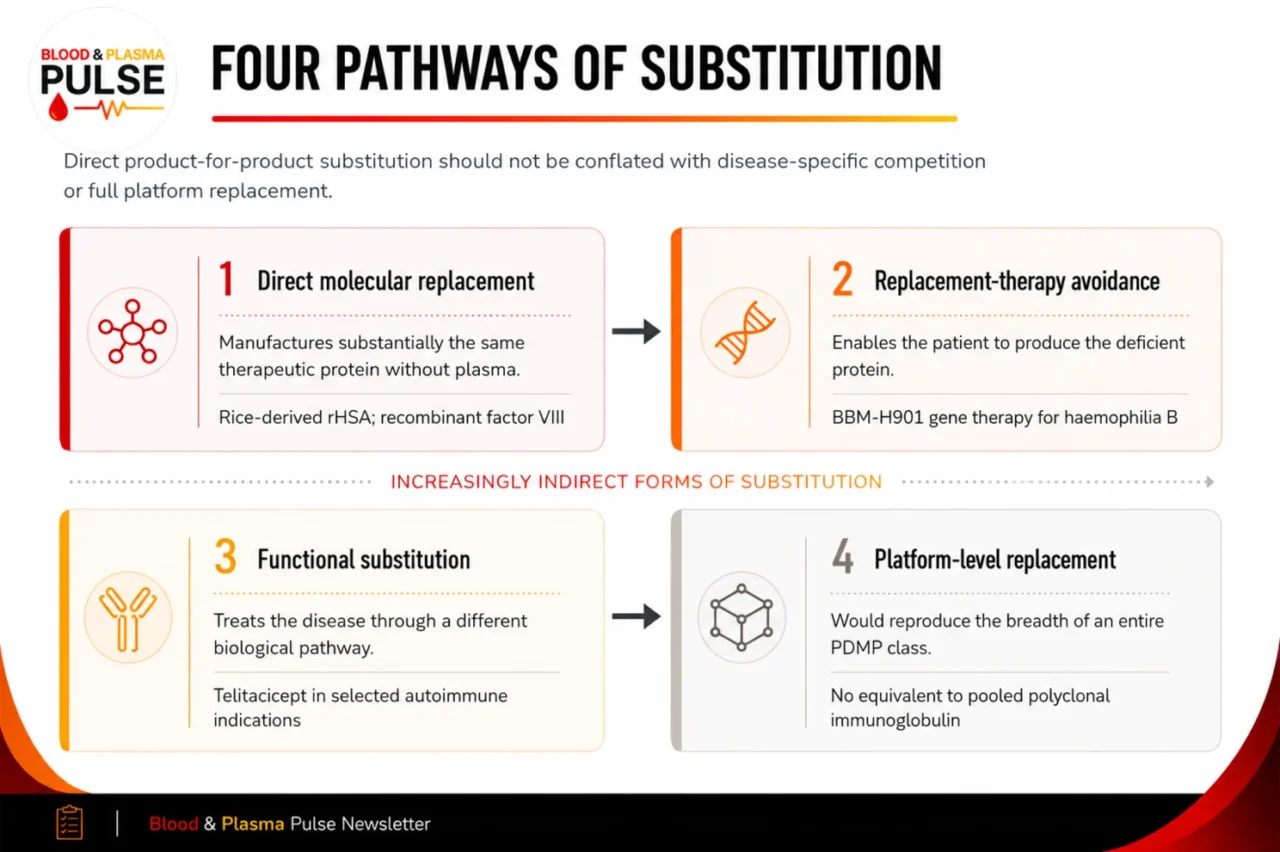
Four pathways through which Chinese biotechnology can affect PDMP demand. Direct product-for-product substitution should not be conflated with disease-specific competition or full platform replacement.
This framework changes the central question. Chinese innovation is not disrupting every PDMP equally. It is moving fastest where a product has a clearly defined molecular structure, a measurable pharmacological function and an indication that can be addressed by a single engineered intervention.
1. Recombinant Albumin: The most direct challenge
A plasma protein produced in rice
In July 2025, China approved a recombinant human albumin injection developed by Wuhan Healthgen Biotechnology for hypoalbuminemia associated with liver cirrhosis.
The product uses genetically engineered Oryza sativa (rice) as its biological expression platform.
This marked a potentially important transition from plasma-dependent albumin manufacturing to plant-based recombinant production.
The approved indication, however, was specific and should not be interpreted as automatic authorization across the many clinical settings in which albumin is used (Niu et al., 2025; Wuhan Municipal Government, 2025).
The published clinical evidence evaluated Oryza sativa recombinant human serum albumin (OsrHSA) against plasma-derived human serum albumin in patients with decompensated liver cirrhosis.
The multicentre, randomized, double-blind phase 2 study was conducted at 22 Chinese centres. Among 216 patients in the full analysis set, 76.0% of the recombinant albumin group and 75.6% of the plasma albumin group reached the specified serum albumin target. The result met the predefined non-inferiority criterion, and no drug-related serious adverse events were reported. The authors nevertheless stated that the findings should be confirmed in phase 3 research (Niu et al., 2025).
The endpoint is the weakest part of the evidence
The primary outcome was biochemical: the proportion of patients reaching a specified serum albumin concentration. That is a pharmacodynamic observation. It demonstrates that infusing albumin raises measured albumin, which was not in doubt, and it is not the same as demonstrating equivalent therapeutic benefit.
The distinction is not theoretical, because the field has already tested it. ATTIRE randomized 777 hospitalized patients with decompensated cirrhosis to targeted 20% albumin infusions aimed at a serum albumin level of at least 30 g/L, or to standard care. The composite primary endpoint of new infection, kidney dysfunction or death showed no significant difference between groups, and more severe or life-threatening serious adverse events occurred in the albumin arm (China et al., 2021). By contrast, ANSWER found that long-term albumin administration alongside standard treatment improved 18-month survival (77% versus 66%), supporting a disease-modifying rather than volume-expanding role (Caraceni et al., 2018).
Taken together, these trials indicate that serum albumin concentration is a poor proxy for clinical benefit in this population. A non-inferiority result built on that proxy therefore establishes biochemical comparability, not therapeutic interchangeability. This is a stronger and more defensible objection than a scope-of-indication argument alone, because it rests on independent evidence rather than on the incumbent product’s track record.
‘The trial demonstrated that the recombinant protein raises the number. The evidence base already suggests the number is not the therapy.’

Albumin is particularly susceptible to recombinant substitution because it is a single, well-characterized protein.
Unlike pooled immunoglobulin, its therapeutic value does not depend on a constantly changing repertoire of antibodies obtained from thousands of donors.
A scalable recombinant source could reduce dependence on plasma collection, improve production planning and potentially lower costs if industrial yields and purification economics prove favourable (Burnouf, 2011).
Why the threat should not be exaggerated
One successful approval does not establish unrestricted interchangeability.
Albumin is used in cirrhosis, large-volume paracentesis, plasma exchange, selected critical-care settings, burns, surgery and other circumstances. Evidence requirements, dosing patterns and patient risks differ substantially between indications.
Wider disruption will depend on indication expansion, repeated-dose safety, immunogenicity, manufacturing consistency, pricing, physician confidence, pharmacovigilance and regulatory acceptance outside China.
The near-term threat is therefore concentrated in the population and indication for which clinical and regulatory evidence exists. The larger strategic threat is real but conditional: if recombinant albumin proves scalable, competitively priced and acceptable across multiple high-volume indications, it could remove an important co-product from plasma fractionation economics.
Manufacturing, not efficacy, is the historical failure mode
This is not the first recombinant human albumin to reach approval.
A Pichia pastoris-derived product was approved in Japan in 2008 for hypoalbuminemia and subsequently withdrawn following falsification of data (Li et al., 2021). The manufacturer later terminated the recombinant albumin business, stating that a manufacturing method capable of sustaining quality and stable supply could not be established (Mitsubishi Chemical Group, n.d.).
That precedent is directly relevant to the current claim.
Recombinant albumin did not previously fail on efficacy or immunogenicity. It failed on the axis the substitution narrative treats as its inherent advantage: consistent, quality-assured supply at therapeutic scale.
Albumin is dosed in grams rather than milligrams, so purification burden, aggregate control and lot-to-lot consistency must hold across tonnes of product and thousands of lots. Scalability is an assertion about an industrial process, not a property of the expression platform.
2. Recombinant Coagulation Factors: Disruption that has already happened
The displacement of plasma-derived coagulation factors by recombinant products is not new. Recombinant factor VIII entered global hemophilia care decades ago.
The Chinese development is strategically important because it localizes manufacturing, expands domestic capacity and may create lower-cost competition in markets where plasma-derived factors remain common (Wang et al., 2026).
Omfiloctocog alfa
Omfiloctocog alfa is a B-domain-deleted recombinant factor VIII developed in China. In a study of 69 previously treated children with severe hemophilia A, the estimated mean annualized bleeding rates were 4.05 for all bleeding episodes and 1.38 for spontaneous bleeding.
Approximately 40% of participants experienced no bleeding, and 83% of bleeding episodes were controlled with no more than two injections. One child developed a factor VIII inhibitor after 12 exposure days; the inhibitor subsequently resolved during immune-tolerance treatment (Wu et al., 2022).
TQG202
TQG202 is a B-domain-deleted recombinant factor VIII produced using a human-derived cell line. In a multicentre study, 26 participants entered the pharmacokinetic comparison and 81 received 24 weeks of prophylaxis.
TQG202 was bioequivalent to the comparator recombinant factor VIII product, and the total annualized bleeding rate during prophylaxis was 2.0. No participant developed a factor VIII inhibitor during the prophylaxis phase (Xi et al., 2022).
For hemophilia A, the central substitution question has largely been answered: recombinant factor VIII can replace plasma-derived factor VIII for many patients.
Chinese products may accelerate this transition by increasing domestic supply, supporting wider prophylactic use, reducing reliance on imports and competing in price-sensitive markets.
Plasma-derived factor products may nevertheless remain relevant where access, procurement policy, product familiarity, or the need for multi-protein products, such as factor VIII with von Willebrand factor, favours continued use.
3. Gene therapy: Eliminating repeated replacement rather than replacing the vial
BBM-H901 and hemophilia B
In April 2025, China approved BBM-H901, dalnacogene ponparvovec, for adults with moderate or severe hemophilia B.
The therapy was developed and manufactured by Belief BioMed, with Takeda responsible for commercialization in designated Chinese markets. It uses an engineered adeno-associated viral vector to deliver a factor IX Padua sequence to liver cells (Belief BioMed and Takeda China, 2025).
The significance of gene therapy differs fundamentally from that of a recombinant factor concentrate. A factor concentrate supplies the deficient protein for a limited period; gene therapy attempts to give the patient’s own cells the instructions required to produce it.
In the Chinese phase 3 study of 26 participants, the mean annualized bleeding rate during the first 52 weeks was 0.60, mean factor IX activity was 41.9 IU/dL at week 52, 80.8% of participants had no bleeding, factor IX infusion frequency fell by approximately 95%, and no participant had a target joint at week 52 (Xue et al., 2026).
The effect on product demand per successfully treated patient could be substantial because one intervention may avoid years of repeated factor use.
Yet market displacement will depend on eligibility, liver health, pre-existing antibodies to the vector, long-term durability, immunosuppression requirements, upfront cost, reimbursement, physician confidence and the limited ability to repeat treatment with the same vector.
Factor concentrates will remain necessary for patients who are ineligible, decline treatment, lose clinically sufficient expression or require additional hemostatic support.
4. Telitacicept: Pressure on selected IVIG indications, not replacement of immunoglobulin
Telitacicept is a Chinese-developed recombinant fusion protein that binds and neutralizes two B-cell survival signals: B-lymphocyte stimulator (BLyS) and a proliferation-inducing ligand (APRIL).
It consists of the extracellular domain of the TACI receptor fused to the Fc portion of human IgG.
China first approved telitacicept for active systemic lupus erythematosus in 2021 (Dhillon, 2021). In May 2025, China approved it in combination with conventional therapy for adults with anti-acetylcholine receptor antibody-positive generalized myasthenia gravis (RemeGen, 2025).
This matters because IVIG is used in myasthenia gravis, particularly for acute deterioration, crisis management, perioperative stabilization and selected maintenance settings.
A targeted biologic that improves disease control may reduce the frequency with which some patients require IVIG. That makes telitacicept a potential therapeutic competitor in a defined indication, but not an immunoglobulin replacement.
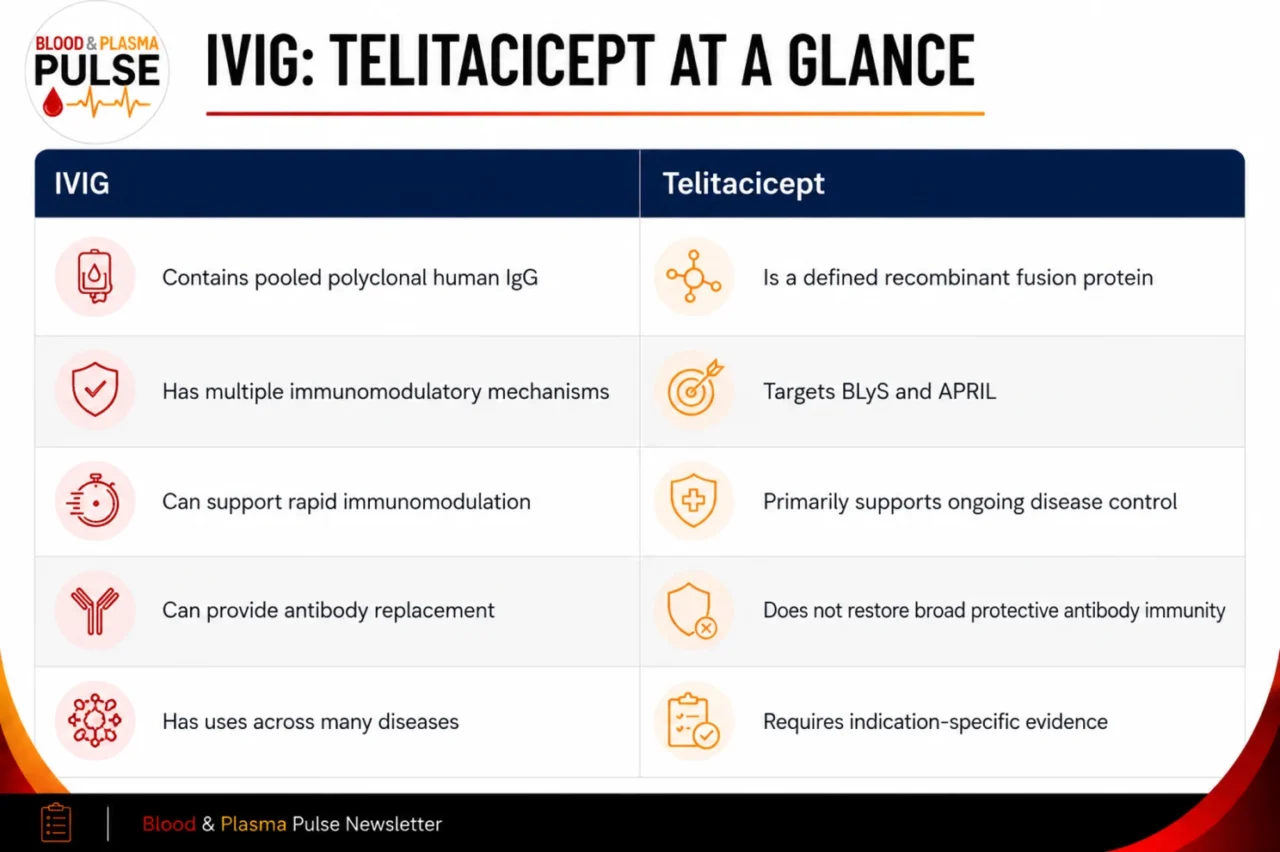
Telitacicept may reduce IVIG consumption in some patients with generalized myasthenia gravis or other antibody-mediated diseases. It cannot replace immunoglobulin used to protect patients who cannot produce adequate antibodies.
A disease-modifying biologic can compete with one use of IVIG without reproducing the biological product itself.
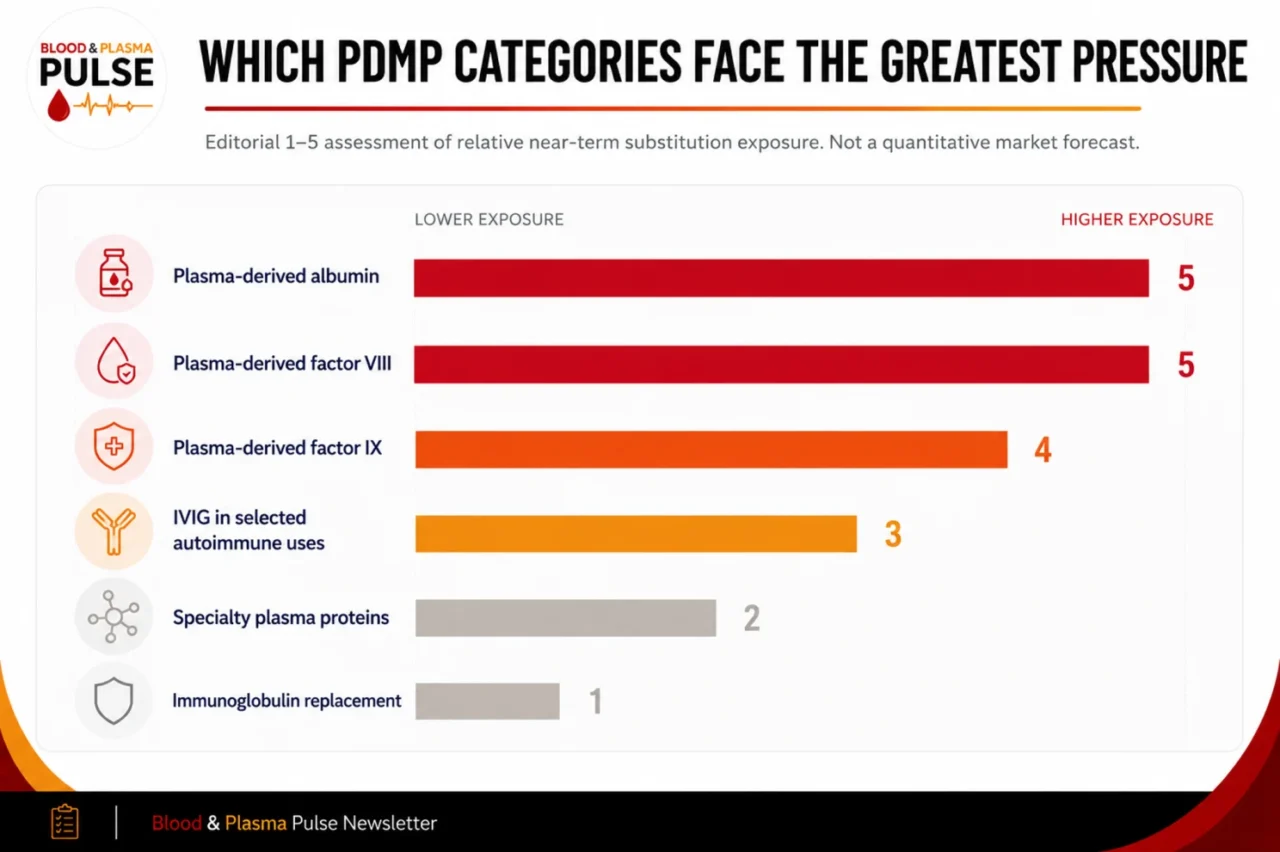
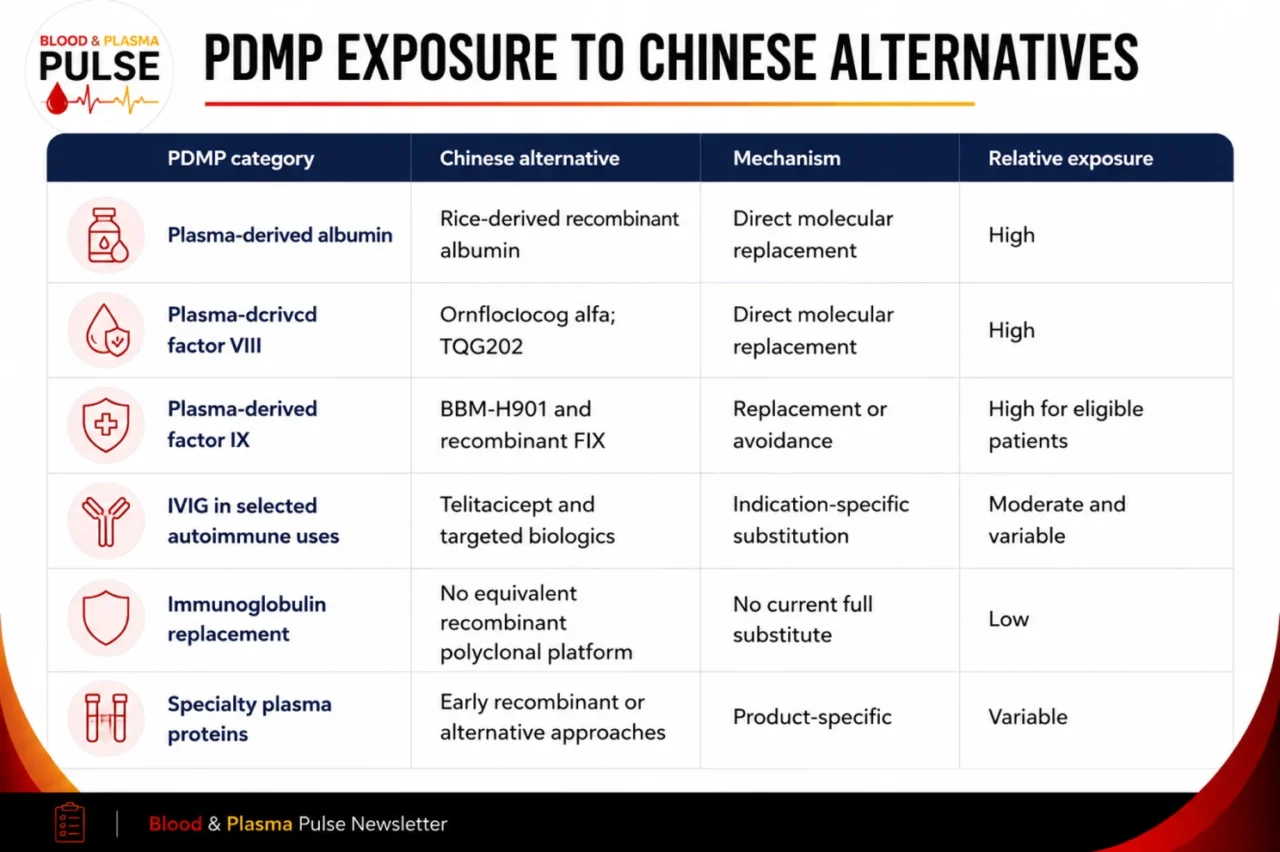
Relative substitution exposure of selected PDMP categories. Ratings are an editorial 1–5 assessment based on directness of substitution, clinical maturity and current Chinese product evidence; they are not quantitative market forecasts.
5. The immunoglobulin barrier
Why pooled IgG is different
Pooled immunoglobulin is not a single therapeutic protein in the practical sense of albumin or factor VIII.
Although the molecules share the IgG structure, an immunoglobulin preparation contains an immense diversity of antibodies derived from a large donor population.
That diversity provides broad recognition of pathogens and antigens and is central to replacement therapy for patients who cannot generate adequate functional antibodies (Prevot and Jolles, 2020).
IVIG also exerts multiple immunomodulatory effects involving Fc receptors, complement, cytokine pathways, anti-idiotypic antibodies, B cells, T cells and other immune mechanisms.
Monoclonal antibodies, Fc-receptor inhibitors, complement inhibitors and B-cell therapies may reproduce or outperform individual mechanisms in defined diseases without reproducing pooled immunoglobulin as a whole.
Two immunoglobulin markets must be separated
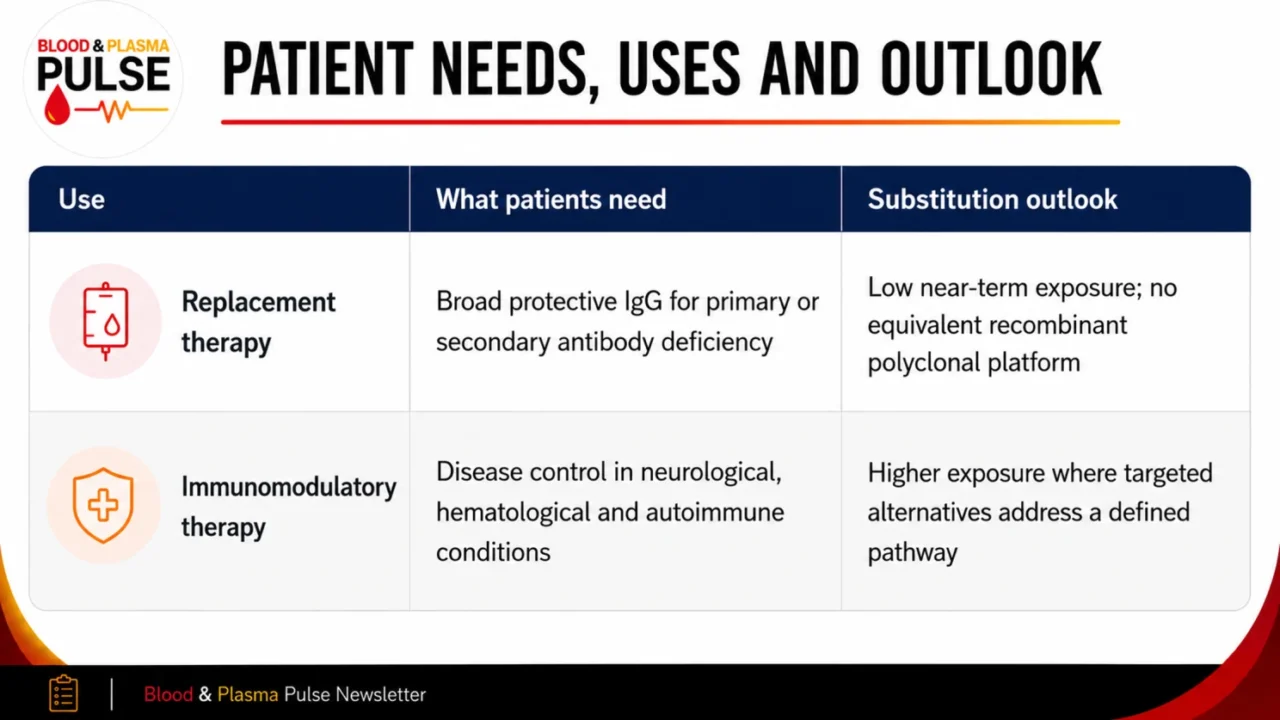
Replacement therapy supplies protective IgG to patients with primary antibody deficiencies, selected combined immunodeficiencies, hematological malignancies, post-transplant immune dysfunction and treatment-related antibody deficiency.
No approved Chinese recombinant product currently reproduces the broad pathogen-recognition diversity of pooled human immunoglobulin.
Immunomodulatory IVIG is more exposed to competition.
Chronic diseases are particularly vulnerable where a clearly defined pathogenic antibody or immune pathway exists, a targeted alternative provides durable control, treatment burden is reduced, and reimbursement systems accept the competing product.
Acute and very rare indications may remain less attractive for substitution because evidence development is difficult and commercial markets are small.
6. What Chinese biotechnology does not yet replace
As of today, no Chinese-developed, NMPA-approved recombinant platform with comparable clinical maturity broadly replaces polyvalent immunoglobulin replacement, hyperimmune immunoglobulins, alpha-1 antitrypsin, C1 esterase inhibitor, fibrinogen concentrate, prothrombin complex concentrates, multi-protein factor VIII–von Willebrand factor products, antithrombin or several low-volume specialty plasma proteins.
This does not mean recombinant development is scientifically impossible.
The barriers differ by product and include complex post-translational modifications, multiple active components, protein interactions, relatively small patient populations, expensive clinical development and uncertain commercial returns.
Recombinant plasma proteins have advanced where the target is sufficiently defined, and the economics support industrial production; success with one protein should not be extrapolated to the plasma proteome or to pooled immunoglobulin (Burnouf, 2011).
Anti-D: the case that refines the substitution thesis
Anti-D immunoglobulin is the most instructive counter-example, and it is routinely omitted from this debate.
On the criteria set out above, it should have been among the first products replaced.
It has a single indication, a measurable pharmacological effect, and unusually strong commercial and ethical incentives for substitution: supply depends on donors deliberately immunized with RhD-positive red cells, and that donor base contracts as prophylaxis succeeds.
Substitution has nonetheless failed for more than three decades.
A review of the clinical trial literature assessed over twenty monoclonal anti-D antibodies evaluated in volunteers; none matched polyclonal anti-D, and certain cell-line-derived candidates were associated with enhanced rather than suppressed alloimmunization (Kumpel, 2007).
A later recombinant candidate demonstrated acceptable pharmacokinetics and safety in healthy volunteers (Yver et al., 2012) and completed a study in RhD-negative pregnant women, but no replacement has been approved.
The mechanism explains the failure.
Rapid clearance of RhD-positive cells is necessary but not sufficient for immunosuppression, and the pathway by which anti-D prevents sensitization remains incompletely characterized.
This suggests a refinement to the framework of substitutability is not how narrowly defined a product’s indication appears, but whether its mechanism of action is understood well enough to be engineered against.
Tetanus and rabies neutralization meet that test. Anti-D immunosuppression does not, and pooled immunoglobulin immunomodulation is further still from meeting it.
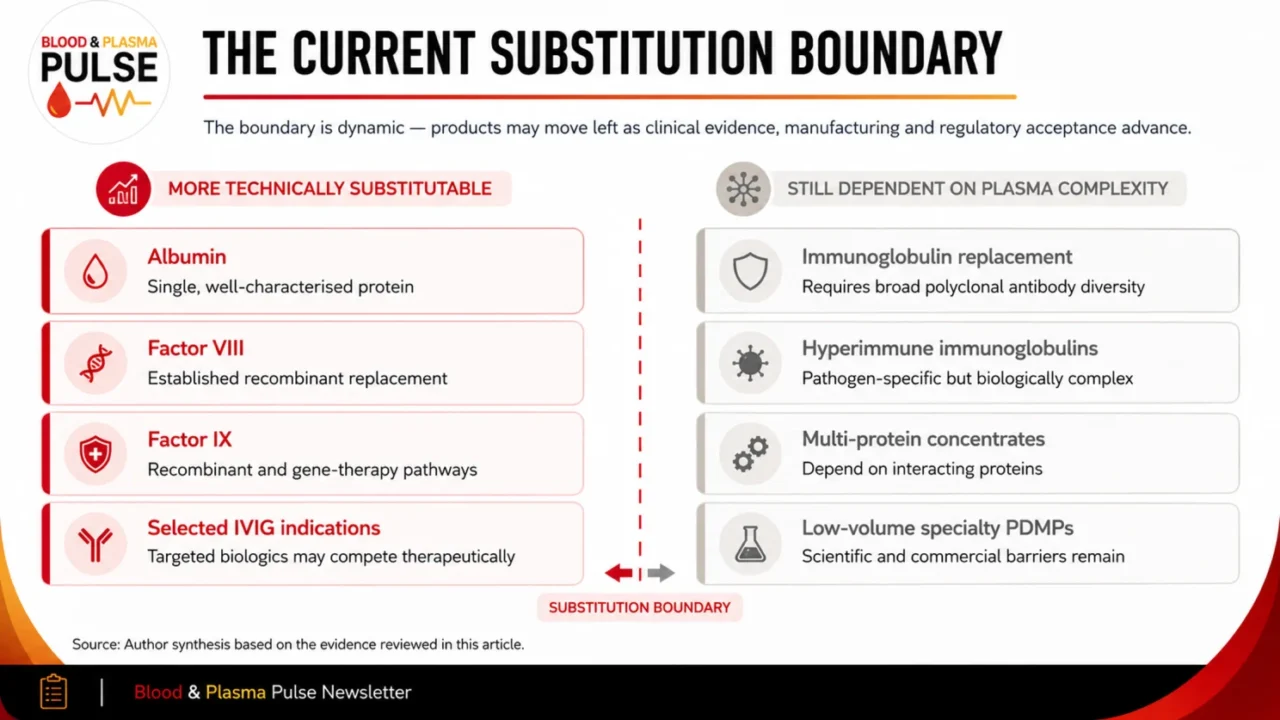
The current substitution boundary. Single, well-characterized proteins are generally more technically substitutable than products whose value depends on polyclonality, interacting proteins or broader biological complexity.
7. The overlooked risk: Fractionation economics
The greatest impact of recombinant substitution may not be a collapse in plasma demand.
It may be a deterioration in the economics of recovering multiple therapies from each litre of plasma.
Plasma fractionation is a co-product system.
Albumin, immunoglobulin, coagulation factors, alpha-1 antitrypsin, C1 esterase inhibitor, antithrombin and other products are recovered from different fractions of the same starting material.
Historically, albumin was a major economic driver.
More recently, immunoglobulin has become the principal driver of plasma collection and fractionation, while demand for plasma-derived coagulation factors has declined in many higher-income markets because of recombinant factors, non-factor therapies and gene-based approaches (Curling, 2025; Strengers, 2023).
This creates a counterintuitive possibility: recombinant substitution could reduce the value recovered from each litre of plasma without proportionately reducing the number of litres required for immunoglobulin.
If immunoglobulin demand continues to rise while albumin and factor revenues weaken, more of the cost of donor recruitment, collection, testing and fractionation must be carried by IVIG and subcutaneous immunoglobulin.
‘The central economic risk is not that every PDMP disappears. It is that too many co-products lose value while immunoglobulin still requires the same, or greater, plasma volume.’
Potential consequences include greater dependence on immunoglobulin pricing, pressure to improve IgG recovery, consolidation among fractionators, reduced incentives to manufacture low-volume products, investment in new separation technologies and supply vulnerability for rare-disease therapies.
The economic effect may therefore be larger than a simple product-by-product market-share analysis suggests.
8. Substitution does not reduce the volume of plasma required
The preceding sections describe competition at the level of individual products.
Set against total requirement, the operative constraint is not surplus plasma but shortage.
This distinction is important because a disruption map can be misread as evidence that less plasma will be needed.
Collection volume is determined principally by immunoglobulin demand.
Albumin, coagulation factors and hyperimmune products are recovered from plasma that is collected for immunoglobulin.
None of the products examined in this article is an immunoglobulin.
Recombinant albumin, domestic factor VIII, gene therapy for haemophilia B and telitacicept could each succeed fully without reducing the number of litres the system must collect.
What they alter is the value recovered per litre, which is the argument of Section 7 rather than a case for reduced capacity.
Underlying demand continues to rise.
Immunoglobulin use has grown by approximately 6–8% annually, driven by improved diagnosis and by expanding neurological and immunological indications (Prevot and Jolles, 2020).
Supply is concentrated: the United States accounts for roughly 70% of global plasma, and five countries representing about a tenth of the world population collect approximately 90% of it (Belmonte et al., 2025; Ramesh and McIntosh, 2025).
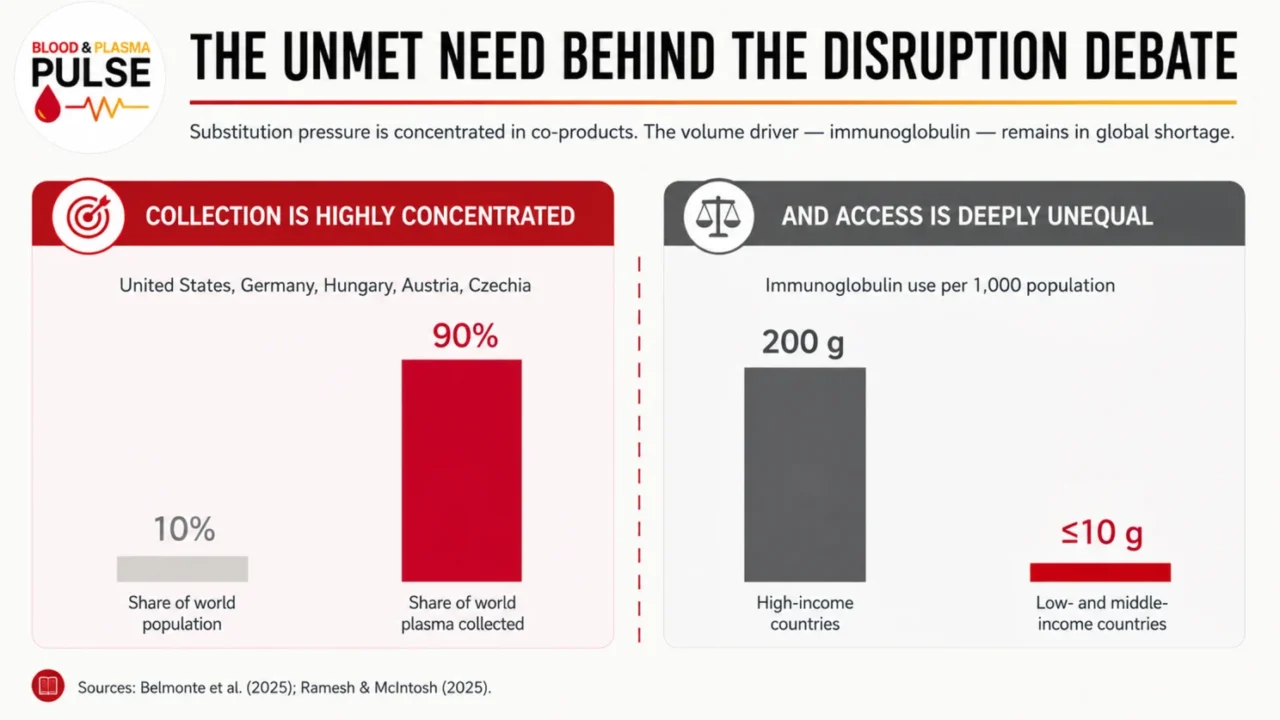
Global plasma collection is concentrated in a small number of countries, and access to the resulting medicines is highly unequal. Substitution pressure falls mainly on co-products; the volume driver remains in shortage.
Access is correspondingly unequal. Immunoglobulin use is around 200 g per 1,000 population in high-income countries against 10 g or less in low- and middle-income countries (Ramesh and McIntosh, 2025).
Latent demand is larger still: undiagnosed primary immunodeficiency alone implies a requirement well beyond current global capacity, and the same applies to several autoimmune neuropathies treated with immunoglobulin.
The system is also structurally slow and exposed. Immunoglobulin manufacturing takes seven to twelve months, compared with two to three months for most biologics, so supply cannot respond quickly to demand shifts; European regulators anticipated shortages affecting 14 countries in 2024 (Belmonte et al., 2025). National supply can also be lost abruptly, as the United Kingdom’s withdrawal of domestic plasma during the variant CJD period demonstrated (Prevot and Jolles, 2020).
These characteristics are why plasma is increasingly treated as a strategic resource rather than an ordinary commodity (Strengers and Klein, 2016).
‘Every product examined in this article could be fully displaced and the global shortage of plasma would be unchanged. Substitution is a margin problem, not a volume solution.’
The practical implication is a caution against a specific policy error: treating recombinant approvals as a reason to defer investment in collection capacity.
The products under discussion do not address the shortage, and reduced collection would create shortfalls in exactly those therapies for which no alternative exists.
9. A realistic disruption map
These ratings are comparative judgments rather than quantitative forecasts.
Actual displacement will depend on price, reimbursement, production capacity, physician adoption, regulatory expansion, clinical durability and the availability of established therapies.
10. Three possible futures
Scenario 1: Selective substitution
This is the most likely near-term outcome.
Recombinant albumin gains meaningful use in China for approved and gradually expanded indications.
Domestic recombinant factors continue replacing plasma-derived coagulation factors.
Gene therapy is used in a limited but clinically important hemophilia population.
Telitacicept and other biologics reduce IVIG use in particular autoimmune diseases.
Immunoglobulin replacement and specialty PDMPs continue to drive the need for plasma.
The industry becomes more immunoglobulin-centred but remains essential.
Scenario 2: Broad Chinese export disruption
Chinese manufacturers achieve large-scale production, competitive pricing and regulatory acceptance in emerging markets and, eventually, major regulated jurisdictions.
Recombinant albumin becomes a significant global competitor.
Chinese factors and advanced therapies gain international share.
Albumin and coagulation-factor revenues decline faster, increasing pressure on fractionation economics and industry consolidation.
Scenario 3: Platform-level biological replacement
A much more disruptive scenario would require technologies capable of reproducing the diversity and functional breadth of pooled immunoglobulin.
An engineered polyclonal platform would need broad pathogen coverage, sufficient antibody diversity, consistent manufacturing, clinically meaningful immune protection, adaptability to changing population immunity and acceptable cost at replacement-level doses.
No Chinese platform has demonstrated all of these capabilities at an approved commercial level.
If such a platform emerged, the fundamental driver of plasma collection would be challenged.
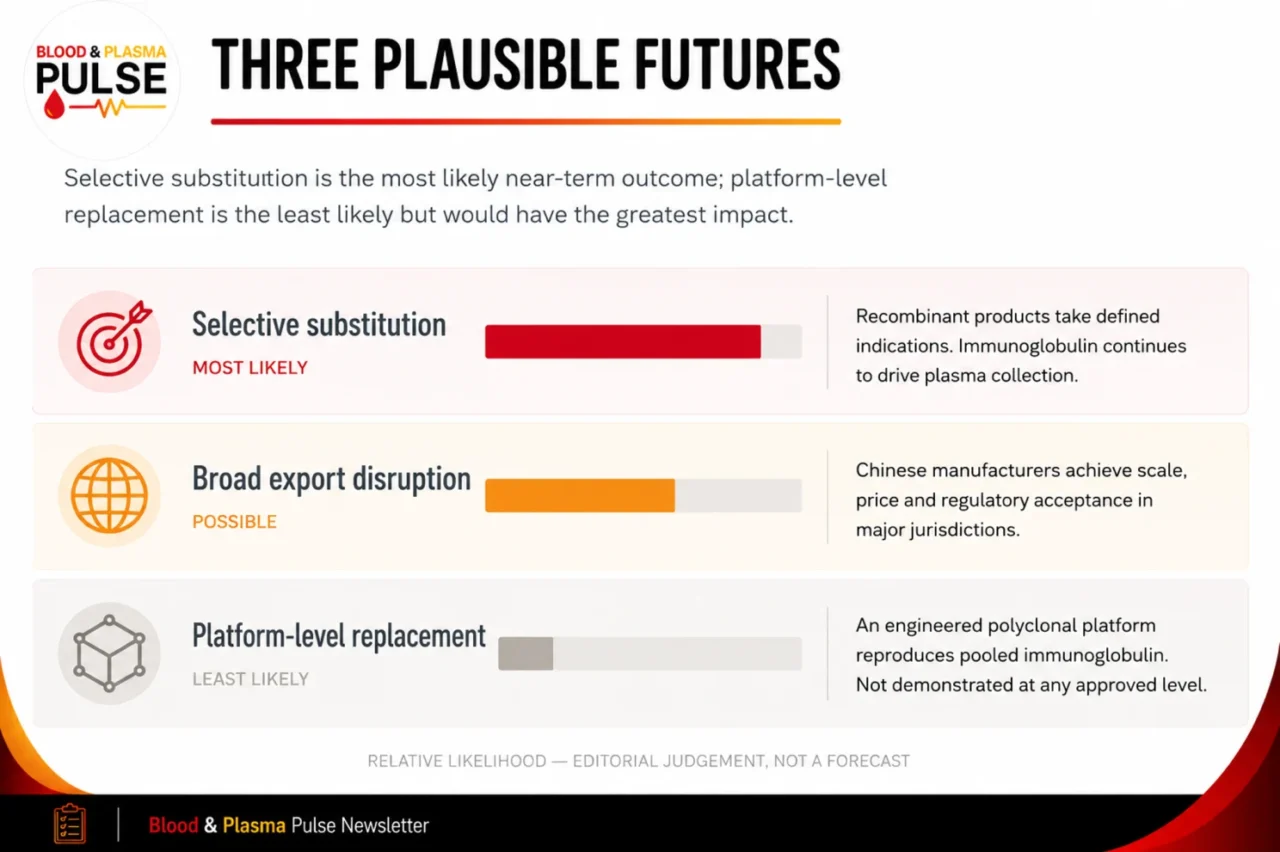
Three plausible futures for Chinese recombinant competition. Selective substitution is the most likely near-term outcome; platform-level replacement is the least likely but would have the greatest impact.
11. What would prove this analysis wrong?
A credible industry assessment should identify the evidence that would invalidate its own conclusion.
The prediction that plasma will remain essential would need to be reconsidered if several developments occurred together:
- Recombinant albumin achieves broad indication expansion: Comparable outcomes are demonstrated across critical care, surgery, paracentesis, plasma exchange and other high-volume uses, followed by approvals in multiple major jurisdictions.
- Recombinant polyclonal immunoglobulin becomes clinically viable: A scalable engineered product supplies sufficiently broad antibody diversity for replacement therapy.
- Targeted biologics displace IVIG across major neurological indications: Alternatives become safer, more durable, more convenient and more economical in high-use chronic diseases.
- Gene therapy becomes durable, repeatable and broadly accessible: Long-term expression, wider eligibility, lower costs and workable redosing strategies substantially reduce lifetime factor use.
- Chinese products gain international regulatory acceptance: Domestic innovation becomes global disruption when major regulators accept the manufacturing, clinical and pharmacovigilance packages.
12. How the PDMP sector should respond
The plasma industry should not deny the validity of recombinant substitution.
Plasma-derived coagulation factors have already lost market share to recombinant and non-factor therapies. Recombinant albumin is commercially real in China. Gene therapy can dramatically reduce factor consumption in selected patients.
A blanket claim that plasma-derived therapies are inherently irreplaceable would be scientifically weak and strategically ineffective.
- Assess each product separately, not the portfolio as a whole: Substitution risk is product-specific. Albumin and factor VIII face mature, approved competition; C1 esterase inhibitor, multi-protein concentrates and immunoglobulin replacement do not. A single portfolio-level judgement will be wrong for most of the portfolio.
- Distinguish antibody replacement from immunomodulatory use of IVIG: These are two different markets served by the same product. Targeted biologics can compete for immunomodulatory indications one disease at a time. They cannot supply broad protective antibodies to patients who cannot make their own, so replacement therapy remains largely unexposed.
- Increase the immunoglobulin yield recovered from each litre of plasma: If albumin and coagulation-factor revenues weaken, immunoglobulin must carry more of the fixed cost of donor recruitment, collection, testing and fractionation. Higher IgG recovery per litre is the most direct way to offset that shift.
- Decide deliberately whether to keep making low-volume specialty products: Products such as antithrombin, fibrinogen and C1 esterase inhibitor are economically supported by the higher-volume products recovered from the same plasma. If those revenues fall, specialty production can quietly become unviable, and patients have no alternative source.
- Compete on published comparative evidence rather than on track record: Long clinical familiarity is not an argument a regulator or payer can act on. Outcome data, safety, durability, cost-effectiveness and real-world performance are what will decide procurement between plasma-derived and engineered products.
- Build or acquire capability outside fractionation: If recombinant, monoclonal and gene-based therapies take defined indications, a fractionation-only business is exposed to each of those shifts. Holding capability across several modalities converts a competitive threat into a portfolio choice.
- Do not treat recombinant approvals as a reason to slow collection investment: None of the products discussed in this article is an immunoglobulin, and immunoglobulin demand determines how much plasma must be collected. Reducing capacity in response to these approvals would create shortages in therapies that have no substitute (see Section 8).
- Avoid arguing that plasma is either irreplaceable or obsolete: Both positions are contradicted by the evidence. Plasma-derived coagulation factors have already been displaced; pooled immunoglobulin has not been reproduced. The credible position is that the two technologies will coexist and serve different patients, indications and health systems.
China will reshape the PDMP market, not eliminate it
Chinese biotechnology has moved from localization into genuine therapeutic innovation.
Rice-derived recombinant albumin creates a direct challenge to one of the oldest and highest-volume plasma proteins.
Chinese-developed recombinant factor VIII products reinforce the transition away from plasma-derived coagulation factors.
BBM-H901 shows that a domestically developed gene therapy can sharply reduce factor IX use. Telitacicept demonstrates how a targeted recombinant biologic can enter diseases in which IVIG has historically played an important role.
Together, these developments could alter product demand, pricing, procurement and fractionation economics. But the evidence does not support the broader conclusion that recombinant technology is close to replacing the PDMP ecosystem.
The principal product driving plasma collection, pooled polyclonal immunoglobulin, remains biologically distinct from any single recombinant protein.
Its breadth depends on population-level antibody diversity that cannot yet be manufactured at equivalent scale and clinical functionality.
The strategic challenge for the PDMP industry is not to defend every existing product indefinitely.
It is to identify which products remain uniquely dependent on human plasma, improve the efficiency and resilience of their production, protect vulnerable specialty therapies and prepare for a future in which plasma-derived, recombinant, monoclonal and gene-based treatments coexist.
KEY MESSAGE FOR INDUSTRY LEADERS
Do not dismiss the Chinese recombinant challenge. But do not mistake progress in Albumin, Coagulation factors or targeted immunotherapy for proof that the biological diversity of plasma has been replicated.
References
- Belief BioMed, and Takeda China. (2025, April 10). BBM-H901 (dalnacogene ponparvovec injection), China’s first hemophilia B gene therapy, officially approved.
- Belmonte, M., Albiero, A., Callewaert, F., Patris, J., and Whittal, A. (2025). Understanding supply sustainability of plasma-derived medicinal products: Drivers and consequences of shortages. Vox Sanguinis, 120(8), 754–764.
- Burnouf, T. (2011). Recombinant plasma proteins. Vox Sanguinis, 100(1), 68–83.
- Caraceni, P., Riggio, O., Angeli, P., Alessandria, C., Neri, S., Foschi, F. G., Levantesi, F., Airoldi, A., Boccia, S., Svegliati-Baroni, G., Fagiuoli, S., Romanelli, R. G., Cozzolongo, R., Di Marco, V., Sangiovanni, V., Morisco, F., Toniutto, P., Tortora, A., De Marco, R., … Bernardi, M. (2018). Long-term albumin administration in decompensated cirrhosis (ANSWER): An open-label randomised trial. The Lancet, 391(10138), 2417–2429.
- China, L., Freemantle, N., Forrest, E., Kallis, Y., Ryder, S. D., Wright, G., Portal, A. J., Becares Salles, N., Gilroy, D. W., and O’Brien, A. (2021). A randomized trial of albumin infusions in hospitalized patients with cirrhosis. The New England Journal of Medicine, 384(9), 808–817.
- Curling, J. (2025). Current and future technologies for the production of plasma protein-derived medicines. Annals of Blood, 10, Article 16.
- Dhillon, S. (2021). Telitacicept: First approval. Drugs, 81(14), 1671–1675.
- Kumpel, B. M. (2007). Efficacy of RhD monoclonal antibodies in clinical trials as replacement therapy for prophylactic anti-D immunoglobulin: More questions than answers. Vox Sanguinis, 93(2), 99–111.
- Li, C., Xiang, W., Wu, M., Zhang, X., Wang, S., Cao, Y., Zhang, Q., and Li, W. (2021). A randomized dose-escalation study on the safety, tolerability, immunogenicity, pharmacokinetics and pharmacodynamics of a novel recombinant human albumin in healthy subjects. European Journal of Pharmaceutical Sciences, 165, 105923.
- Mitsubishi Chemical Group. (n.d.). Notice of termination of the recombinant human serum albumin business. Retrieved August 6, 2026, from
- Niu, J., Gao, Y., Wang, G., Qin, Z., Wu, C., Yu, Z., Wang, L., Hu, Z., Li, X., Zhang, Z., Chen, Y., Yao, L., Yang, J., Li, G.-M., Yang, Y., Lu, X., Gu, Y., Wu, X., Mao, X., . . . Yang, D. (2025). Rice-derived recombinant human serum albumin as an alternative to human plasma for patients with decompensated liver cirrhosis: A randomized, double-blind, positive-controlled and non-inferiority trial. Gut, 74(9), e335577.
- Prevot, J., and Jolles, S. (2020). Global immunoglobulin supply: Steaming towards the iceberg? Current Opinion in Allergy and Clinical Immunology, 20(6), 557–564.
- Ramesh, N., and McIntosh, D. (2025). How do we solve the shortage of plasma derived medicines in low- and middle-income countries (LMIC)? Annals of Blood, 10, Article 13.
- RemeGen Co., Ltd. (2025, May 27). RemeGen’s telitacicept approved for treatment of myasthenia gravis in China.
- Strengers, P. F. W. (2023). Challenges for plasma-derived medicinal products. Transfusion Medicine and Hemotherapy, 50(2), 116–122.
- Strengers, P. F., and Klein, H. G. (2016). Plasma is a strategic resource. Transfusion, 56(12), 3133–3137.
- Wang, Y., Xue, F., Poon, M.-C., and Yang, R. (2026). The therapeutic landscape of inherited bleeding disorders in China. Research and Practice in Thrombosis and Haemostasis, 10(3), 103460. Wu, R., Wang, X., Zhao, X., Cheng, Y., Zhou, Z., Sun, J., Xu, M., Li, W., Xiao, J., Yang, F., Chen, Y., Xu, W., Huang, J., Ma, C., Gai, W., Xie, L., and Yang, R. (2022). Efficacy, safety and pharmacokinetics of recombinant human coagulation factor VIII—omfiloctocog alfa—in previously treated Chinese children with severe hemophilia A. Haemophilia, 28(6), e199–e208. https://doi.org/10.1111/hae.14622
- Wuhan Municipal Government. (2025, July 20). China approves rice-derived recombinant human albumin injection.
- Xi, Y., Jin, C., Liu, W., Zhou, H., Wang, Z., Zhou, R., Lou, S., Zhao, X., Chen, F., Cheng, P., Sun, Z., Jia, H., and Zhang, L. (2022). Efficacy, safety and bioequivalence of the human-derived B-domain-deleted recombinant factor VIII TQG202 for prophylaxis in severe haemophilia A patients. Haemophilia, 28(6), e219–e227.
- Xue, F., Ju, M., Zhu, T., Zhou, Z., Sun, J., Yang, L., Yan, Z., Zhou, H., Du, X., Zheng, C., Zheng, J., Wu, X., Du, Z., Jiang, W., Yang, C., Xiao, X., Liu, W., Yang, R., and Zhang, L. (2026). Factor IX-Padua AAV gene therapy in hemophilia B: Phases 1/2 and 3 trials. Nature Medicine, 32, 93–102.
- Yver, A., Homery, M.-C., Fuseau, E., Guemas, E., Dhainaut, F., Quagliaroli, D., Beliard, R., and Prost, J.-F. (2012). Pharmacokinetics and safety of roledumab, a novel human recombinant monoclonal anti-RhD antibody with an optimized Fc for improved engagement of FcγRIII, in healthy volunteers. Vox Sanguinis, 103(3), 213–222.”
Stay updated with Hemostasis Today.
-
Sep 29, 2026, 12:02Hajra Malik: Bridging Language Gaps in Hematology With AI
-
Sep 29, 2026, 11:57Joan Montaner: Can Blood Test Identify Intracerebral Hemorrhage Within Minutes?
-
Sep 29, 2026, 11:43From Years Without Answers to Life With Hemophilia Care – WFH
-
Sep 29, 2026, 11:32Sara Al Dallal: Transforming Hemophilia Care Across the Gulf
-
Sep 29, 2026, 11:21Richard Davis: Rapid Rescue in Massive Pulmonary Embolism
-
Sep 29, 2026, 11:14Nissan Brown: Every Step Counts for the Hemophilia Community
-
Sep 29, 2026, 11:03Zain Khalpey: SINGLE AF Adds New Evidence to the Anticoagulation Debate
-
Sep 29, 2026, 10:54How Does Haemophilia Affect Motor Development in Infants? – EAHAD
-
Sep 29, 2026, 10:49Alison Davey: The Vital Role of Community Support in Bleeding Disorders