

Rose Almashayekh: Why Vitamin B9 Deserves More Attention?
Rose Almashayekh, Student at the University of British Columbia, shared a post on LinkedIn:
“Folate, also known as vitamin B9, is often discussed mainly in the context of pregnancy.
While its role in prenatal health is well established, this narrow focus can cause its broader importance to be overlooked.
In reality, folate is an essential nutrient for people at all stages of life, supporting fundamental processes that maintain overall health and normal body function.
What Is Folate (Vitamin B9)?
Folate is a water-soluble B vitamin that the body cannot synthesize and therefore must be obtained through dietary sources or supplementation.
It is naturally present in many foods, while its synthetic form, folic acid, is used in fortified foods and supplements.
Both forms contribute to meeting the body’s folate requirements, although folic acid is more bioavailable than naturally occurring folate found in foods (Harvard T.H. Chan School of Public Health, 2023).
The Role of Folate in Cell Growth and DNA Synthesis
One of folate’s most important biological roles is its involvement in one-carbon metabolism, a group of biochemical reactions necessary for DNA synthesis, repair, and methylation.
These processes are essential for normal cell division and growth. Because cells in the body are constantly renewing themselves, particularly in tissues such as blood and the gastrointestinal tract, adequate folate intake is critical for maintaining cellular integrity and function (Bailey and Gregory, 1999).
Folate and Red Blood Cell Formation
Folate plays a key role in the production of healthy red blood cells.
When folate intake is insufficient, red blood cell development becomes impaired, leading to megaloblastic anemia.
This condition is characterized by large, immature red blood cells that are less effective at transporting oxygen throughout the body.
Symptoms may include fatigue, weakness, and difficulty concentrating, highlighting the importance of adequate folate intake for energy and overall well-being (Mayo Clinic, 2022).
Folate vs Iron: Similar Outcomes, Different Roles
Folate and iron are often discussed together because deficiencies in both nutrients can result in anemia.
However, despite this shared outcome, the two nutrients serve distinct physiological roles and affect red blood cells in different ways.
Iron is an essential component of hemoglobin, the protein in red blood cells responsible for transporting oxygen from the lungs to body tissues.
Inadequate iron intake leads to iron-deficiency anemia, which is characterized by smaller red blood cells with reduced hemoglobin content.
Common symptoms include fatigue, weakness, and shortness of breath (Mayo Clinic, 2023).
Folate, on the other hand, supports DNA synthesis and cell division.
When folate levels are low, red blood cell maturation is disrupted, resulting in megaloblastic anemia, where red blood cells are abnormally large and functionally impaired (Bailey and Gregory, 1999).
Although the symptoms of iron-deficiency anemia and folate-deficiency anemia may appear similar, their underlying causes differ, and they require different nutritional approaches.
This distinction emphasizes the importance of identifying the specific nutrient deficiency rather than assuming all anemia is caused by low iron intake.
Why Folate Is Critical During Early Pregnancy
Folate is especially important during early pregnancy due to its role in neural tube development, which later forms the brain and spinal cord.
Adequate folate intake before conception and during the first weeks of pregnancy has been shown to significantly reduce the risk of neural tube defects such as spina bifida and anencephaly (Blom et al., 2006).
Because neural tube closure occurs very early in pregnancy, sufficient folate intake is important even before pregnancy is recognized.
Beyond Pregnancy: Folate’s Role in Adult Health
Beyond its role in fetal development, folate contributes to adult health by supporting metabolic pathways involved in cardiovascular and neurological function.
Folate works alongside other B vitamins, particularly vitamin B12, to regulate homocysteine levels in the blood.
Elevated homocysteine has been associated with increased cardiovascular risk, making folate intake relevant for long-term heart health (Smith and Refsum, 2016).
Dietary Sources of Folate
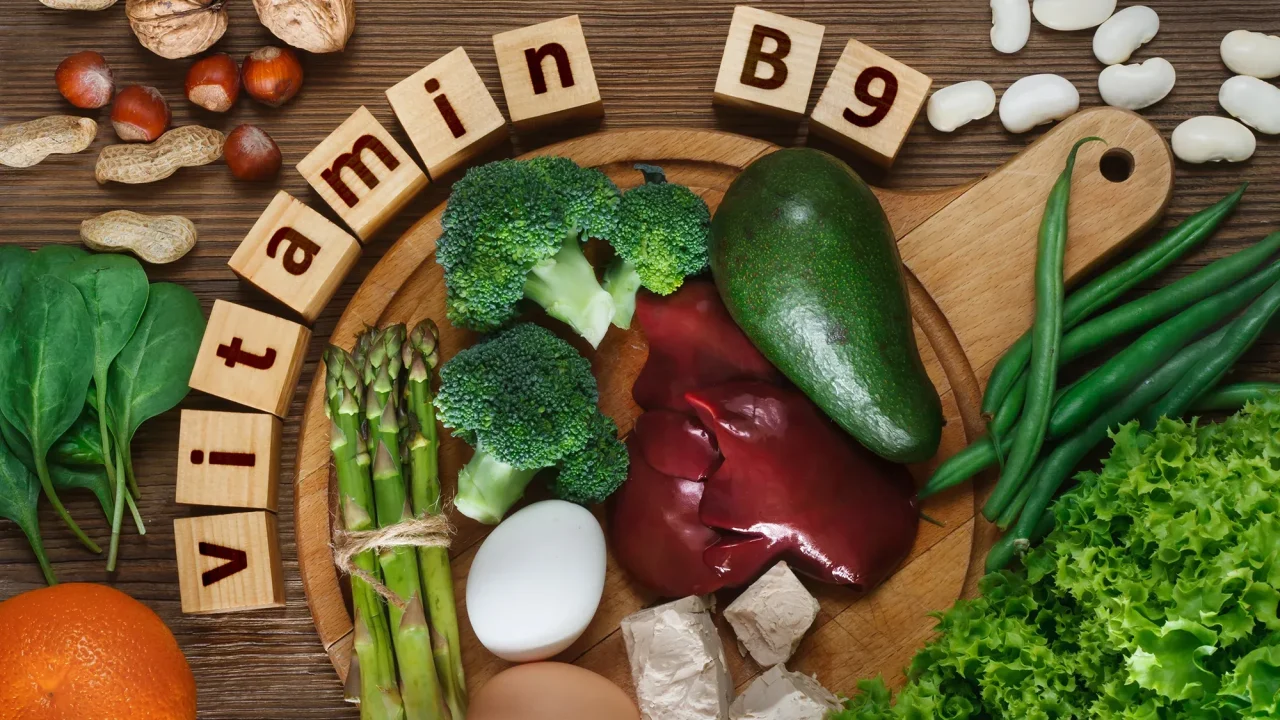
Folate is naturally present in a variety of foods, including leafy green vegetables such as spinach and kale, legumes like lentils and chickpeas, citrus fruits, and avocados.
Many grain products are also fortified with folic acid to help populations meet recommended intake levels.
For most adults, the recommended intake is approximately 400 micrograms of dietary folate equivalents per day, with higher needs for individuals who are pregnant or planning pregnancy (Harvard T.H. Chan School of Public Health, 2023).
Key Takeaway
Folate is far more than a pregnancy-specific nutrient.
It is a foundational vitamin that supports DNA synthesis, red blood cell development, and essential metabolic processes throughout life.
While iron is critical for oxygen transport, folate ensures proper cell formation, demonstrating how multiple nutrients work together to support blood health.
Prioritizing a balanced, nutrient-rich diet can help support long-term health and prevent deficiency.
References
- Bailey, L. B., and Gregory, J. F., III. (1999). Folate metabolism and requirements. The Journal of Nutrition, 129(4), 779–782.
- Blom, H. J., Shaw, G. M., den Heijer, M., and Finnell, R. H. (2006). Neural tube defects and folate: Case far from closed. Nature Reviews Neuroscience, 7(9), 724–731.
- Harvard T.H. Chan School of Public Health. (n.d.). Folate (vitamin B9).
- Mayo Clinic. (2022). Folate (folic acid).
- Mayo Clinic. (2023). Iron deficiency anemia.
- Smith, A. D., and Refsum, H. (2016). Homocysteine, B vitamins, and cognitive impairment. Annual Review of Nutrition, 36, 211–239.“
Stay updated on all scientific advances with Hemostasis Today.
-
Sep 30, 2026, 01:52Javed Anees: DADA2 – When a Young Stroke Is More Than a Stroke
-
Sep 30, 2026, 01:51How a Venous Thrombus Becomes Revascularized – ISTH
-
Sep 29, 2026, 22:45Victor Agunyego: Paracetamol – The Most Common Drug We Underestimate
-
Sep 29, 2026, 22:42Nova Sinclair: Advancing the Future of Hematology – Meet Our 2027 Organizing Committee
-
Sep 29, 2026, 22:41Lorenz Räber: Intracoronary Imaging in PCI – Why, When, How, and Which Modality?
-
Sep 29, 2026, 22:31Selma Turkovic: Pleased to Deliver the Opening Presentation at Kingston Hospital
-
Sep 29, 2026, 22:31Miguel Teran: Ultrasound and Simulation in Arterial Blood Sampling
-
Sep 29, 2026, 22:28Mohammad Refaei: Navigating Your Career in Hematology From Training to Practice
-
Sep 29, 2026, 22:27Matteo Foschi: 10 Clinical Pearls for Antithrombotic Therapy in Secondary Stroke Prevention