

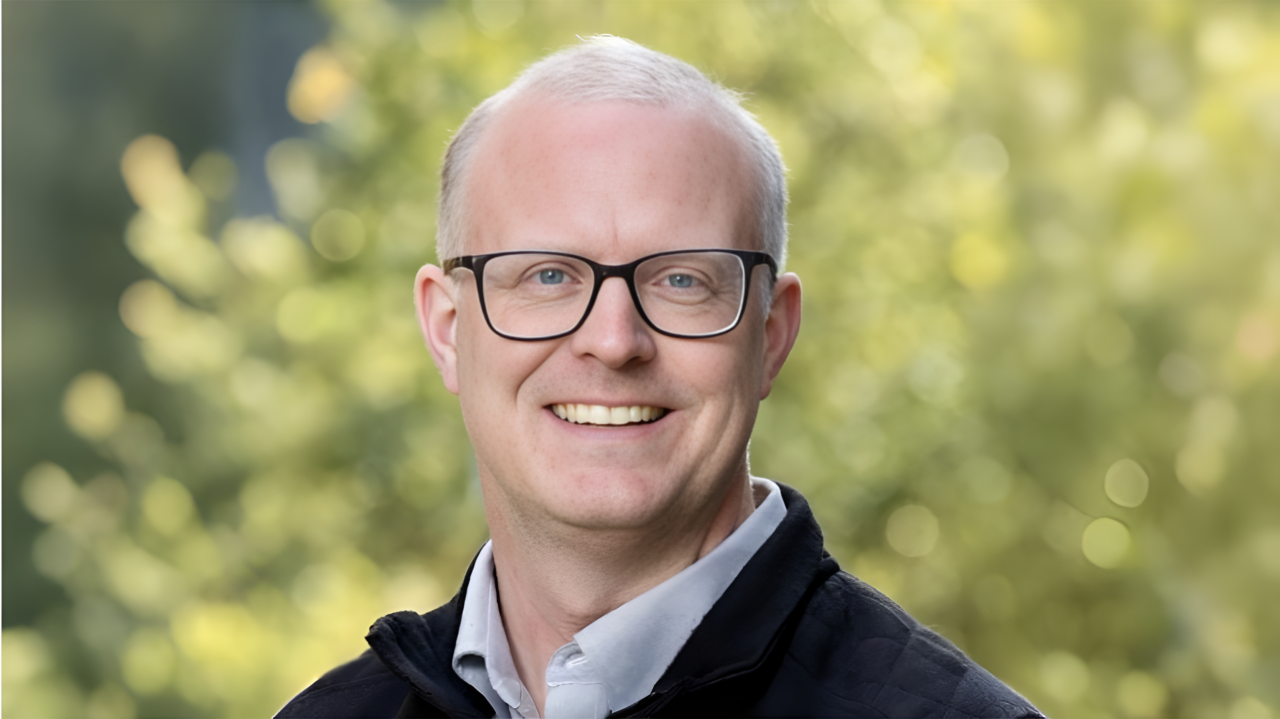
Todd Davenport on The Impacts of Long COVID
Todd Davenport, Professor and Chair, Department of Physical Therapy, University of the Pacific, shared on LinkedIn:
”Our latest manuscript, “ME/CFS and Long COVID Demonstrate Similar Bioenergetic Impairment and Recovery Failure on Two‑Day Cardiopulmonary Exercise Testing,” is now posted as a preprint.
Using two‑day cardiopulmonary exercise testing (CPET), we compared physiologic responses in people living with myalgic encephalomyelitis/chronic fatigue syndrome (ME/CFS), Long COVID, and matched non‑disabled controls, stratifying our analysis by sex.
Here’s what we learned:
- Both ME/CFS and Long COVID show similar failure to recover after exertion
- Largest impairments occur at the ventilatory anaerobic threshold, suggesting similar aerobic system impairment
- Females exhibited more pronounced post‑exertional abnormalities than males
- No meaningful differences were observed between ME/CFS and Long COVID on two-day CPET, suggesting they share a bioenergetic pathophysiology
- Severe functional impairment was common in both patient groups and was not explained by effort preference, deconditioning, ventilation, or hemodynamics
These results reinforce post‑exertional malaise (PEM) is a measurable physiological phenomenon.
They underscore the value of two‑day CPET to:
– Differentiate PEM from normal recovery using objective measures
– Inform disability evaluations in people who can and choose to have a CPET
– Improve precision in rehabilitation and treatment trials
I’m grateful to my co‑authors and to the patients.
Their generous engagement continues to advance our understanding of these terribly disabling yet largely ignored chronic conditions.”
Read the full article here.
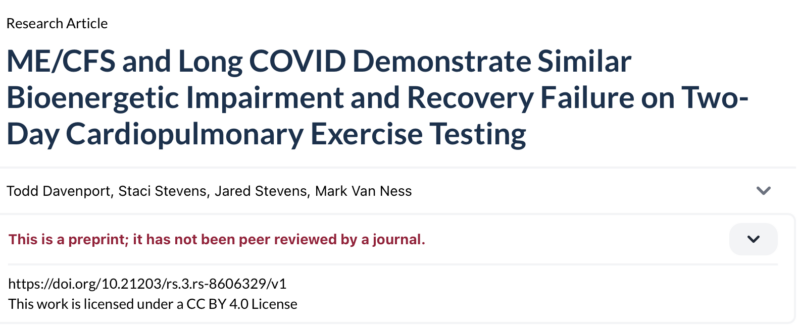
Article: ME/CFS and Long COVID Demonstrate Similar Bioenergetic Impairment and Recovery Failure on Two-Day Cardiopulmonary Exercise Testing
Authors: Todd Davenport, Staci Stevens, Jared Stevens, Mark Van Ness
Stay updated on all scientific advances with Hemostasis Today.
-
Sep 30, 2026, 15:07Chiranjeev Sharma: Targeting Factor XIa with the Synthetic Inhibitor SB-01
-
Sep 30, 2026, 14:41Bruna Gigante: Balancing Thrombosis and Bleeding in Cardiovascular Care
-
Sep 30, 2026, 14:13Ashok Choudhury: Portal Vein Thrombosis and Outcomes in Cirrhosis
-
Sep 30, 2026, 13:57Leslye Conde Bazán: When Conventional Imaging Is Not Enough – The Role of IVUS
-
Sep 30, 2026, 13:41Huda Salah Eldin: The Challenge of Balancing Antithrombotic Therapy After PCI
-
Sep 30, 2026, 13:29Abdus Salam: What Can CT Venography Reveal About the Veins?
-
Sep 30, 2026, 13:03Amira Mohy: Diagnostic Flow Cytometry Panels for Hematological Malignancies
-
Sep 30, 2026, 12:52Paul Watton: Could Repetitive Head Impacts Leave a Molecular Memory?
-
Sep 30, 2026, 12:41The Journey to ISTH 2027 Starts in Vancouver