


Limited Evidence for Anticoagulation Despite High VTE Risk in Sickle Cell Disease – RPTH
RPTH Journal shared on LinkedIn about a recent article by Mosaad Almegren et al, adding:
”What’s the best anticoagulant for venous thrombosis in sickle cell disease?
Patients with sickle cell disease (SCD) face a high risk of venous thromboembolism, yet evidence guiding anticoagulation choice remains limited.
A new RPTH study compared direct oral anticoagulants (DOACs) vs warfarin in adults with SCD experiencing their first VTE.
Here’s the key signal:
- Similar rates of recurrent thrombosis and major bleeding between DOACs and warfarin.
- Clinically relevant non-major bleeding was significantly lower with DOACs.
Some context from the cohort:
- 99 patients with SCD and VTE
- Pulmonary embolism was the most common event (~65%)
- Median follow-up ~44 months
- Most DOAC use involved rivaroxaban or apixaban
Translation:
For patients with SCD and thrombosis, DOACs may offer comparable protection with less bleeding burden.
Big questions for the field:
- Should DOACs become first-line therapy for VTE in SCD?
- How long should anticoagulation continue in this high-recurrence population?
- Do SCD-specific thrombosis mechanisms require tailored anticoagulation strategies?”
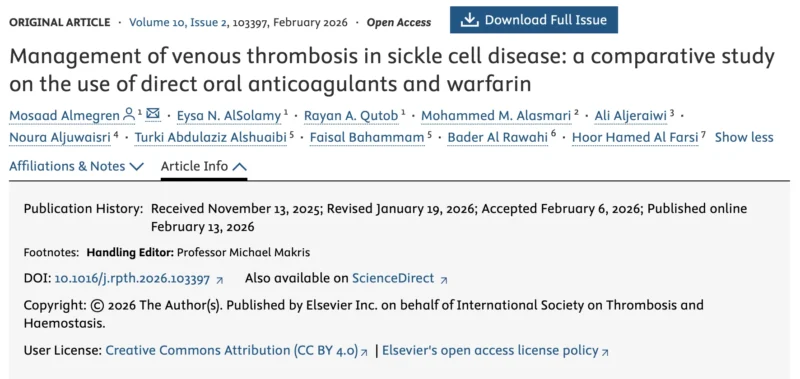
Title: Management of venous thrombosis in sickle cell disease: a comparative study on the use of direct oral anticoagulants and warfarin
Authors: Mosaad Almegren, Eysa N. AlSolamy, Rayan A. Qutob, Mohammed M. Alasmari, Ali Aljeraiwi, Noura Aljuwaisri, Turki Abdulaziz Alshuaibi, Faisal Bahammam, Bader Al Rawahi, Hoor Hamed Al Farsi
Read the Full Article on RPTH
Stay updated on all scientific advances with Hemostasis Today.
-
Sep 15, 2026, 22:42100 Years of von Willebrand Disease: What Has a Century of Progress Taught Us? – EAHAD
-
Sep 15, 2026, 22:38Cedric Hermans: How Iis TFPI Inhibition Changing Haemophilia Care?
-
Sep 15, 2026, 17:33Reza Shojaei: Blood and Plasma Donors Are Not a Production Metric
-
Sep 15, 2026, 17:32Thomas Dayspring: MHT for Vasomotor Symptoms May Also Offer Cardiovascular Benefits
-
Sep 15, 2026, 17:31Rebecca Risman: Deciphering the Mechanisms of Fibrinolysis in Contracted Clots
-
Sep 15, 2026, 17:31Clare Tower: 30 Times Higher Does Not Tell the Whole Story
-
Sep 15, 2026, 17:29Erica Wood: Looking Forward to the Webinar on Future Directions in Haemovigilance
-
Sep 15, 2026, 17:28Caitlin Raymond: Can an Antibody Screen Tell You If a Transfusion Will Actually Hurt Your Patient?
-
Sep 15, 2026, 17:28Rachel Margolis-Goodman: When Conventional Treatment Could Not, Research Found an Answer