

A Century After Its Discovery, VWD Remains Dramatically Underdiagnosed Worldwide – RPTH Journal
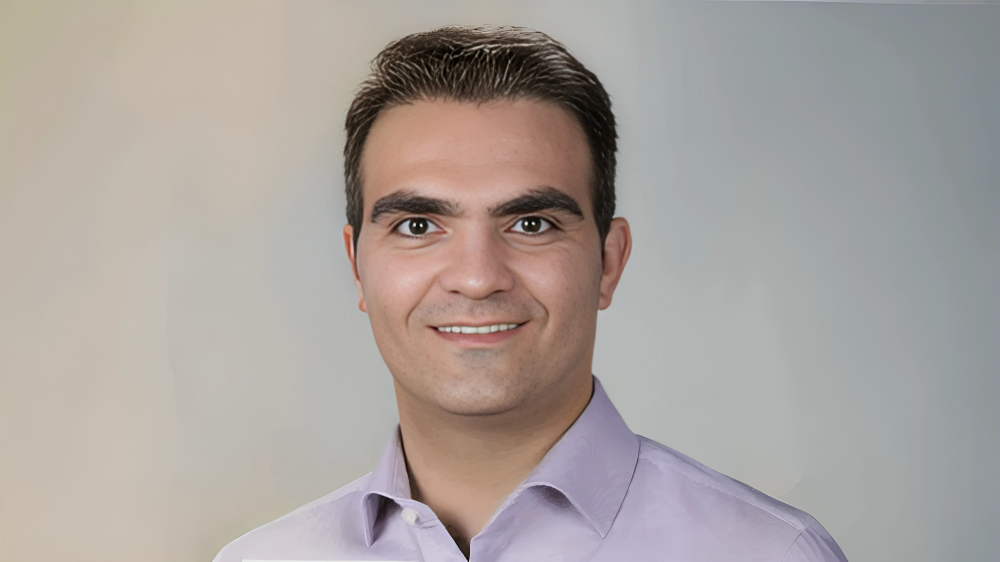
RPTH Journal shared on LinkedIn about a recent article by Omid Seidizadeh et al, adding:
”A century after its discovery, von Willebrand disease (VWD) remains dramatically underdiagnosed worldwide.
A new RPTH review highlights one of the most striking paradoxes in hematology.
Although VWD is the most common inherited bleeding disorder, the vast majority of affected individuals remain undiagnosed or misdiagnosed.
The numbers are staggering:
- Population studies estimate VWD prevalence at 0.8%–1.6%
- At least 1 in 1000 individuals likely has a clinically significant disease
- Yet global registry prevalence averages only 25.6 per million
Many patients experience:
- recurrent mucosal bleeding
- iron deficiency anemia
- chronic fatigue
- impaired quality of life
- missed school/work
- delayed surgical or obstetric recognition
Why does underdiagnosis persist after 100 years?
The review outlines several key barriers:
- Limited awareness among clinicians and the public
- Poor access to specialized VWF testing
- Biological variability of VWF levels
- Complex and heterogeneous phenotypes
- Assay variability and diagnostic inconsistency
- Misclassification as platelet disorders or hemophilia A
Meaning patients may intermittently appear ‘normal’ in routine testing.
The paper also highlights major global inequities. In low- and middle-income countries, only the most severe VWD phenotypes are typically diagnosed due to limited access to specialized laboratory infrastructure.
The message of this review is powerful:
The next century of VWD should not focus only on discovering new biology, but on ensuring patients are actually diagnosed.
A thoughtful and important review bridging bleeding disorders, women’s health, global health equity, diagnostic medicine, and laboratory hematology.”
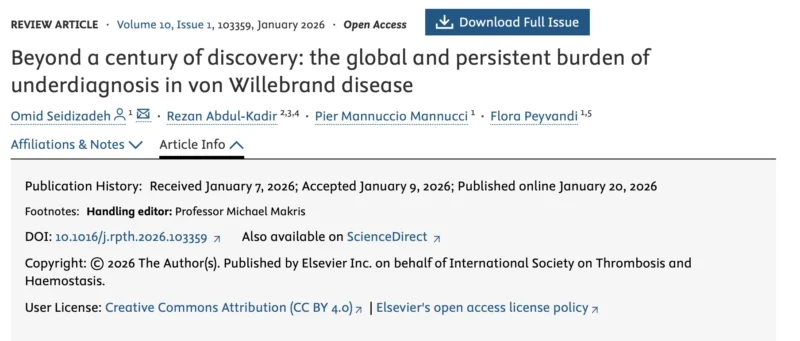
Title: Beyond a century of discovery: the global and persistent burden of underdiagnosis in von Willebrand disease
Authors: Omid Seidizadeh, Rezan Abdul-Kadir, Pier Mannuccio Mannucci, Flora Peyvandi
Stay updated on all scientific advances with Hemostasis Today.
-
Oct 13, 2026, 21:05Francisco Chacón-Lozsán: Heparin-Induced Thrombocytopenia – When an Anticoagulant Triggers Thrombosis
-
Oct 13, 2026, 21:04Aref Zribi: Isolated Tumor Thrombus and the Role of Prophylactic Anticoagulation
-
Oct 13, 2026, 21:01Alex Larson: Why Normal Bloodwork Does Not Always Tell the Whole Story
-
Oct 13, 2026, 20:58Juan Jauregui-Lozano: How Replication Stress Impairs Red Blood Cell Maturation
-
Oct 13, 2026, 20:55Caitlin Raymond: Understanding Platelet Refractoriness Before Ordering More Platelets
-
Oct 13, 2026, 20:54Sanja Seratlic: How Cow Feeding Systems Influence the Anti-Platelet Properties of Cheddar Cheese
-
Oct 13, 2026, 20:50Ruchika Goel: Cord Blood Red Blood Cells as a Physiologically Aligned Transfusion Strategy
-
Oct 13, 2026, 20:47Sophia Delicou: Strengthening Transfusion Safety Through Advanced Screening and Haemovigilance
-
Oct 13, 2026, 20:45Lydia Pecker: Alloimmunization and Transfusion Indications in Sickle Cell Disease Pregnancy