

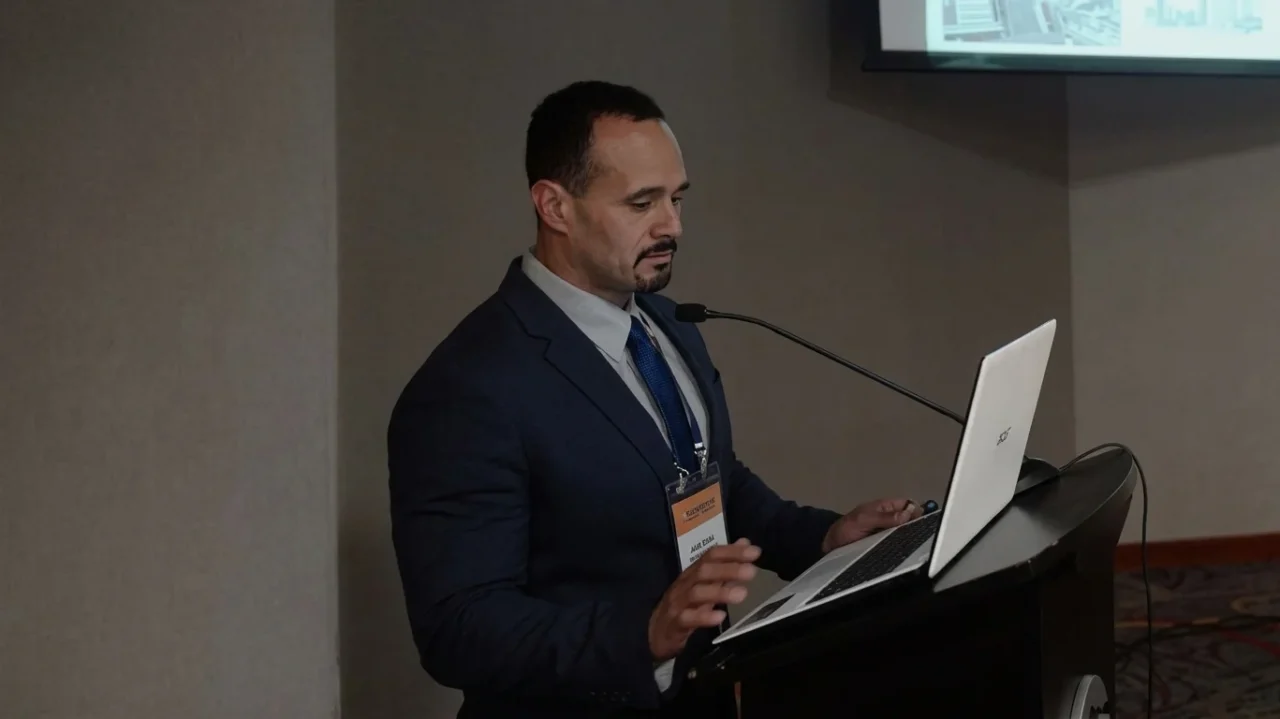
W. Alberto Sifuentes Giraldo: Dual Targeted Therapy Shows Promise in Refractory Systemic Autoinflammatory Diseases
W. Alberto Sifuentes Giraldo, Rheumatologist at Hospital Nuestra Señora de Sonsoles (Sacyl), shared a post on LinkedIn about a recent article by Abdurrahman Tufan et al., published in Seminars in Arthritis and Rheumatism, adding:
“Combination biologics or biologic + JAK inhibitor: Dual targeted therapy offers durable benefit in difficult-to-treat SAIDs — with frequent regimen changes and infection risk
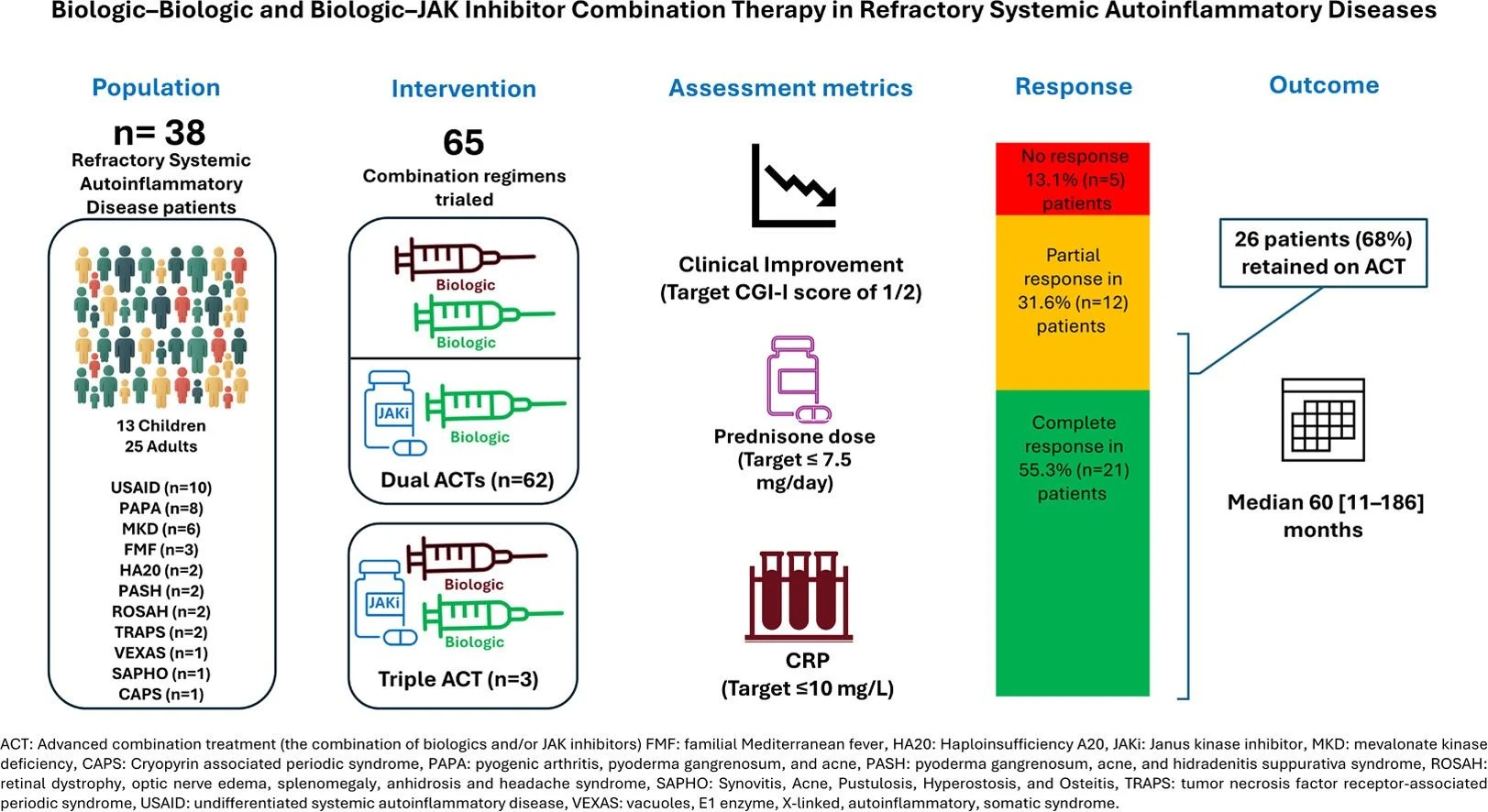
An observational retrospective cohort of 38 patients with refractory systemic autoinflammatory diseases (SAIDs) assessed the treatment response in patients receiving advanced combination therapy (ACT) — two biologics together, or a biologic plus a JAK inhibitor.
Cohort and why ACT was used
- Median age 30 years (range 4–76).
- Most common diagnoses: PAPA, mevalonate kinase deficiency (MKD), and undifferentiated SAIDs.
- Most patients already had disease complications and were dependent on glucocorticoids and/or opioids for inflammation and pain.
- ACT was used after monotherapy with biologics or JAK inhibitors had failed.
Efficacy
- Response was a composite of corticosteroid dose, CRP, and clinical improvement: Complete response 21 (55.3 percent); partial response 12 (31.6 percent); no response 5 (13.1 percent).
- So 87 percent had at least a partial benefit after (often multiple) ACT trials.
What combinations were used
- 65 ACT regimens in total.
- The most frequent pairing was an IL-1 inhibitor + a TNF inhibitor.
- 39 of 65 regimens were later stopped (lack of efficacy, secondary loss of response, or adverse events).
Durability
At last follow-up:
- 26/38 patients (68 percent) were still on ACT.
- Median time on ACT: 60 months (range 11–186).
Safety / limits
Benefits were real in this highly refractory group, but:
- secondary loss of efficacy was common,
- infection risk remained a concern,
- many regimens still had to be changed.
Bottom line of the study
In patients with difficult-to-treat SAIDs who have already failed targeted monotherapy, combining two pathway blockers (especially IL-1 + TNF) can produce complete or partial control in the majority, often with steroid-sparing, and can be continued for years — but it is not a set-and-forget strategy and needs close monitoring for loss of response and infection.”
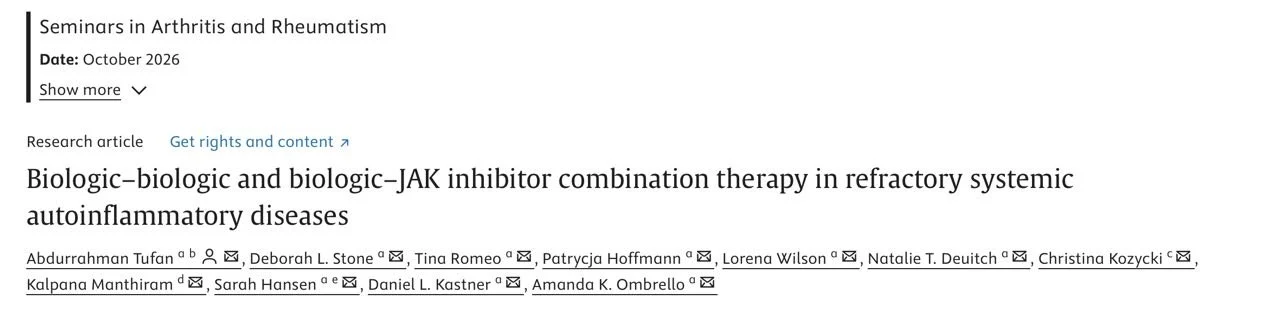
Title: Biologic–biologic and biologic–JAK inhibitor combination therapy in refractory systemic autoinflammatory diseases
Authors: Abdurrahman Tufan, Deborah L. Stone, Tina Romeo, Patrycja Hoffmann, Lorena Wilson, Natalie T. Deuitch, Christina Kozycki, Kalpana Manthiram, Sarah Hansen, Daniel L. Kastner, Amanda K. Ombrello
Other posts featuring W. Alberto Sifuentes Giraldo on Hemostasis Today.
-
Sep 13, 2026, 04:42Christopher Robinson: Early Pregnancy Oxylipins May Signal Risk of Fetal Growth Restriction
-
Sep 13, 2026, 04:22Gabriela Hobbs: 2026 Society of Hematologic Oncology Meeting
-
Sep 13, 2026, 03:40Mizinga Moonze: When Blood Speaks – The Missing Link in Healthcare Sustainability
-
Sep 12, 2026, 17:55Dries De Wolf: Honored to Have Wolfgang Miesbach Comment on Our Latest Research
-
Sep 12, 2026, 17:53Usman Waheed: Introducing the Discovery of the 49th ISBT Blood Group System
-
Sep 12, 2026, 17:51Maria Sabater Lleal: Happy to Share Our Latest Work Exploring the Genetic Determinants of PE in VTE
-
Sep 12, 2026, 17:51Jeff Sternlicht: Why LDL-C and ApoB Remain King of the Hill?
-
Sep 12, 2026, 17:49Kalyan Roy: TRAGS – An Emerging Transfusion Safety Concern
-
Sep 12, 2026, 17:48Jason Fung: What Happened to “Statins Save Lives”?