


Wolfgang Miesbach: Predicting Breakthrough Bleeding in Emicizumab-Treated Acquired Haemophilia A
Wolfgang Miesbach, Professor of Medicine at Frankfurt University Hospital, shared on LinkedIn:
“Predicting Breakthrough Bleeding in Emicizumab-Treated Acquired Haemophilia A. Excellent work presented at ASH2025 by Fabius Pelzer addressing one of the most pressing challenges in acquired haemophilia A:
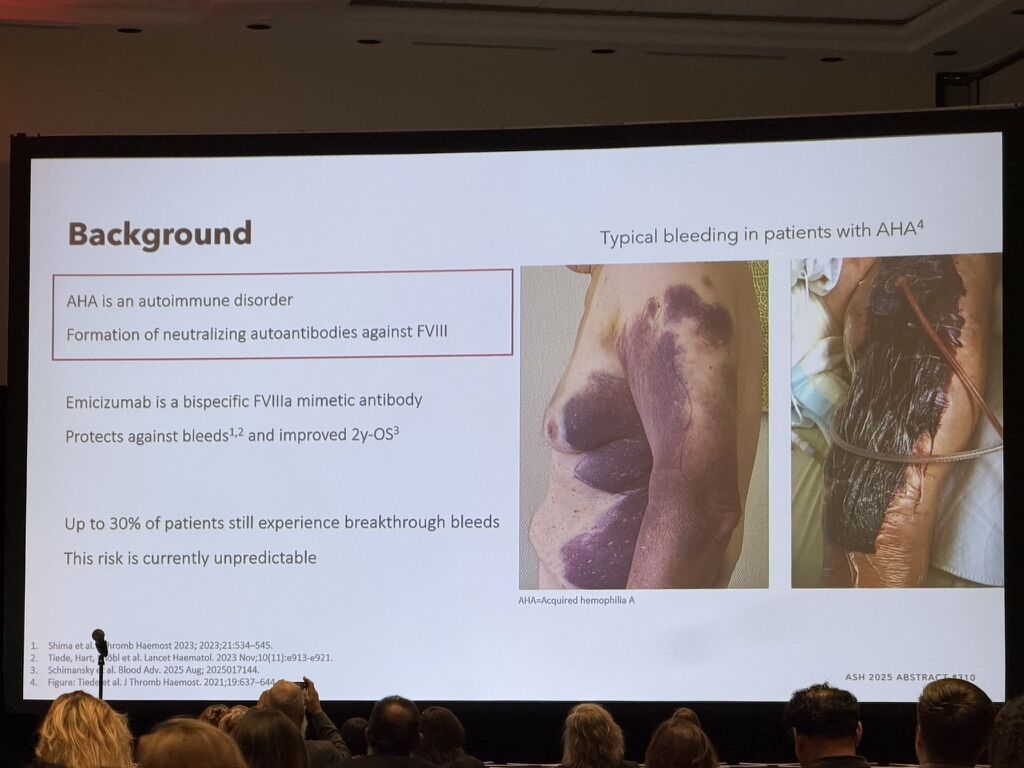
Despite emicizumab’s remarkable efficacy in preventing bleeds, up to 30% of patients still experience breakthrough bleeding—and we currently lack reliable predictive tools to identify who’s at risk.
This changes today.
Using FXIa-triggered thrombin generation (FXIa-TGA) as a surrogate biomarker, Pelzer and colleagues developed an innovative nomogram to assess individual bleeding risk based on:
- Peak thrombin generation potential
- Emicizumab levels
- Residual Factor VIII activity
Main findings:
- FXIa-TGA peak thrombin is more sensitive than conventional TGA to low factor levels and emicizumab concentrations
- Both emicizumab and residual Factor VIII significantly influence peak thrombin generation in the multivariable model
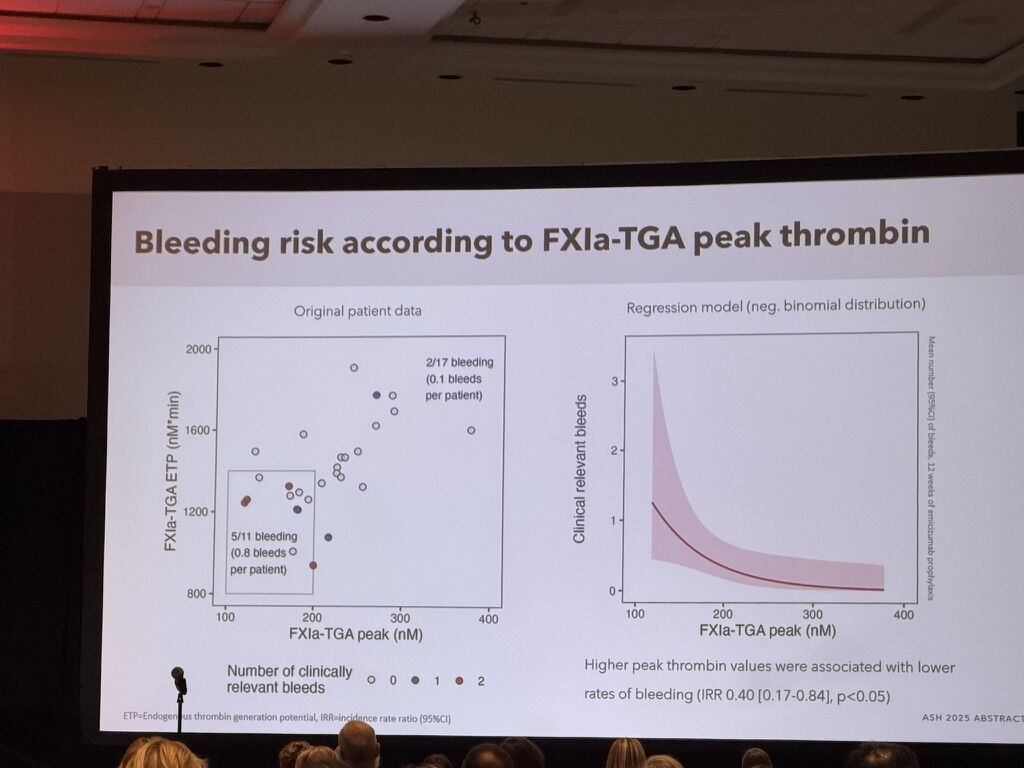
- Higher peak thrombin values correlated with lower bleeding rates (IRR 0.40 [0.17-0.84])
This is precision haemostasis and enables patient-specific risk stratification in real time. Moving beyond one-size-fits-all dosing to truly personalized management of AHA.
Having a functional biomarker that predicts individual risk opens pathways for:
- Optimized prophylactic dosing strategies
- Early detection of patients requiring intervention
- Better understanding of emicizumab mechanism in real-world AHA
Congratulations to Fabius, Andreas Tiede and the entire GTH study team on this rigorous work that has now been published in Haematologica Journal.”
Read more posts from Wolfgang Miesbach on Hemostasis Today.
-
Sep 30, 2026, 15:58Bernhard Merget: New Frontiers in Thrombosis and Stroke Research
-
Sep 30, 2026, 15:39Ifeanyichukwu Ifechidere: The Molecular Orchestra of Primary Hemostasis
-
Sep 30, 2026, 15:28Reassessing the Benefit–Risk Balance of Extended Anticoagulation in Cancer Patients – ESC Working Group on Cardiovascular Pharmacotherapy
-
Sep 30, 2026, 15:07Chiranjeev Sharma: Targeting Factor XIa with the Synthetic Inhibitor SB-01
-
Sep 30, 2026, 14:41Bruna Gigante: Balancing Thrombosis and Bleeding in Cardiovascular Care
-
Sep 30, 2026, 14:13Ashok Choudhury: Portal Vein Thrombosis and Outcomes in Cirrhosis
-
Sep 30, 2026, 13:57Leslye Conde Bazán: When Conventional Imaging Is Not Enough – The Role of IVUS
-
Sep 30, 2026, 13:41Huda Salah Eldin: The Challenge of Balancing Antithrombotic Therapy After PCI
-
Sep 30, 2026, 13:29Abdus Salam: What Can CT Venography Reveal About the Veins?