

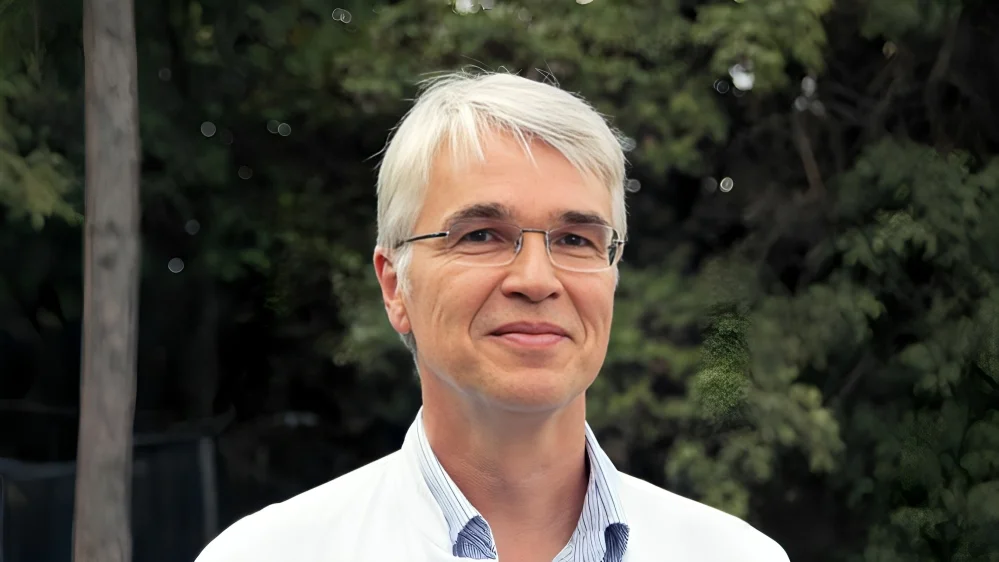
Wolfgang Miesbach: Six Years of Normal Factor VIII After a Single Gene Therapy in Hemophilia A
Wolfgang Miesbach, Professor of Medicine at Frankfurt University Hospital, shared a post on LinkedIn about a recent article by Kerstin Herbst et al, published in Haemophilia:
“One single infusion.
Normal Factor VIII for six years – even after Grade 3 ALT elevation.
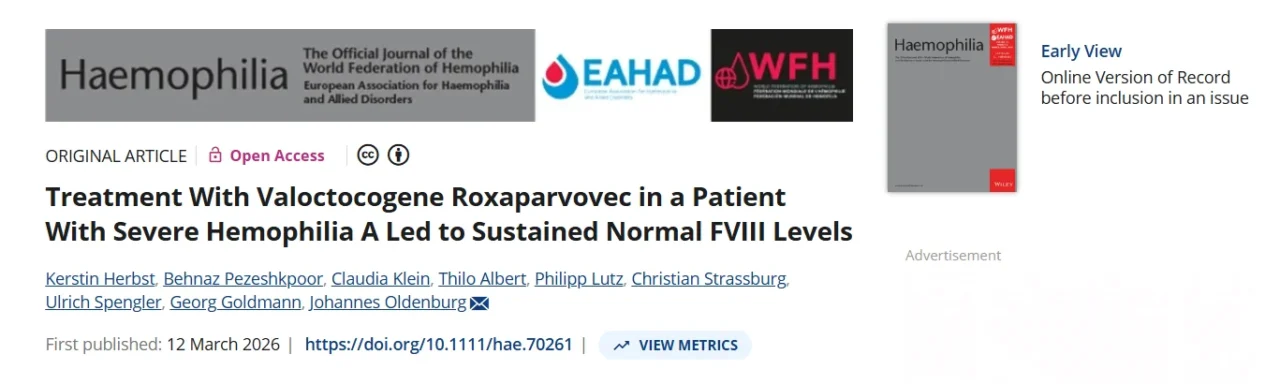
A new case report about a remarkable 6-year follow-up of a patient with severe haemophilia A treated with valoctocogene roxaparvovec within the GENEr8-1 study.
Six full years after a single gene therapy infusion, the patient maintains normal FVIII activity (49-72 IU/dL by chromogenic assay in year 6) – with zero bleeding episodes and no prophylactic FVIII infusions since treatment.
FVIII levels appear to have reached a plateau from year 3 onwards, pointing to durable, long-term transgene expression.
What makes this case particularly instructive is the immunosuppression management:
- Grade 3 ALT elevation (peak 555 U/L) at week 5 required hospitalisation and IV methyl-prednisolone
- Oral prednisolone was switched to budesonide to reduce systemic side effects (incl. oral thrush) – while FVIII levels remained protected
- Total immunosuppression lasted approximately 40 weeks – personalised, stepwise, and carefully tapered
For context: in the GENEr8-1 trial overall, only 8.3% of patients maintained FVIII more than 40 IU/dL at 5 years.
This case demonstrates that with tailored immunosuppression, significantly better long-term outcomes are within reach – even after a serious hepatic immune response.
Congratulations to Kerstin Herbst, Behnaz Pezeshkpoor and co-authors from the University of Bonn (Johannes Oldenburg).”
Title: Treatment With Valoctocogene Roxaparvovec in a Patient With Severe Hemophilia A Led to Sustained Normal FVIII Levels
Authors: Kerstin Herbst, Behnaz Pezeshkpoor, Claudia Klein, Thilo Albert, Philipp Lutz, Christian Strassburg, Ulrich Spengler, Georg Goldmann, Johannes Oldenburg
Read the Full Article on Haemophilia
Simon Fletcher, Research Assistant at University of Oxford, shared this post, adding:
“An interesting paper, but yet again, there is no discussion of the psychosocial impacts of either the gene therapy itself or the immunosuppression required to treat the ALT elevation.
Case reports are important but they should be more than just a report of the physical outcomes to a treatment or incident.”
Other posts featuring Wolfgang Miesbach on Hemostasis Today.
-
Sep 23, 2026, 16:04Monia Ezzalfani: Advancing Patient-Centered Care in Hemophilia A and B
-
Sep 23, 2026, 15:49Bilge Başak: How Activated PRP Modulates Osteoarthritic Chondrocyte Function
-
Sep 23, 2026, 14:50Mbonjo Bitsie Dora: Strengthening Sickle Cell Care Through Education, Awareness and Innovation
-
Sep 23, 2026, 13:58The New B12 Diagnostic Algorithm: From Serum Cobalamin to Functional Deficiency
-
Sep 23, 2026, 13:56Noha Soror: Preparing for Hematology and Medical Oncology Board Certification
-
Sep 23, 2026, 13:46Ugochi Ogu: What Can Platelet Proteomics Reveal about Pain and Neurocognitive Vulnerability in Sickle Cell Disease?
-
Sep 23, 2026, 13:42Melissa Hollo: Connecting Obesity and Anemia for Earlier Maternal Risk Intervention
-
Sep 23, 2026, 13:16Beverley Hunt: Advances in Haemostatic Management of Postpartum Haemorrhage
-
Sep 23, 2026, 13:13Ioanna Mela: Recruiting a Research Associate on DNA nanotechnology