


Ahmad G. Alzahrani: Major Bleeding and Anticoagulant Reversal
Ahmad G. Alzahrani, Consultant in Internal Medicine, shared a post on LinkedIn:
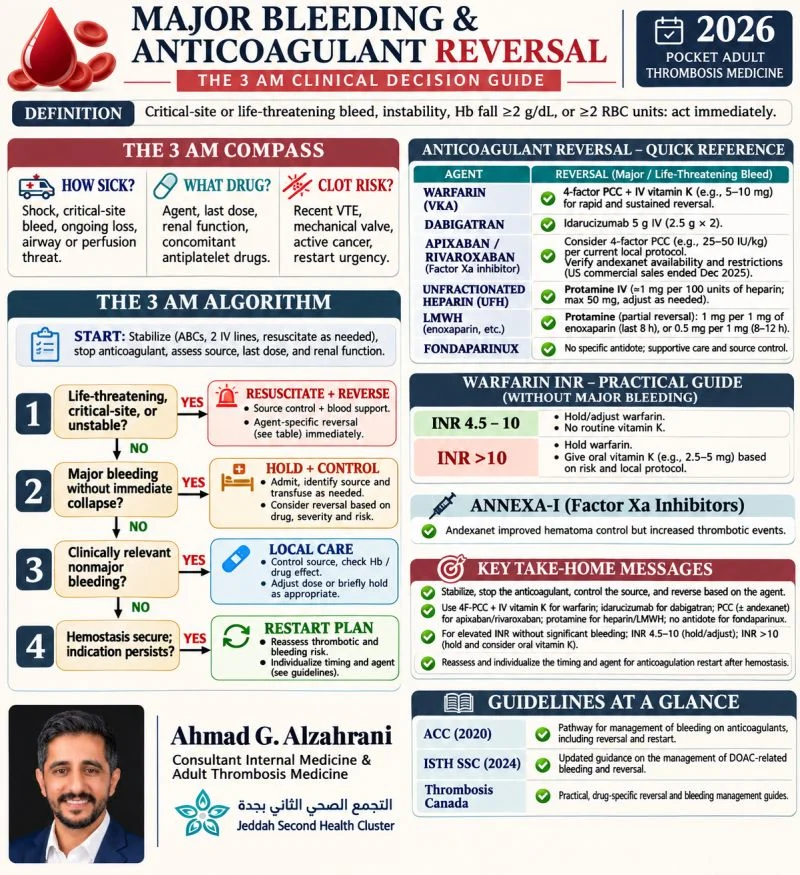
”Major Bleeding and Anticoagulant Reversal | The 3 AM Clinical Decision Guide
When a patient on anticoagulation develops major bleeding, every minute matters.
The challenge is not simply stopping the anticoagulant — it is controlling the bleeding while minimizing the risk of recurrent thrombosis.
First: Stabilize the patient
- Assess hemodynamic stability and bleeding severity.
- Hold anticoagulation and initiate resuscitation.
- Identify and control the bleeding source.
Know your reversal strategy:
- Warfarin: 4-factor PCC + IV vitamin K.
- Dabigatran: Idarucizumab.
- Apixaban/Rivaroxaban: Consider 4-factor PCC according to current local protocols.
- UFH: Protamine.
- LMWH: Protamine provides partial reversal.
Not every bleed requires reversal. The decision depends on bleeding severity, anticoagulant exposure, and clinical context.
And remember: Reversal is only half the decision.
Once hemostasis is achieved, reassess the indication for anticoagulation, thrombotic risk, and the safest time to restart treatment.
The 3 AM takeaway:
Stabilize, Then Control the Source, Then Reverse When Indicated, and Finally Plan the Restart.
References: ACC Expert Consensus Decision Pathway (2020) | ISTH SSC Guidance (2024) | Thrombosis Canada Clinical Guides.”
Stay updated with Hemostasis Today.
-
Nov 15, 2026, 16:05Sabine Eichinger: Is Recurrence Risk After Provoked VTE Really Low?
-
Nov 15, 2026, 15:53Nicolas Schommer: The Seed and Soil Hypothesis of NET-Mediated Inflammation
-
Nov 15, 2026, 15:36Giovanni Merlino: Targeting LDL-C to Prevent Recurrent Stroke
-
Nov 15, 2026, 15:33Riitta Lassila: From Helsinki to ISTH 2027 Advancing Thrombosis Research
-
Nov 15, 2026, 15:30Andreas Calatzis: Can Protein C and Plasma Overcome Fibrinolysis Resistance in Sepsis?
-
Nov 15, 2026, 15:25Hussnain Javaid: Thalassaemia 2026 New Therapies Transforming UK Practice
-
Nov 15, 2026, 15:03Francesco Antonio Veneziano: Rethinking Coronary Artery Disease Through Precision Cardiology
-
Nov 15, 2026, 14:37Denise Rezende: 100 Years of von Willebrand Disease and Advances in Diagnosis
-
Nov 15, 2026, 14:22Ahmed Alotaibi: Does Donor Sex Influence Platelet Storage Quality