

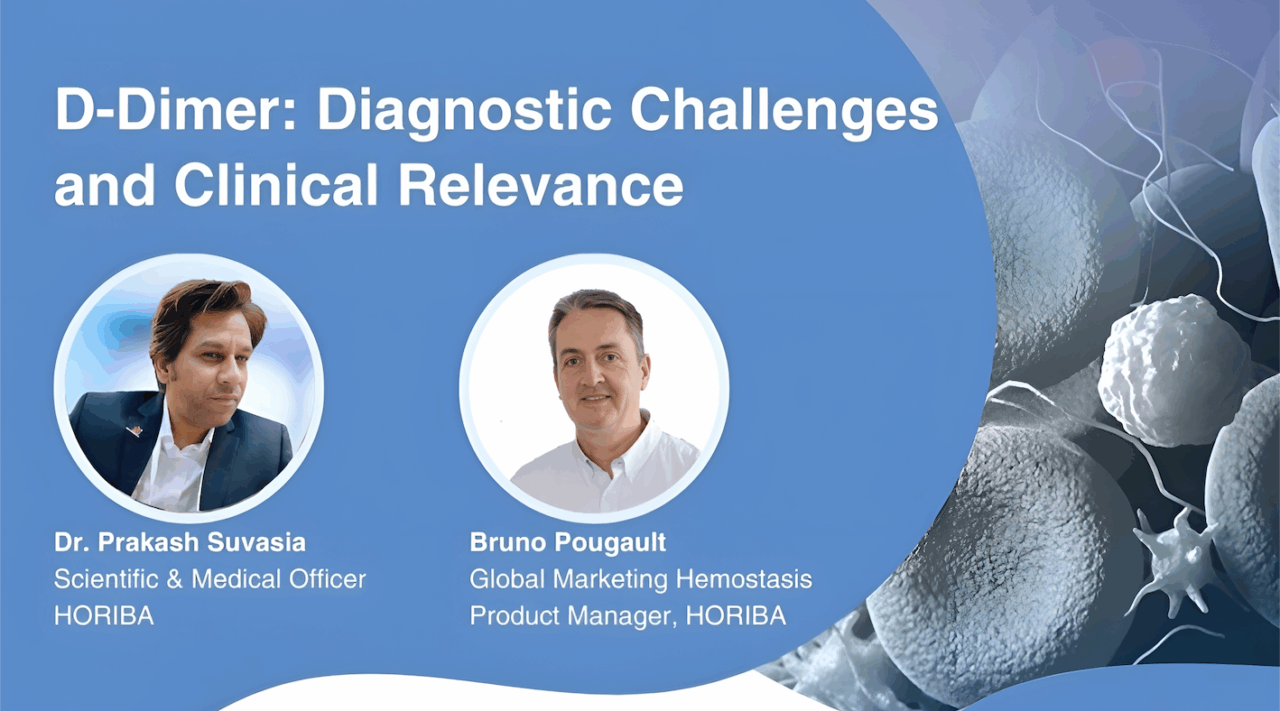
D Dimer Role in Coagulation Activation and Secondary Fibrinolysis
Bruno Pougault, Global Marketing Hemostasis Product Manager at HORIBA, reposted from Horiba on LinkedIn:
”D dimer is an important biomarker of coagulation activation and secondary fibrinolysis that is routinely used to rule out venous thromboembolism (VTE), and to evaluate the risk of VTE recurrence, as well as the optimal duration of anticoagulant therapy.”
Horiba for Healthcare shared on LinkedIn:
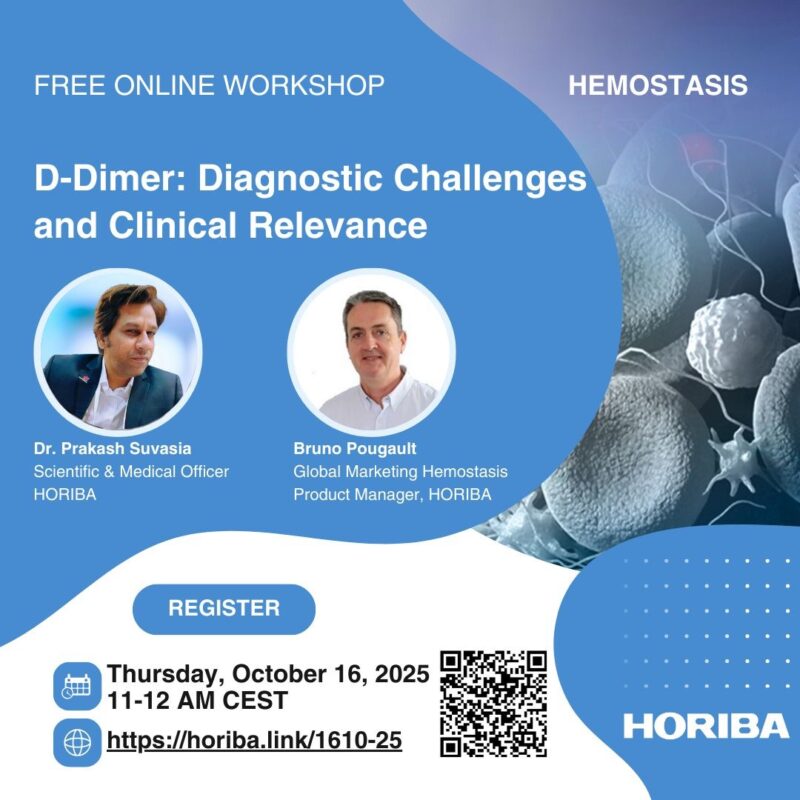
”[Register now!] Free Online Workshop
D-Dimer: Diagnostic Challenges and Clinical Relevance
Thursday, October 16, 11–12 AM CEST
Register here.
This online workshop will focus on D dimer, a byproduct of the blood clotting and breakdown process that serves as a marker of ongoing coagulation and fibrinolysis.
The session will explore its clinical use in ruling out deep vein thrombosis (DVT) and pulmonary embolism (PE), as well as the inherent challenges—such as poor specificity, false positives, and difficulties in interpretation, especially in older patients or those with conditions like COVID-19 or cancer.
Participants will learn how to improve diagnostic accuracy and patient management through the use of clinical pretest probability assessments.
The workshop will also discuss the application of age-adjusted D dimer thresholds and the importance of confirmatory imaging in guiding clinical decisions.
Who should attend?
Healthcare professionals involved in D-dimer testing and thromboembolic disease management, such as pathologists, hemostasis lab scientists, acute care nurses, emergency physicians, hospitalists, hematologists, cardiologists, geriatricians, general practitioners, and trainees in related specialties.”
Stay updated on all scientific advances in the field of thrombosis with Hemostasis Today.
-
Oct 13, 2026, 21:05Francisco Chacón-Lozsán: Heparin-Induced Thrombocytopenia – When an Anticoagulant Triggers Thrombosis
-
Oct 13, 2026, 21:04Aref Zribi: Isolated Tumor Thrombus and the Role of Prophylactic Anticoagulation
-
Oct 13, 2026, 21:01Alex Larson: Why Normal Bloodwork Does Not Always Tell the Whole Story
-
Oct 13, 2026, 20:58Juan Jauregui-Lozano: How Replication Stress Impairs Red Blood Cell Maturation
-
Oct 13, 2026, 20:55Caitlin Raymond: Understanding Platelet Refractoriness Before Ordering More Platelets
-
Oct 13, 2026, 20:54Sanja Seratlic: How Cow Feeding Systems Influence the Anti-Platelet Properties of Cheddar Cheese
-
Oct 13, 2026, 20:50Ruchika Goel: Cord Blood Red Blood Cells as a Physiologically Aligned Transfusion Strategy
-
Oct 13, 2026, 20:47Sophia Delicou: Strengthening Transfusion Safety Through Advanced Screening and Haemovigilance
-
Oct 13, 2026, 20:45Lydia Pecker: Alloimmunization and Transfusion Indications in Sickle Cell Disease Pregnancy