


Spider Venom Molecule Hi1a Could Transform Heart Attack and Stroke Treatment
Dato Capt. Mahesan Subramaniam, Co-Founder of United Health Tourism, posted on LinkedIn:
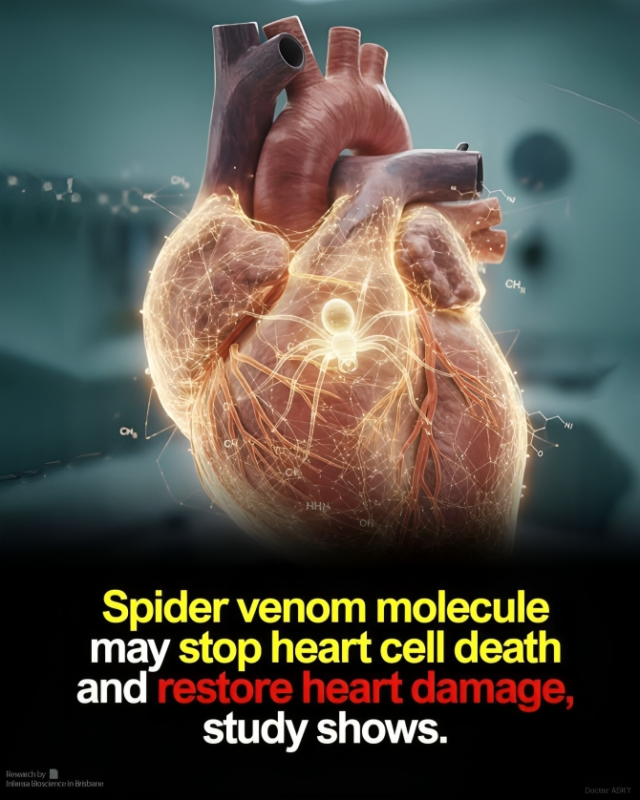
”Researchers in Australia have uncovered something powerful in the venom of the funnel-web spider that might help reduce tissue damage during heart attacks and strokes. They isolated a molecule called Hi1a, which blocks a special type of ion channel known as ASIC1a. These channels open when tissues lose oxygen, letting in molecules that make cells acidic and trigger cell death. By blocking these channels, Hi1a helps prevent that harmful “death signal” in heart and brain cells.
In lab tests with mice, injecting Hi1a after a stroke significantly reduced brain damage even when given hours after the event. Similar benefits were seen in tests of heart tissue under stress from low oxygen, and in donor hearts used for transplant studies. Importantly, Hi1a seems to act only in injured tissue, reducing risk of harm to healthy cells. Safety and dosing have met early benchmarks in preclinical models.
A synthetic version of Hi1a is being developed so it could be tested in humans as early as a few years from now. If all goes well, the drug might become a treatment given during or after heart attacks, helping preserve heart muscle and limit long-term damage.
Research by Infensa Bioscience in Brisbane․”
Stay updated with Hemostasis Today.
-
Sep 17, 2026, 13:52Ashley George: Blood Clots Remain the Leading Cause of Maternal Death in UK
-
Sep 17, 2026, 13:09Mehak Trehan: New Perspectives on Anemia Management in CKD
-
Sep 17, 2026, 10:08WFH 2027 Comprehensive Care Summit Opens Abstract Submissions – World Federation of Hemophilia
-
Sep 17, 2026, 09:56Marianne Yee: MySCDstory Expands Access to Multilingual Sickle Cell Education
-
Sep 17, 2026, 09:36Enewa Onoja: Platelet Satellitism Phenomenon, Three Misleading Counts
-
Sep 17, 2026, 09:22Emmanuel J Favaloro: Hemostasis and Thrombosis in Exercise and Athletes
-
Sep 17, 2026, 09:18Updated Iron Deficiency Diagnostic Guidelines – American Society of Hematology
-
Sep 17, 2026, 09:14Angela Weyand: ASH 2026 Iron Deficiency Guidelines
-
Sep 17, 2026, 08:18Anirban Sen Gupta: From Flow to Clot Insights Into Hemostasis and Thrombosis