

Tareq Abadl: Laboratory Diagnosis of Anemia
Tareq Abadl, Medical Laboratory Specialist and Director of the Blood Bank at Dr. Abdelkader Al-Mutawakkil Hospital, posted on LinkedIn:
“Laboratory Diagnosis of Anemia
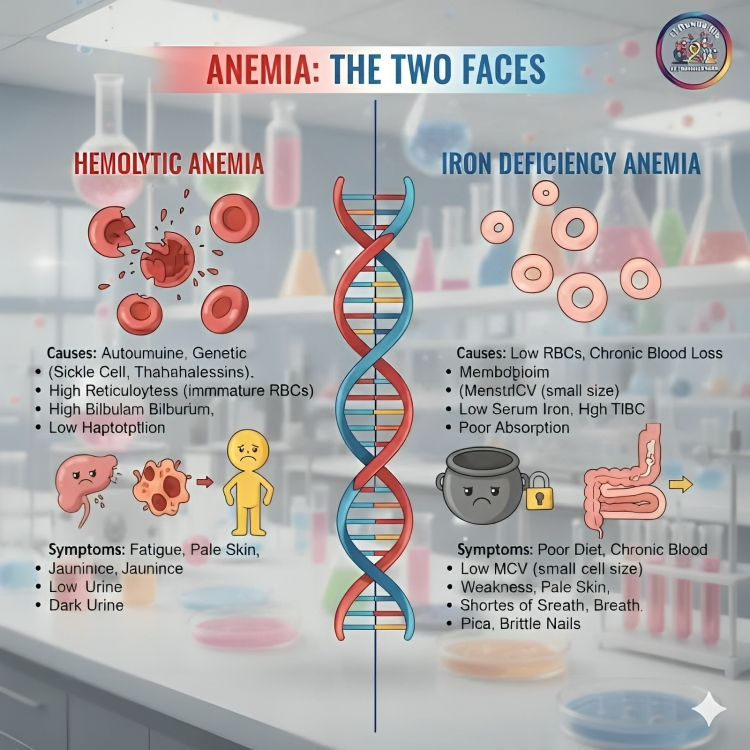
1. Iron Deficiency Anemia (IDA)
When iron deficiency is suspected, several tests must be evaluated together to get the full picture:
- Hemoglobin (Hb)
The iron-containing protein that carries oxygen.
Low Hb → early indicator of anemia.
- Hematocrit (Hct)
Measures the percentage of RBCs in blood.
Low Hct → possible iron deficiency.
- Ferritin
The main iron-storage protein.
Low ferritin → strongest marker of IDA.
- Serum Iron
Measures circulating iron in blood.
Low value supports the diagnosis but not enough alone.
- Total Iron-Binding Capacity (TIBC)
In IDA, TIBC increases because the body tries to capture more iron.
- Transferrin Saturation
Low saturation → low available iron.
- RBC Indices
MCV: Low (microcytic)
MCHC: Low (hypochromic)
All these tests together give a complete assessment of iron status and confirm Iron Deficiency Anemia.
2. Hemolytic Anemia (HA)
Hemolytic anemia is a completely different mechanism—RBCs are being destroyed. Key tests include:
- Hemoglobin (Hb)
Normal or low depending on severity.
- Reticulocyte Count
Elevated retics → bone marrow trying to compensate for RBC destruction.
- Peripheral Blood Smear
Fragmented or abnormal RBCs → evidence of hemolysis.
- Bilirubin (Indirect)
Increases due to breakdown of hemoglobin.
- Haptoglobin
Decreased because it binds free hemoglobin released during hemolysis.
- LDH (Lactate Dehydrogenase)
High levels indicate cell destruction.
- Direct Coombs Test
Positive result → immune-mediated hemolysis.
These tests clarify the type, cause, and severity of hemolysis before treatment decisions.
Summary
- Iron Deficiency Anemia → Iron profile + RBC indices
- Hemolytic Anemia → Hemolysis markers + Coombs test + Reticulocytes
Combining the right tests provides accurate diagnosis and guides precise treatment.”
Follow the latest in Hemostasis Today.
-
Sep 25, 2026, 13:32Gevorg Yaghjyan: Low Drug Levels, Higher Cardiovascular Risk in Lupus
-
Sep 25, 2026, 12:53Bastu Odoka: What Happened to Blood Donation?
-
Sep 25, 2026, 12:43Thomas Dayspring: Reshaping the Biology of Atherosclerotic Plaques with New Therapies
-
Sep 25, 2026, 12:14Garima Sharma: Community Clinical Linkages for Better Postpartum Cardiovascular Care
-
Sep 25, 2026, 10:49Shefina S: From Presenting to Hosting at TRANSCON 2026
-
Sep 25, 2026, 10:37Michelle Leona Cecil: Hemophilia Advocacy and the Power of Community
-
Sep 25, 2026, 10:13Michael Baria: Platelet Concentration and PRP Outcomes in Partial Rotator Cuff Tears
-
Sep 25, 2026, 08:55Hitarth Mehta: BHMS Students Gain Practical Exposure to Haemophilia Diagnosis
-
Sep 25, 2026, 07:25Varun Capoor: How Therapeutic Apheresis and Transfusion Medicine Can Complement Clinical Management in SCD