

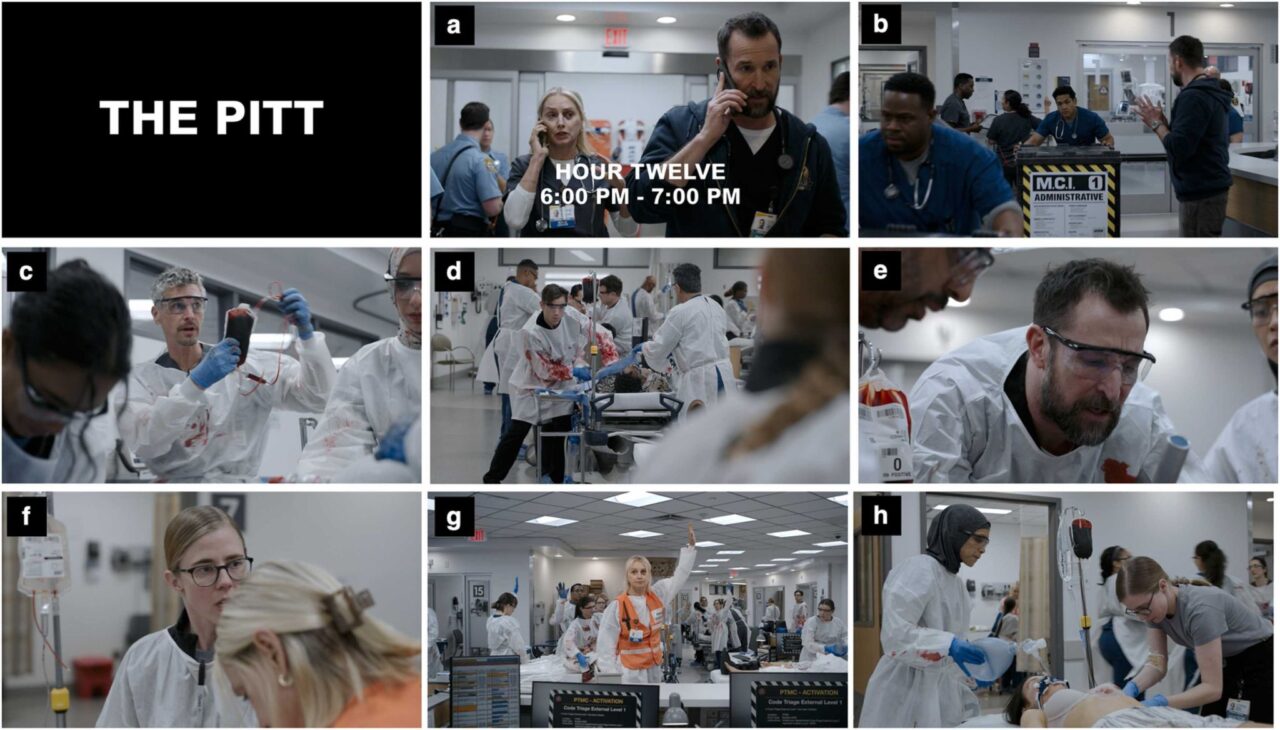
Massive Hemorrhage Protocols in Mass Casualty Care: Lessons Highlighted by The Pitt
Andrew Petrosoniak, Emergency Physician and Trauma Team Leader at St. Michael’s Hospital, shared a post on LinkedIn:
“Thank you Sheharyar Raza and colleagues for highlighting how The Pitt portrayed Massive Hemorrhage Protocols (MHP) in a mass casualty situation.
If you haven’t watched the show, it’s well worth it. Closest thing I’ve ever seen to accurate portrayal of the emergency department.
To summarize the 5 key points about MHP made by the authors:
1. Emergency transfusion is high-stakes, chaotic, and error-prone in real life
2. Pre-planned protocols matter especially during acute blood shortages
3. Modern practice has evolved: permissive RhD+ use, intraosseous access, and whole blood are game-changers
4. Civilian walking blood banks are gaining traction for austere and surge scenarios
5. And finally, it reminds us that blood saves lives AND donors are heroes
Check out the article.”
Title: “Go with O Pos” – Blood Transfusion During Mass – Casualty in The Pitt
Authors: Sheharyar Raza, Garrett S. Booth, Jeremy W. Jacobs
Find more posts on Hemostasis Today.
-
Oct 17, 2026, 02:00How Antiphospholipid Syndrome Can Affect the Adrenal Glands – APS Foundation of America
-
Oct 17, 2026, 01:59Liza-Marie Johnson: How Far Should Clinicians Go to Influence Parents’ Decisions?
-
Oct 17, 2026, 01:54Jim Hoffman: The Importance of Self-Advocacy and Understanding Autoimmune Mechanisms
-
Oct 17, 2026, 01:53Kristopher Jonas: Listening to Patients and Recognizing the Donors Who Make Treatment Possible
-
Oct 16, 2026, 18:12Adil Nawaz: Extended Dual Antiplatelet Therapy After Coronary Stenting
-
Oct 16, 2026, 17:50Elad Asher։ STORM-PE Shows Functional Benefits of Thrombectomy
-
Oct 16, 2026, 17:32Shruthi Narayan: STORM-PE and STRIKE-PE Studies Advance Understanding of Recovery After Pulmonary Embolism
-
Oct 16, 2026, 17:22Wolfgang Miesbach։ What a Near-Perfect FISH Score Fails to See
-
Oct 16, 2026, 17:06Troels Wienecke: Connecting Myeloproliferative Disease and Ischemic Stroke