


Jin Q Gives a Summary of 2025’s Most Impactful Cell and Gene Therapy Milestones
Jin Q, Director, Market Development and Strategy at PackGene Biotech, Inc., reposted from PackGene Biotech, Inc. on LinkedIn:
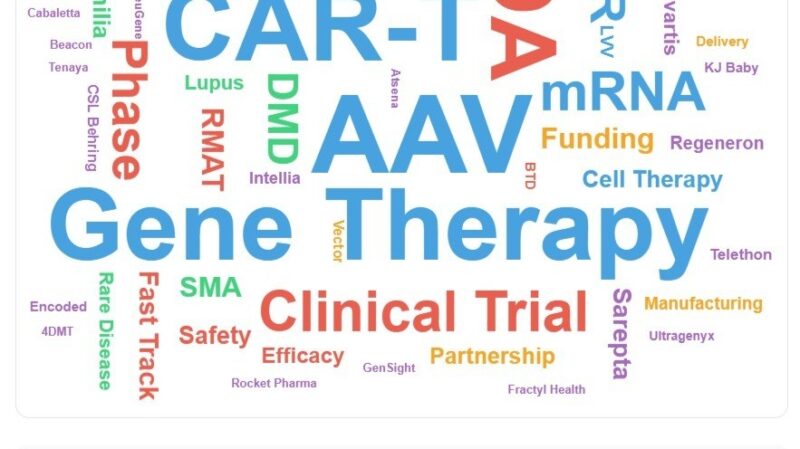
”I summarized the 2025’s Most Impactful Cell and Gene Therapy Milestones:
First personalized N-of-1 CRISPR therapy successfully treated an infant with CPS1 deficiency using mRNA-based adenine base editing (NEJM milestone).
First FDA-approved nonprofit gene therapy: Telethon’s lentiviral stem cell therapy (Waskyra) for Wiskott–Aldrich syndrome.
Dual-AAV hearing restoration achieved as Regeneron’s DB-OTO restored functional hearing in congenitally deaf children.
Five-year durability validated for CSL Behring’s Hemgenix, confirming long-term efficacy of one-time AAV gene therapy in hemophilia B.
Non-viral base editing advances with Beam’s BEAM-101 showing curative potential in sickle cell disease without DNA double-strand breaks.
Gene regulation emerges as a modality as Encoded Therapeutics’ ETX101 delivered major seizure reduction in Dravet syndrome.
Expanded SMA access following FDA approval of intrathecal Zolgensma for older pediatric patients.
Huntington’s gene therapy momentum tempered as uniQure’s AMT-130 gained Breakthrough status but faced late-stage regulatory delays.
CAR-T therapies expand beyond oncology, delivering deep remissions in lupus, myasthenia gravis, and stiff person syndrome.
In vivo CAR-T and RNA reprogramming gain traction, signaling a shift away from ex vivo cell manufacturing.
Regulatory acceleration intensifies, with widespread Breakthrough, Fast Track, and RMAT designations across CGT modalities.
DMD gene therapy faces renewed scrutiny, following safety events and mixed Phase 3 outcomes with systemic AAV delivery.
Cardiac gene therapy matures, with clinical progress in inherited cardiomyopathies and regenerative heart failure programs.
Ocular gene therapy enters commercialization phase, supported by durable efficacy, regulatory confidence, and pharma partnerships.
AAV expands into metabolic and neurodegenerative diseases, including late-stage GSDIa, ALS, and pancreas-targeted GLP-1 gene therapies.”
Quoting PackGene Biotech, Inc.‘s post:
”2025: A Landmark Year for Cell and Gene Therapy – Key Milestones and Insights
At PackGene, we’ve closely monitored these developments. Our latest Learning Center article, “2025’s Most Impactful Cell and Gene Therapy Milestones” provides a comprehensive breakdown of the successes and challenges that defined the year.
Key Highlights from 2025 include:
- Precision Medicine Firsts: The successful administration of a bespoke CRISPR base-editing therapy for an infant with CPS1 deficiency.
- Regulatory Milestones: Landmark FDA approvals, including the first non-profit developed lentiviral gene therapy.
- Clinical Success: Five-year data showing functional cures for Hemophilia and major progress in AAV9-mediated delivery for SMA.
- Pipeline Expansion: A significant surge in AAV clinical trials.”
Find the full article here.
Stay updated with Hemostasis Today.
-
Oct 21, 2026, 09:43Ahmad Gharehbaghian: How Can Blood Supplies Be Sustained During a Crisis?
-
Oct 21, 2026, 09:30Adrián Dante De Angelis: Research That Opens New Possibilities for Recurrent iTTP
-
Oct 21, 2026, 09:13Jarod Horobin: Blood 2026 – Connecting Science and People
-
Oct 21, 2026, 08:35Raeeda Gheewala: VTE in Athletes – Risks Beyond the Playing Field
-
Oct 21, 2026, 08:29Andreas Kronbichler: The Changing Landscape of CV Risk in ANCA-Associated Vasculitis
-
Oct 21, 2026, 08:21Pham Quy: Taking Stroke Awareness Beyond Hospitals and Into the Community
-
Oct 21, 2026, 07:15Mahmoud Saad: Successful Mechanical Thrombectomy for Right Atrial Thrombosis
-
Oct 21, 2026, 06:55Hunain Shahbaz: Extended Dual Antiplatelet Therapy Beyond 12 Months After Drug-Eluting Stent Implantation
-
Oct 21, 2026, 06:19Dawood Findakly: When Should Anticoagulation Be Held or Resumed?