

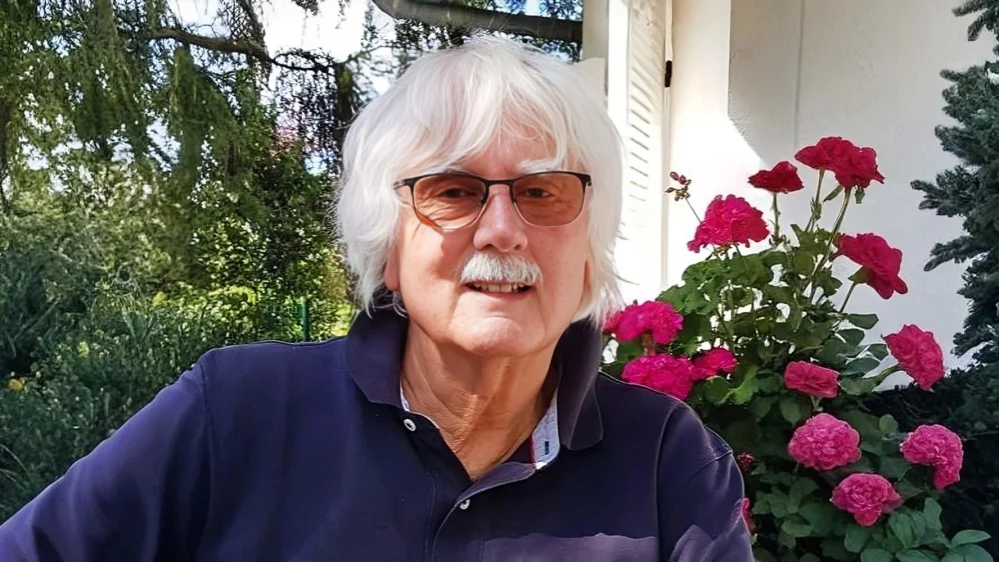
Alan Nurden: Platelet Defects Explain Bleeding in EHDS Patients
Alan Nurden, Emeritus Research Director at CNRS, Co-Founder of the French National Reference Centre for Inherited Platelet Disorders (CRPP), shared a post on LinkedIn about a recent article by Mariia Kumskova et al, published in Blood:
“While the Ehlers-Danlos syndrome (EHDS) is basically defined as a connective tissue disorder linked to increased elasticity many patients also report easy bruising and hemorrhagic problems. In this online paper in Blood, Mariia Kumskova and her colleagues describe how the platelet defects in EHDS patients are caused by decreased αIIbβ3 activation due to abnormally low talin-1 phosphorylation and a decreased presence of GPVI and PAR1, receptors for collagen and thrombin respectively.
As these signaling abnormalities were reproduced in a mouse (Col5a1+/-) model, it is therefore probable that the platelet defects directly explain the bleeding confirming that EHDS patients also have an inherited platelet disorder.
Interestingly, just as in Glanzmann thrombasthenia (where alphaIIbbeta3 function is absent), previous studies have shown that while thrombotic risk is reduced for EHDS patients, rare cases still occur and the general cardiovascular burden is not mitigated. An original and impressive study.”
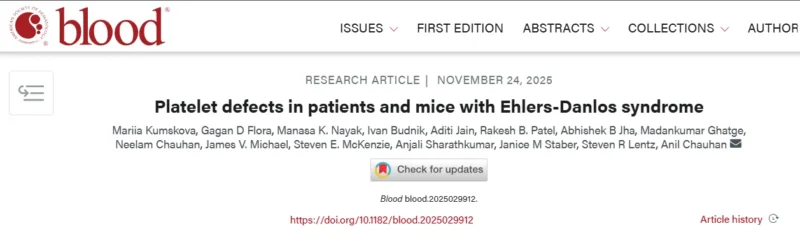
Title: Platelet defects in patients and mice with Ehlers-Danlos syndrome
Authors: Mariia Kumskova, Gagan D Flora, Manasa K. Nayak, Ivan Budnik, Aditi Jain, Rakesh B. Patel, Abhishek B Jha, Madankumar Ghatge, Neelam Chauhan, James V. Michael, Steven E. McKenzie, Anjali Sharathkumar, Janice M Staber, Steven R Lentz, Anil Chauhan
Read the Full Article on Blood.
Other articles featuring Alan Nurden on Hemostasis Today.
-
Oct 10, 2026, 17:58Archo Farzana Batool: Exploring Medical Writing Through an Article on Iron Deficiency Anemia
-
Oct 10, 2026, 17:53Assessing Frailty in Adults With Hemophilia – JTH
-
Oct 10, 2026, 17:52Fatma Sadeghi: Reducing Maternal Health Inequalities Through Nursing Advocacy
-
Oct 10, 2026, 17:50Grzegorz Hensler: How Apheresis Transformed Blood Cell Separation and Collection
-
Oct 10, 2026, 17:47Hemant K Sharma: Japan’s Universal Artificial Blood Research – A Potential Breakthrough in Transfusion Medicine
-
Oct 10, 2026, 17:40John Strouse: Learning About Bleeding Disorders and Sickle Cell Disease at FWGBD
-
Oct 10, 2026, 17:34Mae Caime: Speaking at the Annual Women’s Retreat for the Hemophilia Community in Florida
-
Oct 10, 2026, 17:30Chokri Ben Lamine: PNH beyond the Textbook Triad
-
Oct 10, 2026, 17:29Ruah Alyamany: Thrombosis and Anticoagulation in Hematological Malignancies at SOHO KSA 2026