

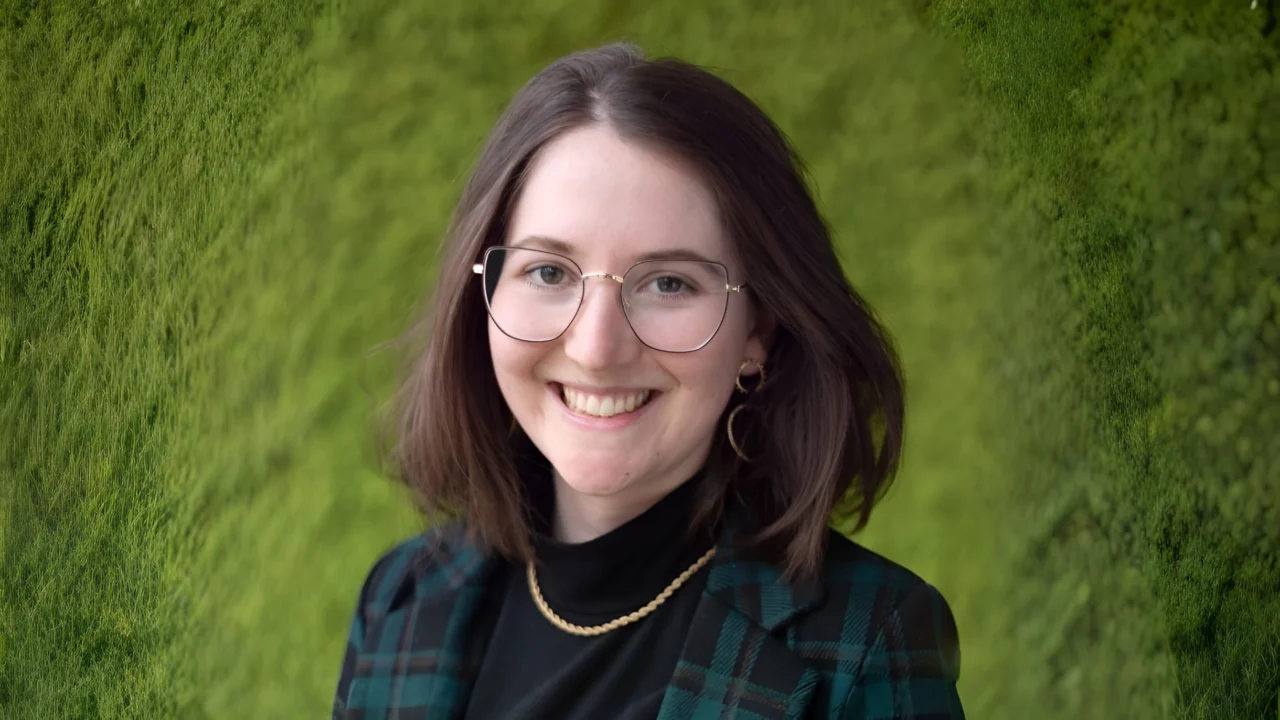
Isabel Bär: A Novel Gene Therapy Strategy for Heterozygous VWD
Isabel Bär, PhD candidate of Department of Hematology at Erasmus University Medical Centre, shared on LinkedIn about a recent article she and her colleagues co-authored, adding:
”Von Willebrand disease is genetically messy… hundreds of variants and multiple mechanisms complicate everything from diagnosis to therapy.
So how do you design a gene therapy for that?
- Can we tackle hundreds of different VWF mutations without designing hundreds of different therapies?
- Can we fix a disease by removing something rather than adding?
- What if the simplest strategy is taking a step back and targeting entire alleles instead of individual mutations?
Turns out: It might be!
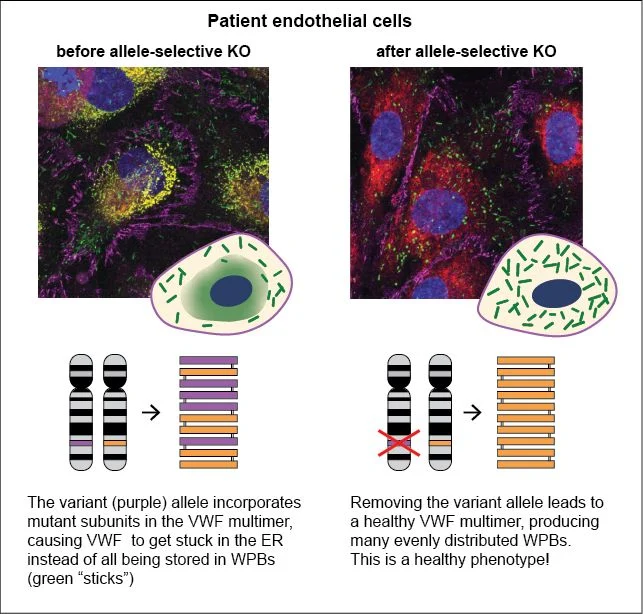
In our new paper we propose a novel gene therapy strategy for heterozygous VWD.
By selectively removing the mutant allele, the patient-derived endothelial cells reverted to a healthy VWF phenotype!
And the cool part is that you don’t even have to target the mutation itself but you can just target a common heterozygous SNP, which will be enough to eliminate the entire allele!
If you want to see how this worked in type 2A and type 2B VWD patient‑derived endothelial cells, check out our paper published in Blood Advances:
Thanks to everyone for their contributions to this work!
Especially to Stijn Groten for his mass-spec expertise and my supervisor Ruben Bierings!
This project was so much fun!”
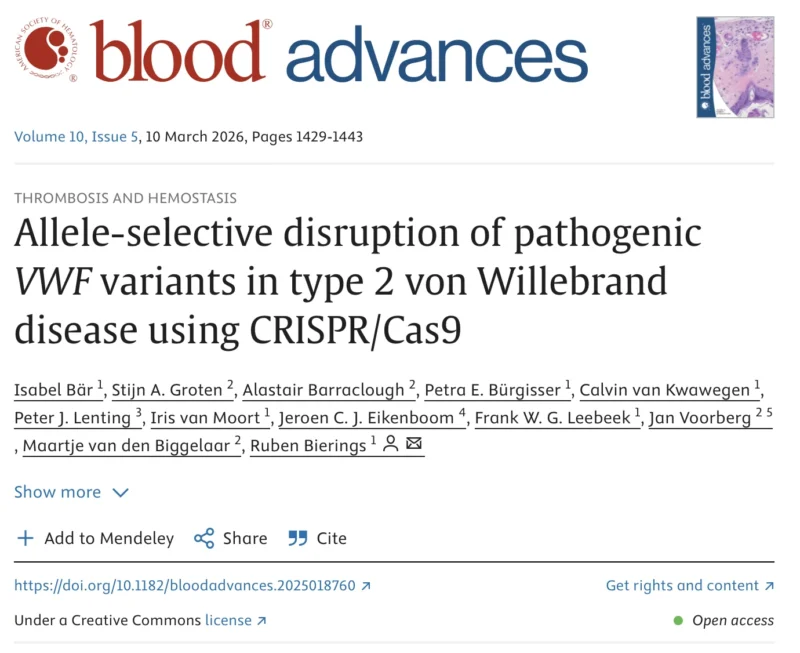
Title: Allele-selective disruption of pathogenic VWF variants in type 2 von Willebrand disease using CRISPR/Cas9
Authors: Isabel Bär, Stijn A. Groten, Alastair Barraclough, Petra E. Bürgisser, Calvin van Kwawegen, Peter J. Lenting, Iris van Moort, Jeroen C. J. Eikenboom, Frank W. G. Leebeek, Jan Voorberg, Maartje van den Biggelaar, Ruben Bierings
Read the Full Article on Blood Advances
Stay updated on all scientific advances with Hemostasis Today.
-
Oct 16, 2026, 10:07Habib Bennaceur: Building a Stronger Care Pathway for Sickle Cell Disease in India
-
Oct 16, 2026, 09:59Tareq Abadl: A Simple Guide to Blood Collection Tubes
-
Oct 16, 2026, 09:50Mona Alfaraj: Distinguishing HCL from SMZL in Bone Marrow
-
Oct 16, 2026, 09:44New International Consensus on Covert Brain Infarction – International Journal of Stroke
-
Oct 16, 2026, 06:17Neha Rastogi Panda: Precision Diagnosis and Organ Preservation in Splenic Abscess
-
Oct 16, 2026, 05:53Alejandro González Veliz: Looking Beyond Coronary Anatomy to Understand Ischemia
-
Oct 16, 2026, 04:16Asmaa M. Gouda: Advancing Blood Bank Leadership at Alexandria University Hospitals
-
Oct 16, 2026, 03:52Saja Al-Zamili: Minimally Invasive Hematoma Evacuation in Intracerebral Hemorrhage
-
Oct 16, 2026, 03:13Bhumika Satija: Beyond the Diploma A Growing Passion for Blood Banking and Transfusion Medicine