


Georgiana Toma: Why Nutrition is a Hematologist’s Secret Weapon
Georgiana Toma, Hematology Resident at Bucharest Emergency University Hospital, shared a post on LinkedIn:
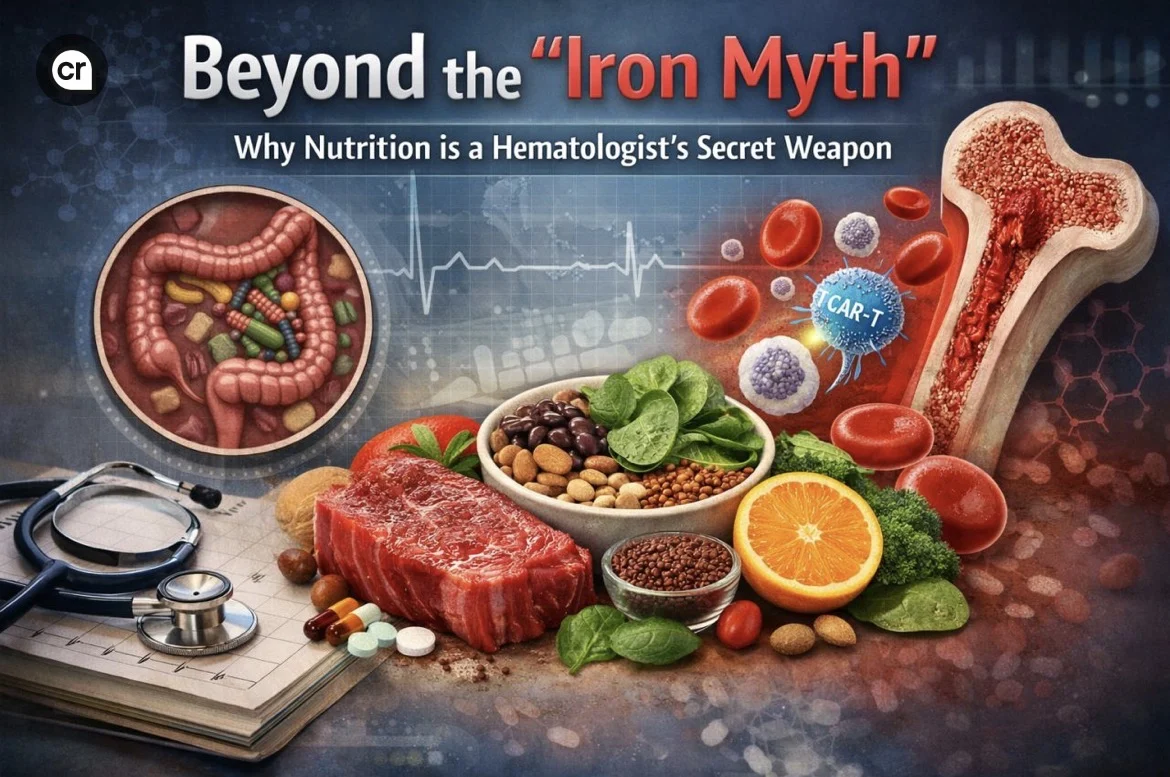
“Nutrition is a Hematologist’s secret weapon
In my clinical days, the most common question I get isn’t about the latest monoclonal antibody. It’s: ‘Doctor, what should I eat to fix my blood?’
It’s a question born from a desire for agency—patients wanting to take part in their own recovery. And while ‘eating your greens’ is a start, hematology requires a much more strategic approach to the plate.
1. The Bioavailability Trap
We often treat iron deficiency anemia as a simple math problem:
Low iron benefits from iron-rich foods leads to success.
In reality, it’s more of a chemistry problem.
Many patients diligently consume iron-rich meals, but wash them down with coffee or tea. Polyphenols and phytates in these drinks can significantly reduce the absorption of non-heme iron, limiting the bioavailability of otherwise iron-rich meals.
Emerging research suggests that the gut microbiome may play an important role in modulating systemic iron homeostasis. A healthy gut ecosystem is not only essential for digestion—it may also influence effective erythropoiesis.
2. Nutrition as Adjuvant Therapy in Hematologic Malignancies
When dealing with leukemia, lymphoma, or multiple myeloma, nutrition shifts from ‘wellness advice’ to a genuine treatment-support strategy.
Cancer-related muscle wasting (cachexia) represents one of the most significant barriers to maintaining chemotherapy intensity and treatment tolerance. A high-protein, calorie-adequate diet is not about weight—it is about preserving the structural and metabolic reserves that allow patients to withstand full treatment cycles.
Emerging research is also exploring the gut–bone marrow axis, where microbial metabolites interact with immune pathways and hematopoiesis. Early data suggest that microbiome diversity may even influence responses to modern therapies, including immunotherapy and cellular therapies.
The bone marrow is one of the most metabolically active tissues in the body. As clinicians, we shouldn’t only treat the blood—we must also ensure that the factory producing it has the resources it needs to function.”
Stay updated with Hemostasis Today.
-
Sep 25, 2026, 13:32Gevorg Yaghjyan: Low Drug Levels, Higher Cardiovascular Risk in Lupus
-
Sep 25, 2026, 12:53Bastu Odoka: What Happened to Blood Donation?
-
Sep 25, 2026, 12:43Thomas Dayspring: Reshaping the Biology of Atherosclerotic Plaques with New Therapies
-
Sep 25, 2026, 12:14Garima Sharma: Community Clinical Linkages for Better Postpartum Cardiovascular Care
-
Sep 25, 2026, 10:49Shefina S: From Presenting to Hosting at TRANSCON 2026
-
Sep 25, 2026, 10:37Michelle Leona Cecil: Hemophilia Advocacy and the Power of Community
-
Sep 25, 2026, 10:13Michael Baria: Platelet Concentration and PRP Outcomes in Partial Rotator Cuff Tears
-
Sep 25, 2026, 09:49Haley Coleman: Volunteering to Support Hemophilia Awareness
-
Sep 25, 2026, 08:55Hitarth Mehta: BHMS Students Gain Practical Exposure to Haemophilia Diagnosis