

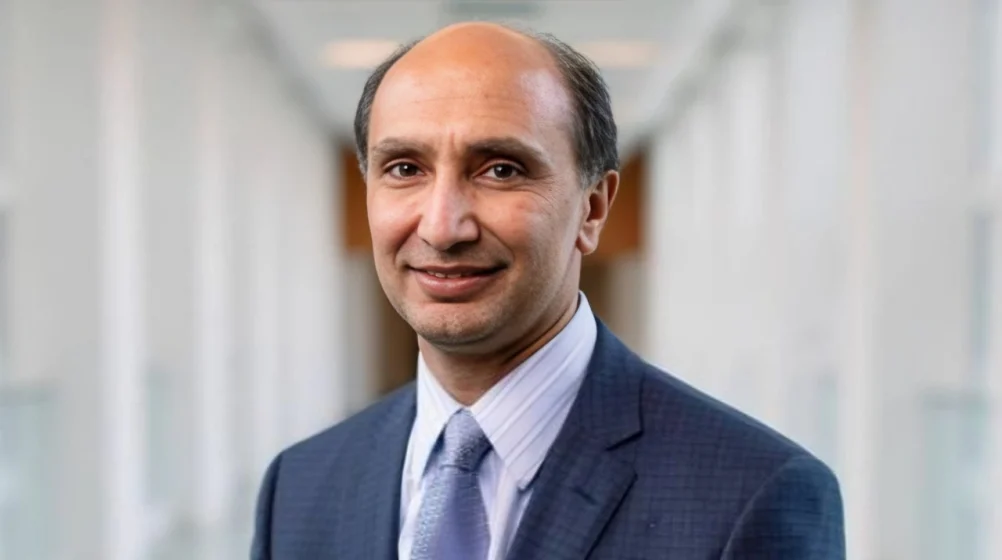
Vijay Shah: Increasing Value of AI-Based Assessment in Cardiovascular Risk Prediction
Vijay Shah, Kinney Executive Dean of Research Carol Gatton, Professor of Medicine at Mayo Clinic, shared a post on LinkedIn:
“Including AI-derived heart fat measurement improves accuracy of cardiovascular disease risk prediction.
Francisco Lopez-Jimenez and Zahra Esmaeili applied AI to coronary artery calcium scans to measure fat surrounding the heart in data gathered from nearly 12,000 adults for approximately 16 years.
The findings show that the volume of heart fat could be used independently to predict cardiovascular events.
It significantly improved the overall accuracy of long-term risk prediction when combined with the coronary artery calcium score and the PREVENT equation, especially among patients in low-risk categories.”
Stay updated with Hemostasis Today.
-
Oct 22, 2026, 14:45Seyed Mehrab Safdari: Prenatal Diagnosis in Hemophilia – Two Decades of Progress and Remaining Challenges
-
Oct 22, 2026, 14:39Mahmoud Abdelnabi: Evaluating the Evidence on Elevated Lp(a) and VTE Before Clinical Translation
-
Oct 22, 2026, 14:34David McIntosh: Fundamental Flaws in National Blood Systems Are Root Causes of Failure
-
Oct 22, 2026, 14:32Aurelio Maggio: Bridging Scientific Progress and Equitable Access to SCD Care in Sub-Saharan Africa
-
Oct 22, 2026, 14:26Khaled Musallam: Longevity and Healthy Aging in Thalassemia
-
Oct 22, 2026, 14:26Deise Catamo Vaz: Two Years of Growth and a New Way of Seeing the World of Stroke
-
Oct 22, 2026, 14:24Yara Mohamed: A Silent Killer Plots his Victim’s Death Over Years
-
Oct 22, 2026, 14:19Shailendra Singh: Two Different Pulmonary Embolism Cases, One Critically Important Lesson
-
Oct 22, 2026, 14:14Caitlin Raymond: Estimating Infection Rates After Therapeutic Plasma Exchange in a Large Real-World Population