

Tareq Abadl: Sickle Cell Anemia is Not Just Hemoglobin Deficiency, It’s a Genetic Mutation
Tareq Abadl, Medical Laboratory Specialist and Director of the Blood Bank at Dr. Abdelkader Al-Mutawakkil Hospital, shared a post on LinkedIn:
“Many people think all types of anemia are the same, but Sickle Cell Anemia is completely different!
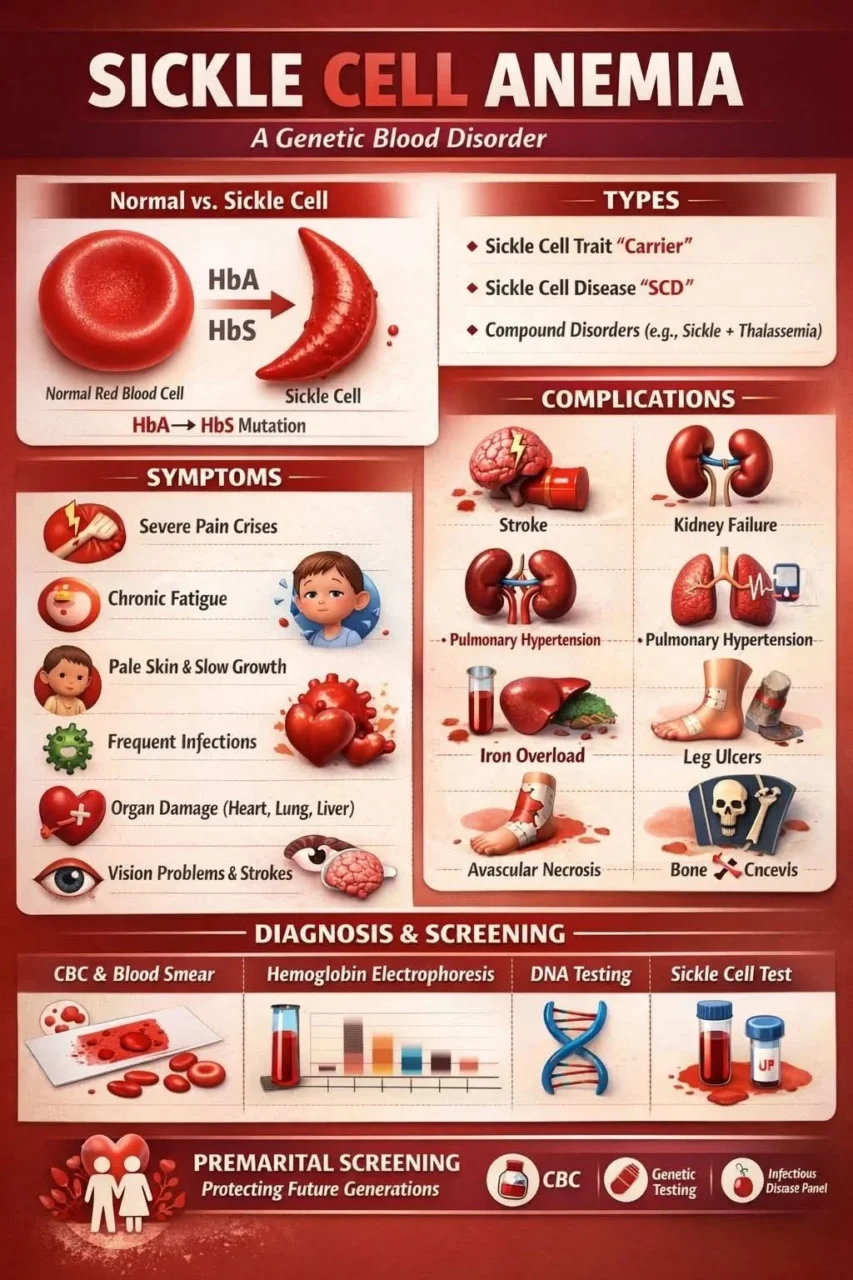
It’s not just a hemoglobin deficiency — it’s a genetic mutation that changes red blood cells from round to ‘crescent’ or ‘sickle’ shaped.
What Happens?
The mutation occurs in the beta-globin gene, producing HbS instead of normal HbA.
Sickle cells:
- Live only 10–20 days instead of 120.
- Stick together and block small blood vessels.
- Reduce oxygen delivery to tissues, causing pain crises and serious complications.
Types:
- Sickle Cell Trait:
Carrier, usually symptom-free, but may show problems under stress (low oxygen, dehydration, intense exercise).
- Sickle Cell Disease:
Fully symptomatic, requires lifelong follow-up.
Compound Heterozygotes: e.g., Sickle and Thalassemia or Sickle and HbC, producing variable disease severity.
Symptoms:
- Chronic anemia and fatigue
- Sudden pain crises in bones and joints
- Pale skin and delayed growth in children
- Enlarged spleen and liver
- Heart and lung problems due to low oxygen
- Increased infection risk
- Vision problems or mini-strokes
- In males: Priapism (painful prolonged erection)
- Gallstones from continuous red cell breakdown
- Chronic leg ulcers due to poor circulation
- Delayed puberty in adolescents
Diagnosis:
1. CBC:
- Low Hb, abnormal red cell shapes, sometimes high WBC and platelets.
2. Peripheral Smear:
- Shows sickled cells clearly
3. Hemoglobin Electrophoresis / HPLC:
- Trait:
Normal HbA + small HbS fraction.
- Disease:
HbS dominant, HbA absent or very low.
4. DNA Analysis:
Confirms the genetic mutation.
5. Screening Tests:
Sickling test or Solubility test for rapid detection.
Long-Term Complications
- Iron overload from repeated transfusions
- Stroke or cerebral infarction
- Pulmonary hypertension and breathing difficulties
- Renal failure
- Vision loss from blocked retinal vessels
- Frequent infections due to immune dysfunction
- Leg ulcers from poor circulation
- Delayed puberty and growth
- Psychological stress from chronic pain and social stigma
Premarital Screening in Egypt:
- Mandatory and free under the ‘100 Million Health’ initiative.
- Includes CBC, blood group, Rh factor, infectious disease tests, and genetic screening for Sickle Cell and Thalassemia.
- Results are ready within two weeks and discussed confidentially with each partner.
- Goal: Protect future generations and detect chronic or infectious diseases early.
Role of Society:
- Spread awareness that genetic testing isn’t a luxury – it’s a necessity for protecting future generations.
- Break the stigma around hereditary diseases.
- Support awareness programs in schools and universities.
- Encourage families to maintain regular medical follow-up for affected children.
- Provide psychological and social support to help patients live normal lives.”
Other posts featuring Tareq Abadl on Hemostasis Today.
-
Sep 25, 2026, 10:49Shefina S: From Presenting to Hosting at TRANSCON 2026
-
Sep 25, 2026, 10:37Michelle Leona Cecil: Hemophilia Advocacy and the Power of Community
-
Sep 25, 2026, 10:13Michael Baria: Platelet Concentration and PRP Outcomes in Partial Rotator Cuff Tears
-
Sep 25, 2026, 09:49Haley Coleman: Volunteering to Support Hemophilia Awareness
-
Sep 25, 2026, 08:55Hitarth Mehta: BHMS Students Gain Practical Exposure to Haemophilia Diagnosis
-
Sep 25, 2026, 07:25Varun Capoor: How Therapeutic Apheresis and Transfusion Medicine Can Complement Clinical Management in SCD
-
Sep 25, 2026, 07:14Manshi Kesharwani: SAK-GQDs Modulate Thrombus Burden and Endothelial Function in Deep Vein Thrombosis
-
Sep 25, 2026, 06:20Farjah Hassan Algahtani: How Can We Better Identify Patients at Risk of Blood Clots after Metabolic and Bariatric Surgery?
-
Sep 25, 2026, 05:59Carla Lewis: Kids Conquering Sickle Disease Joins Nemours Children’s Hospital for 2nd Annual Awareness Event