

Yazhini Selvaraj: What is Plasmapheresis?
Yazhini Selvaraj, Medical Student at Vinayaka Mission’s Research Foundation – University, shared a post on LinkedIn:
“Plasmapheresis
Definition
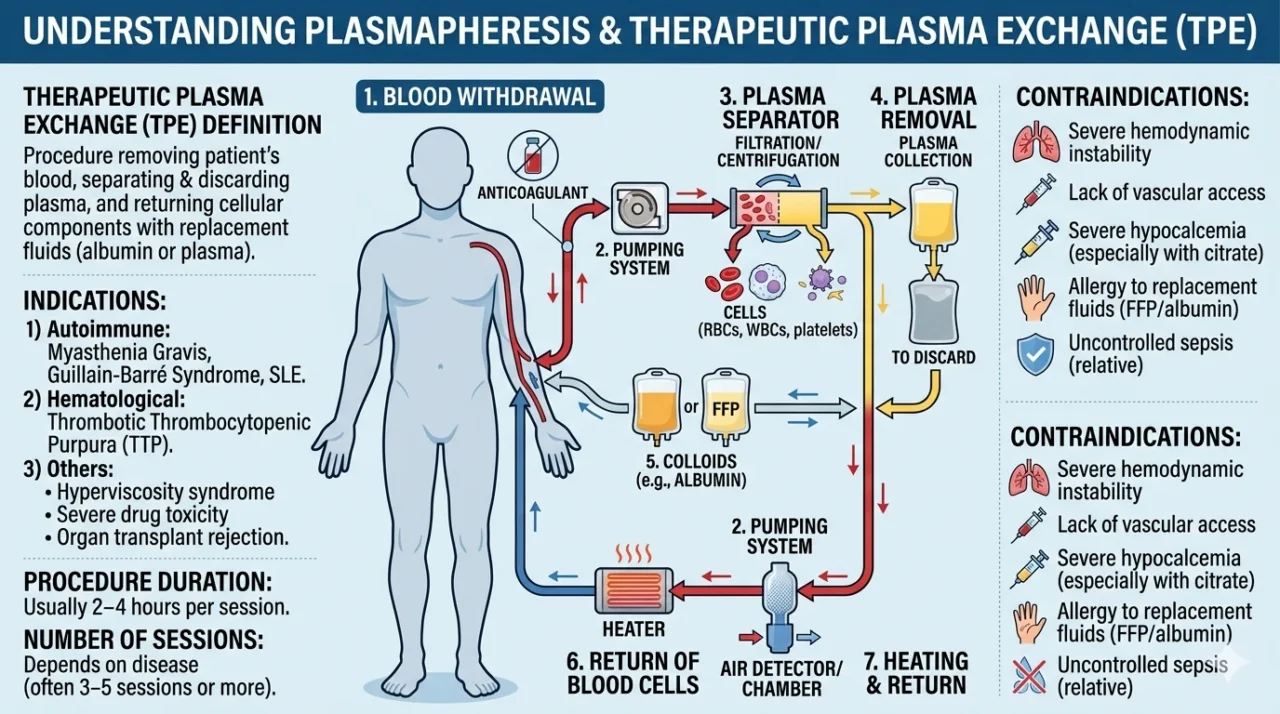
Therapeutic Plasma Exchange (TPE) is a procedure in which a patient’s blood is removed, plasma is separated and discarded, and the cellular components are returned along with replacement fluids such as albumin or plasma.
Indications
1.Autoimmune diseases
- Myasthenia Gravis
- Guillain-Barré Syndrome
- Systemic Lupus Erythematosus
2.Hematological disorders
- Thrombotic Thrombocytopenic Purpura
3.Others
- Hyperviscosity syndrome
- Severe drug toxicity
- Organ transplant rejection
Contraindications
- Severe hemodynamic instability
- Lack of vascular access
- Severe hypocalcemia (especially with citrate use)
- Allergy to replacement fluids (FFP/albumin)
- Uncontrolled sepsis (relative)
Duration of Procedure
Usually 2–4 hours per session
Number of sessions:
- Depends on disease (often 3–5 sessions or more
Procedure
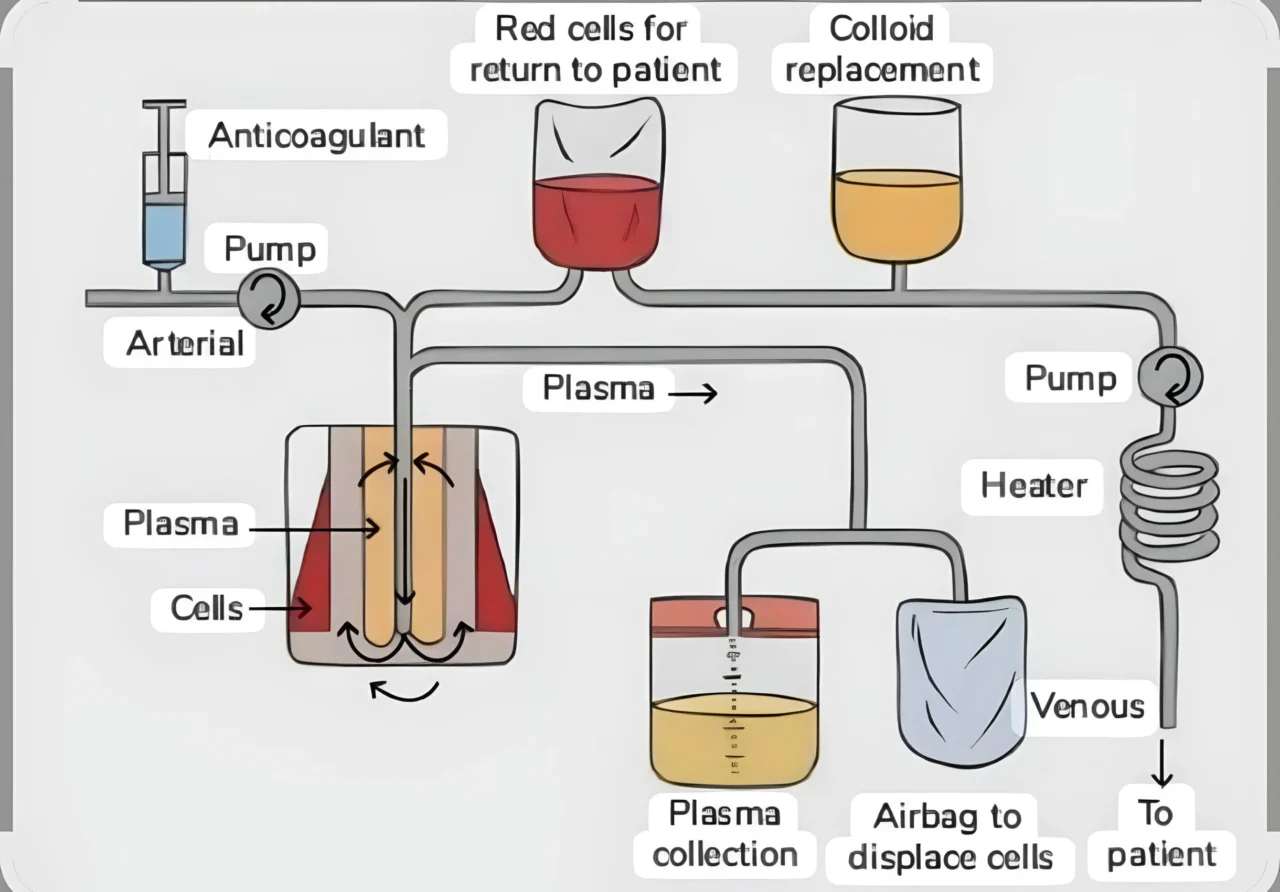
1. Blood withdrawal (Arterial line)
- Blood is taken from the patient through an arterial line.
- An anticoagulant (usually Heparin or citrate) is added to prevent clotting in the circuit.
2. Pumping system
- A pump moves the blood through the extracorporeal circuit at a controlled rate.
3. Plasma separator (Filter/Centrifuge)
Blood enters a plasma separator:
Separates into:
- Plasma (liquid part – contains antibodies, toxins, proteins)
- Cells (RBCs, WBCs, platelets)
- Mechanism can be filtration or centrifugation.
4. Plasma removal
- The separated plasma is discarded or collected (shown as ‘plasma collection’).
- This removes harmful substances (e.g., autoantibodies, immune complexes).
5. Replacement fluid
- Lost plasma volume is replaced with:
- Colloids (e.g., albumin)
- Sometimes fresh frozen plasma (FFP)
- This maintains blood volume and oncotic pressure.
6. Return of blood cells
- Red blood cells and other cells are returned to the patient.
- An air bag/chamber helps push the blood safely and prevent air embolism.
7. Heating and return (Venous line)
Blood passes through a heater to maintain body temperature.
Finally, it returns to the patient via the venous line.”
Stay updated with Hemostasis Today.
-
Sep 25, 2026, 13:50Alejandro González Veliz: Beyond the Golden Hour in Stroke Care
-
Sep 25, 2026, 13:32Gevorg Yaghjyan: Low Drug Levels, Higher Cardiovascular Risk in Lupus
-
Sep 25, 2026, 12:53Bastu Odoka: What Happened to Blood Donation?
-
Sep 25, 2026, 12:43Thomas Dayspring: Reshaping the Biology of Atherosclerotic Plaques with New Therapies
-
Sep 25, 2026, 12:14Garima Sharma: Community Clinical Linkages for Better Postpartum Cardiovascular Care
-
Sep 25, 2026, 10:49Shefina S: From Presenting to Hosting at TRANSCON 2026
-
Sep 25, 2026, 10:37Michelle Leona Cecil: Hemophilia Advocacy and the Power of Community
-
Sep 25, 2026, 10:13Michael Baria: Platelet Concentration and PRP Outcomes in Partial Rotator Cuff Tears
-
Sep 25, 2026, 09:49Haley Coleman: Volunteering to Support Hemophilia Awareness