


Spelile Mutupira/LinkedIn
May 26, 2026, 03:02
Spelile Mutupira: Process of Blood Clotting After Injury
Spelile Mutupira, Medical Laboratory Technologist, shared a post on LinkedIn:
“The coagulation cascade is one of the body’s most fascinating defense mechanisms.
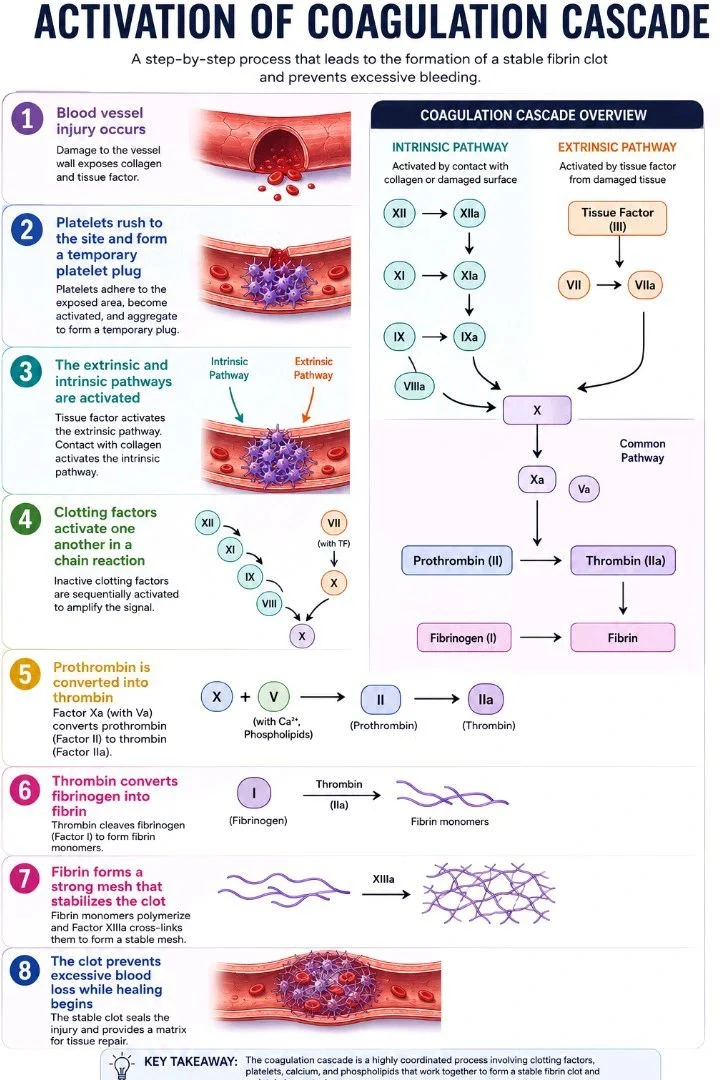
Here’s a simplified step-by-step process of how blood clotting occurs after injury:
- Blood vessel injury occurs
- Platelets rush to the site and form a temporary platelet plug
- The extrinsic and intrinsic pathways are activated
- Clotting factors activate one another in a chain reaction
- Prothrombin is converted into thrombin
- Thrombin converts fibrinogen into fibrin
- Fibrin forms a strong mesh that stabilizes the clot
- The clot prevents excessive blood loss while healing begins
Learning the activation of the coagulation cascade highlights how coordinated and precise human physiology truly is. Understanding these mechanisms is essential in hematology, medicine, and laboratory science.”
Stay updated with Hemostasis Today.
-
Oct 20, 2026, 16:51Suzan Nakasendwa: A Growing Stroke Challenge in Uganda
-
Oct 20, 2026, 16:38Steve Moon: How Does Smoking Cessation Duration Affect Ischemic Stroke Risk
-
Oct 20, 2026, 16:25Cedrice Mentor: Reducing Platelet Wastage Through Cold Storage
-
Oct 20, 2026, 16:09Thirunavukkarasu Angappan: Can a Purified Fibrinogen Concentrate Replace Cryoprecipitate
-
Oct 20, 2026, 16:01Kalyan Roy: Platelet Conservation Through Evidence-Based Transfusion Practice
-
Oct 20, 2026, 15:28Stacy E. Croteau: 33 Countries, One Mission – Better Bleeding Disorder Care
-
Oct 20, 2026, 15:19Teresa Barnes: What Does a Pulmonary Embolism Mean for Jalen Hurts?
-
Oct 20, 2026, 15:04Laura S.: Could Speaking Up Prevent Maternal Deaths from Thrombosis?
-
Oct 20, 2026, 14:44Pete Stibbs: VTE in Professional Athletes – When Fitness Is Not Enough