


Mohammed Al Rubaei: Where Do I Start When Evaluating a Patient With Suspected Hemolysis?
Mohammed Al Rubaei, Internal Medicine Specialist at Sheikh Shakhbout Medical City – SSMC, shared on LinkedIn:
”Not every anemia is due to blood loss or decreased production.
Sometimes the problem is destruction.
Missing hemolytic anemia can delay life-saving treatment and expose patients to devastating complications such as acute kidney injury, thrombosis, organ failure, and even death.
Over the years, I found that many trainees struggle with one question:
‘Where do I start when evaluating a patient with suspected hemolysis?’
To simplify this, I developed a practical bedside approach that focuses on four key steps:
- Confirm hemolysis
- Identify the mechanism
- Determine the underlying cause
- Assess severity and urgency
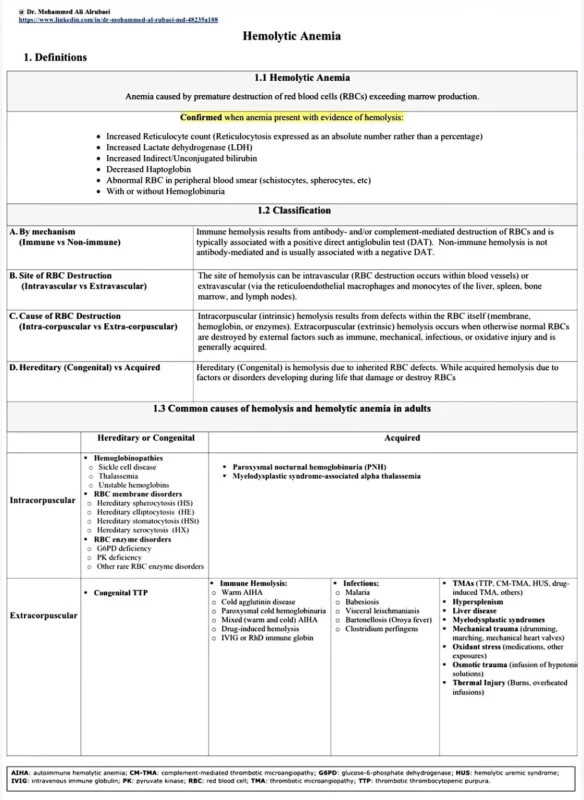
Think hemolysis when anemia is accompanied by:
- Reticulocytosis
- Elevated LDH
- Elevated indirect bilirubin
- Low haptoglobin
- Abnormal peripheral smear findings
Never overlook critical diagnoses such as:
- Autoimmune hemolytic anemia (AIHA)
- TTP/HUS
- G6PD-related hemolysis
- Drug-induced hemolysis
- Mechanical valve hemolysis
- Severe infections including malaria
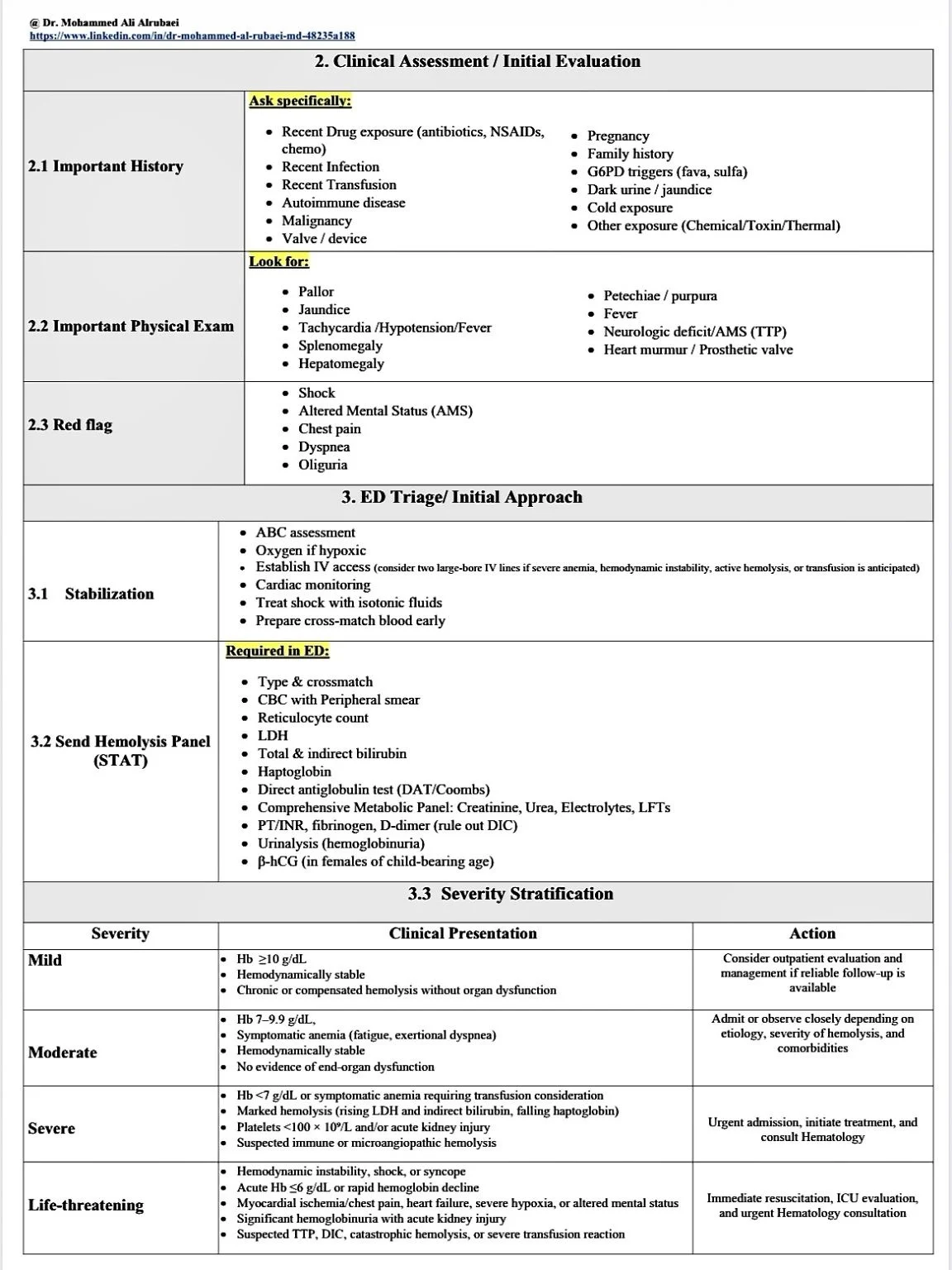
Red flags requiring urgent action:
- Hemodynamic instability
- Neurological symptoms
- Acute kidney injury
- Chest pain or myocardial ischemia
- Rapid hemoglobin decline
A well-performed history, peripheral smear, and DAT (Coombs test) often provide the biggest diagnostic clues.
This infographic focuses on the initial evaluation and early diagnostic approach to hemolytic anemia, particularly in acute care settings.
It represents the first step of a larger project.
Future versions will explore detailed diagnostic algorithms and cause-specific workups to help clinicians progress from recognizing hemolysis to identifying the underlying etiology and guiding definitive management.
I welcome feedback, suggestions, and shared experiences from colleagues.”
Stay updated with Hemostasis Today.
-
Oct 19, 2026, 19:44Where You Live Should not Determine Whether You Receive Care – World Federation of Hemophilia
-
Oct 19, 2026, 19:42Belen Bianco: Prevention, Early Suspicion and an Interdisciplinary Approach Save Lives
-
Oct 19, 2026, 19:40Christina Chrysohoou: Catheter-Based LAAC vs OAC for Stroke Prevention in Atrial Fibrillation
-
Oct 19, 2026, 19:38Matthew Flick: A Two-Day Research Meeting on Fibrinogen, Hemostasis and Thrombosis
-
Oct 19, 2026, 19:37Hayat Saeed: Excited to Share Our Publication on the FGL1–Hepcidin Axis in Iron Homeostasis and Disease
-
Oct 19, 2026, 19:08IPAW 2026 Comes to a Close, but the Work Continues – PPTA
-
Oct 19, 2026, 17:44Paul Riley: Moderating a Webinar on Anticoagulation Monitoring
-
Oct 19, 2026, 16:36Christopher Pittman: Blood Clot Prevention Cannot End at Hospital Discharge
-
Oct 19, 2026, 16:13Javier M. Floren: When Immune Cells Move With Their Environment