


Mohamed Reda: CBC Report – More Than Just Numbers
Mohamed Reda, Registered Nurse at Canadian Specialist Hospital, shared on LinkedIn:
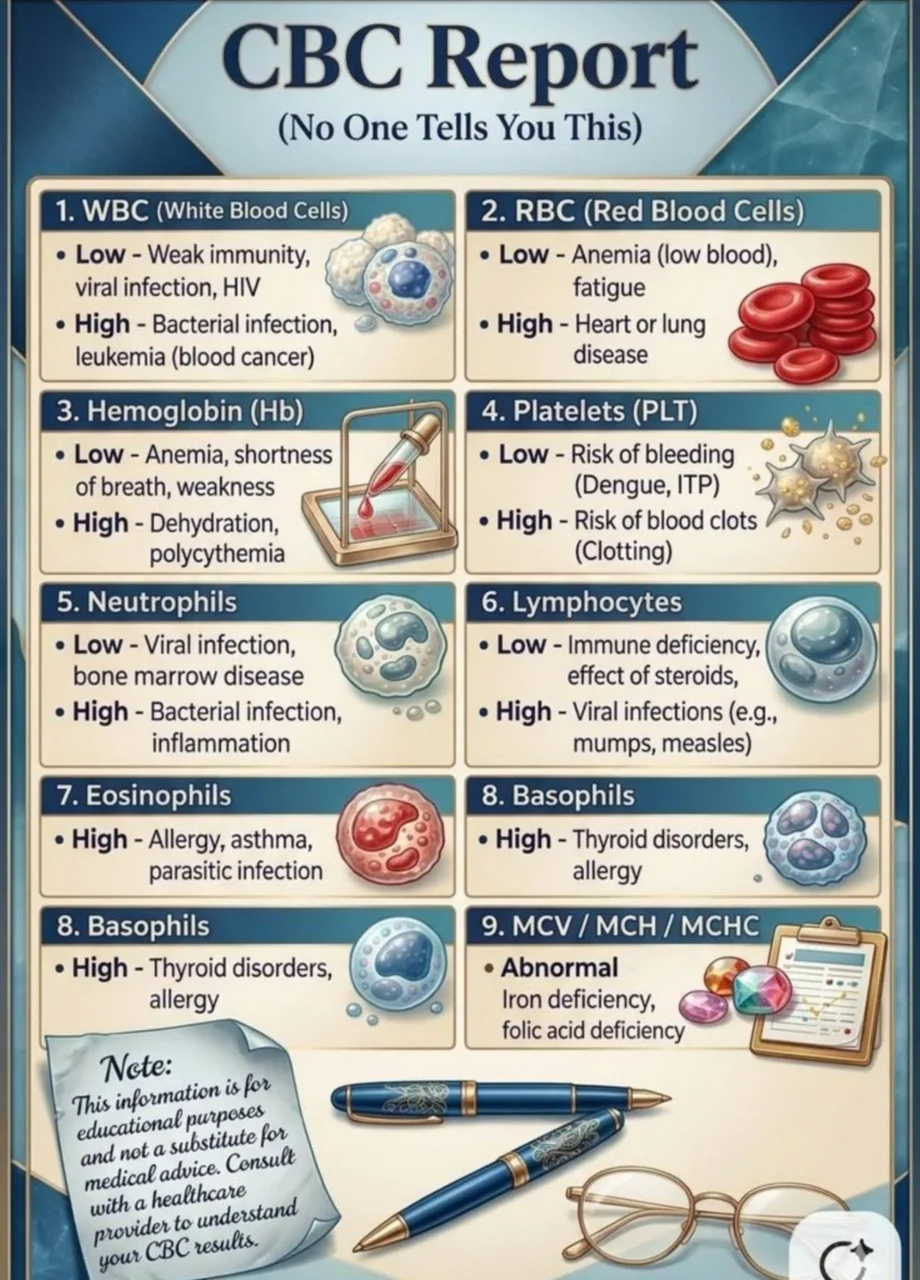
”CBC Report: More Than Just Numbers
A Complete Blood Count (CBC) is one of the most commonly ordered laboratory tests, yet many healthcare professionals and patients focus only on whether values are ‘normal’ or ‘abnormal.’
In reality, every parameter tells a story about what’s happening inside the body.
Key CBC Components and What They May Indicate:
WBC (White Blood Cells)
- Low: May be associated with viral infections or weakened immunity.
- High: Can suggest bacterial infections, inflammation, or hematologic disorders.
RBC and Hemoglobin
- Low levels may indicate anemia, fatigue, weakness, and reduced oxygen-carrying capacity.
- High levels can be seen with dehydration, chronic hypoxia, or polycythemia.
Platelets
- Low counts increase bleeding risk.
- High counts may increase the risk of thrombosis and clot formation.
Neutrophils
- Often elevated during bacterial infections and acute inflammation.
- Reduced levels may occur with viral illnesses or bone marrow suppression.
Lymphocytes
- Elevated levels are commonly associated with viral #infections.
- Reduced levels may be seen in immunodeficiency states or with corticosteroid use.
Eosinophils
- Frequently elevated in allergic conditions, asthma, and parasitic infections.
Basophils
- May increase in allergic reactions and certain endocrine or hematologic conditions.
- MCV, MCH, and MCHC
- These red cell indices help identify the type of anemia and guide further investigation of nutritional deficiencies such as iron, folate, or vitamin B12 deficiency.
The most important lesson: A CBC should never be interpreted in isolation.
Clinical history, physical examination, symptoms, and additional investigations are essential for accurate diagnosis and patient management.
Understanding the story behind these values helps transform laboratory data into meaningful clinical decisions.”
Stay updated with Hemostasis Today.
-
Sep 17, 2026, 20:38Konstantinos Bistas: Reduced Circulating Tregs in Pediatric Chronic Neutropenia
-
Sep 17, 2026, 15:33Gopal Patidar: Honoured to Contribute to the ASFA 2026 Guidelines for Therapeutic Apheresis
-
Sep 17, 2026, 20:36Cosima C. Hoch: Developing a 3D Organotypic Co-Culture Model for Pleomorphic Adenoma
-
Sep 17, 2026, 20:19Riten Kumar: Boston Children’s Hospital Ranked No. 1 in Seven Pediatric Specialties
-
Sep 17, 2026, 20:17Katrina Snow: Whole Blood or Component Therapy – Which Would You Choose?
-
Sep 17, 2026, 16:30Daria Camilli: Empowering Bleeding Disorder Advocacy Through Health Economics
-
Sep 17, 2026, 16:17Mehran Ghasemzadeh: Platelet NK Cell Crosstalk in Advanced Coronary Artery Disease
-
Sep 17, 2026, 16:16Barbara Adams Krolak: Do GLP-1s Affect Blood Clot Risk?
-
Sep 17, 2026, 15:46Heghine Khachatryan: Clinical Context at the Core of Thrombosis and Thrombophilia Management