

10 Posts Not To Miss from ISTH 2026, Part 2
ISTH 2026 in Paris brought together a global community of researchers, clinicians, and healthcare professionals to exchange knowledge on the latest advances in thrombosis and hemostasis.
The Congress featured groundbreaking research, clinical innovations, and evolving therapeutic strategies spanning thrombotic disorders, bleeding diseases, anticoagulation, platelet biology, and vascular medicine.
Beyond the scientific sessions, ISTH 2026 served as a platform for international collaboration, enabling experts to present new data, discuss emerging evidence, and explore developments that may shape future research and clinical practice.
Below are 10 standout posts from ISTH 2026 highlighting key updates, breakthroughs and discussions from the Congress.
Lara Monica, PhD Student, Study Director, preclinics GmbH:
“Really happy to be attending ISTH again!
Looking forward to engaging discussions and inspiring presentations on thrombosis and hemostasis, as well as connecting with researchers from around the world.”
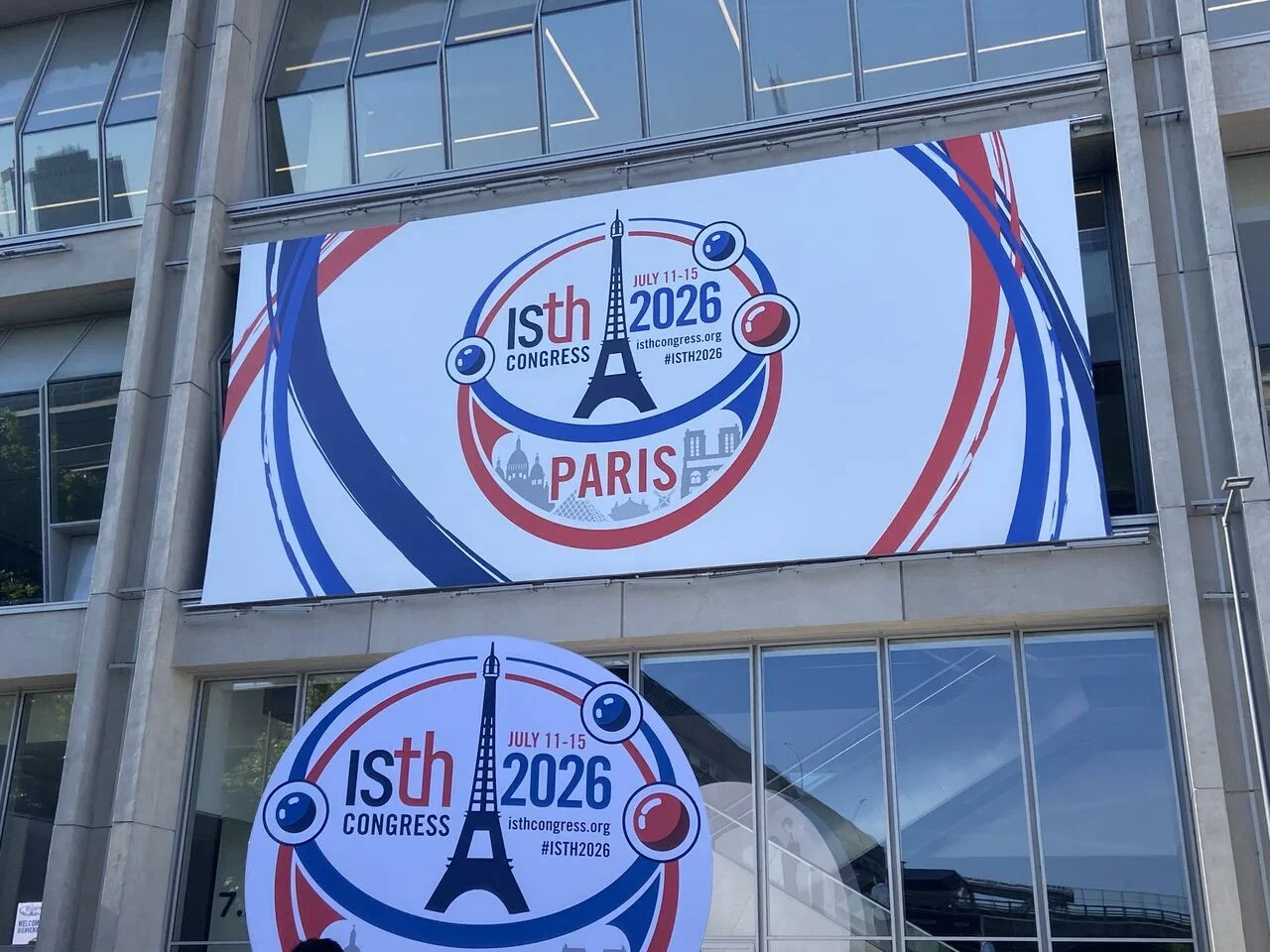
Zeyad Kholeif, Resident Doctor at Baptist Hospitals of Southeast Texas Internal Medicine Residency, Research Scholar at Mayo Clinic:
“New Publication!
Our updated meta-analysis is now published in Clinical and Applied Thrombosis/Hemostasis.
7 studies | 2,273 patients
Compared with DAPT alone, prophylactic triple antithrombotic therapy after anterior STEMI:
Did not significantly reduce LV thrombus
No reduction in mortality or thromboembolic events
Increased major bleeding
Take-home message: Routine prophylactic triple therapy may not be justified—careful patient selection remains essential.”
Joseph R. Shaw, Director of Research plus Program at Ottawa Department of Medicine, EHJ-CVP Associate Editor at European Heart Journal:
“Our group’s work will be featured during two sessions today at ISTH 2026.
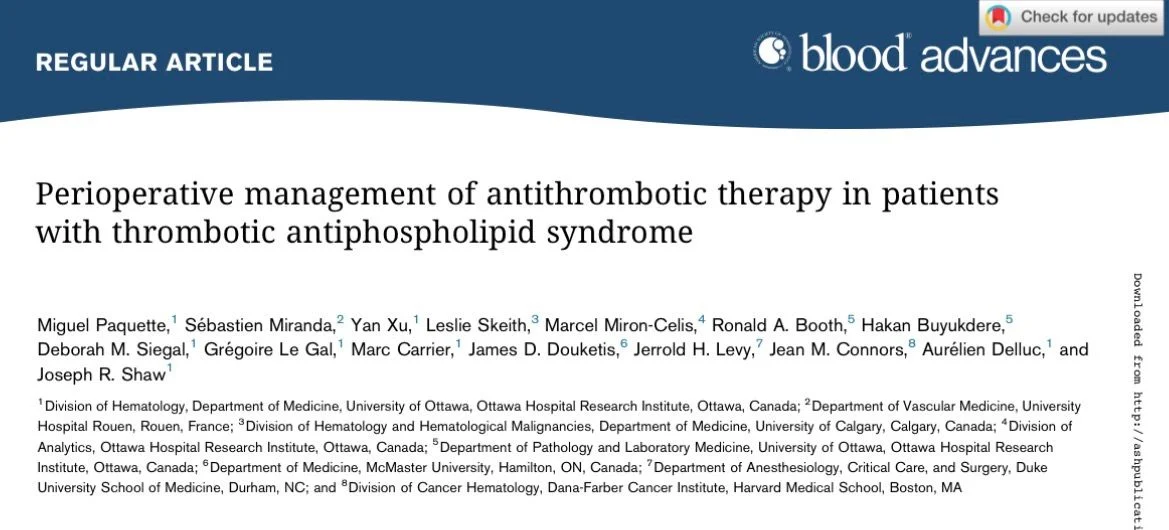
First, Miguel Paquette , a medical student at the University of Ottawa, will present our study on the perioperative management of antithrombotic therapy in patients with thrombotic antiphospholipid syndrome, now published in Blood Advances.
Room S05–06 at 14:45
Programme.
Publication.Later, during the joint ISTH SSC session, I will discuss thrombin generation as a framework for understanding the pharmacodynamic effects of anticoagulants and hemostatic therapies, integrating findings from GAUGE and our recent reviews in Pharmacological Reviews and JTH.
Room N01 at 16:30
Programme.GAUGE publication.”
Anna Waterhouse, Group Leader at University of Sydney:
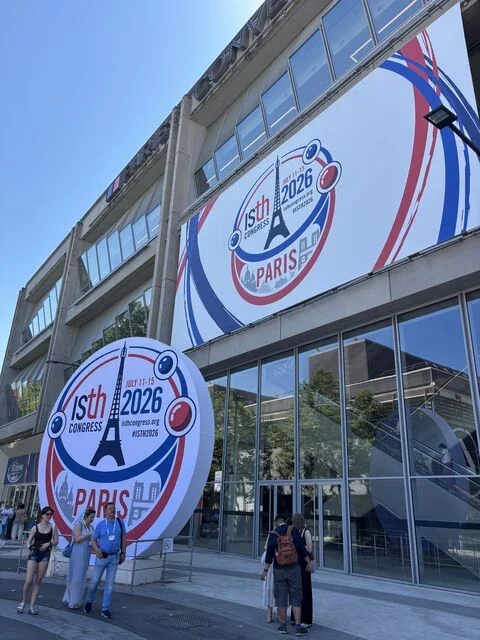
“Exciting first day at the International Society on Thrombosis and Haemostasis (ISTH) in Paris, from medicine and science to art!”
Marc Carrier, Professor at Ottawa Hospital Research Institute:
“Major scientific highlight from ISTH 2026 in Paris with simultaneous publication in JAMA.
The RCT demonstrated that a diagnostic strategy using the YEARS diagnostic algorithm in patients with cancer and suspected PE was as safe as using CTPA only, and decreased the need of diagnostic imaging by 22 percent.”
Wolfgang Miesbach, Professor of Medicine at Frankfurt University Hospital:
“A pioneer in APS testing, Prof. Pier Luigi Meroni delivered a powerful message at ISTH 2026 in Paris yesterday: what do we really target with our aPL assays?
His update on harmonizing ELISA and non‑ELISA antiphospholipid antibody tests with new commutable reference material for anti‑β2GPI and aCL IgG showed that standardization of units is possible—but that variability from assay design and antibody heterogeneity remains.
For me, the key takeaway was a clear shift from ‘any aPL positive’ towards biologically meaningful β2GPI‑dependent specificities and domain reactivity, which should drive future APS risk stratification, classification, and guidelines.
But how ready are our routine laboratories to embrace this more targeted, domain‑focused approach to APS testing?”
Shayan Mohammadmoradi, Vascular Biology and Platelet Function Scientist at University of Kentucky, CEO of Moradi Enterprise:
“And the ISTH 2026 begins!
For early-career scientists attending the ISTH conference, I understand that this large event can be overwhelming.
Choosing sessions, networking, and maximizing your time can be challenging.
Please feel free to reach out or come say hello.
I would be happy to help you prioritize sessions, approach networking, or build a manageable schedule using the app!
Looking forward to connecting with colleagues, friends, and new faces in Paris.”
Mildred Lundgren, Chairman of the Board at HHT Sweden:
“Rare diagnoses must not amount to a ‘postal code lottery’ where the stakes are human lives.
A landmark national registry study was recently published in the ‘Journal of Internal Medicine‘ (2026), led by researchers from Lund University and the Karolinska Institute.
For the first time, survival rates and causes of death for Swedish patients with the genetic vascular disorder HHT (also known as Morbus Osler or Osler’s disease) have been mapped.
The results reveal a painful inequality in the Swedish healthcare system:
- Shorter life expectancy: HHT patients in Sweden have, on average, a life expectancy that is 7.5 years shorter than that of the general population.
- High underdiagnosis: Only 9.3 per 100,000 Swedes have been diagnosed, meaning that more than 50 percent of those with the disease lack proper care and follow-up.
- Known complications: Patients die in large numbers from serious but potentially preventable complications, such as ischemic heart disease and liver diseases linked to vascular malformations.
Medical paradox and unequal care most notably, international studies from countries with centralized specialty centers (e.g., Denmark and the Netherlands) show that HHT patients there live just as long as the general population.
Systematic screening and early intervention eliminate excess mortality.
In Sweden today, we have skilled, multidisciplinary teams in Lund, Stockholm (Karolinska), Uppsala, and Gothenburg.
The expertise is there.
The problem is structural: If you don’t live in or near these regions, you’re often left out. Healthcare becomes a postcode lottery.
Fair and life-saving care should be determined by medical needs, not by your ZIP code.”
Alexandra Yakusheva, Preclinical Scientist at EFS:
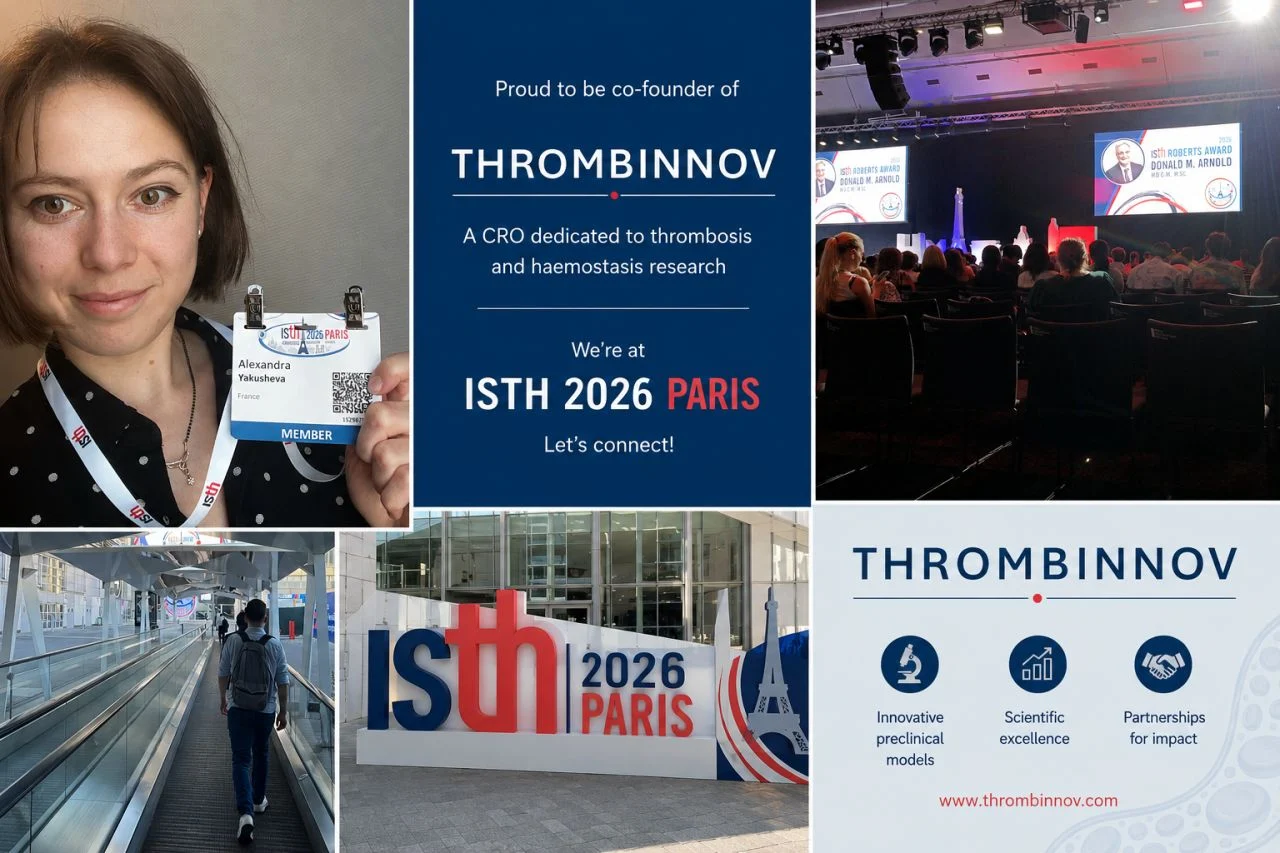
“Excited to share something I’ve been working on over the past months.
Together with an amazing team, we have founded ThrombInnov, a CRO dedicated to thrombosis and haemostasis research, with the goal of making advanced preclinical models more accessible to academia and industry.
I’m proud to be one of the co-founders of this project and excited to contribute to building it from the ground up.
Today is also the first day of ISTH 2026, where Pierre Mangin and I will be representing ThrombInnov.
If you’re attending the congress and would like to discuss preclinical thrombosis models, collaborations or simply say hello, we’d be delighted to meet you.”
Karin Knobe, SVP, Global Head Rare Diseases and ad interim Global Head DCVM, Clinical Development:
“Check out the news from ISTH 2026, ongoing in a very warm Paris.
Nice to meet old colleagues and get new insights!”
Stay Updated with the Latest ISTH 2026 Updates on Hemostasis Today.
-
Oct 10, 2026, 17:58Archo Farzana Batool: Exploring Medical Writing Through an Article on Iron Deficiency Anemia
-
Oct 10, 2026, 17:53Assessing Frailty in Adults With Hemophilia – JTH
-
Oct 10, 2026, 17:52Fatma Sadeghi: Reducing Maternal Health Inequalities Through Nursing Advocacy
-
Oct 10, 2026, 17:50Grzegorz Hensler: How Apheresis Transformed Blood Cell Separation and Collection
-
Oct 10, 2026, 17:47Hemant K Sharma: Japan’s Universal Artificial Blood Research – A Potential Breakthrough in Transfusion Medicine
-
Oct 10, 2026, 17:40John Strouse: Learning About Bleeding Disorders and Sickle Cell Disease at FWGBD
-
Oct 10, 2026, 17:34Mae Caime: Speaking at the Annual Women’s Retreat for the Hemophilia Community in Florida
-
Oct 10, 2026, 17:30Chokri Ben Lamine: PNH beyond the Textbook Triad
-
Oct 10, 2026, 17:29Ruah Alyamany: Thrombosis and Anticoagulation in Hematological Malignancies at SOHO KSA 2026