

ESO/LinkedIn
Jul 21, 2026, 03:19
Where Does Stroke Treatment Go Next on The Latest ESOC 2026 TV Studio Session – ESO
European Stroke Organisation shared on LinkedIn:
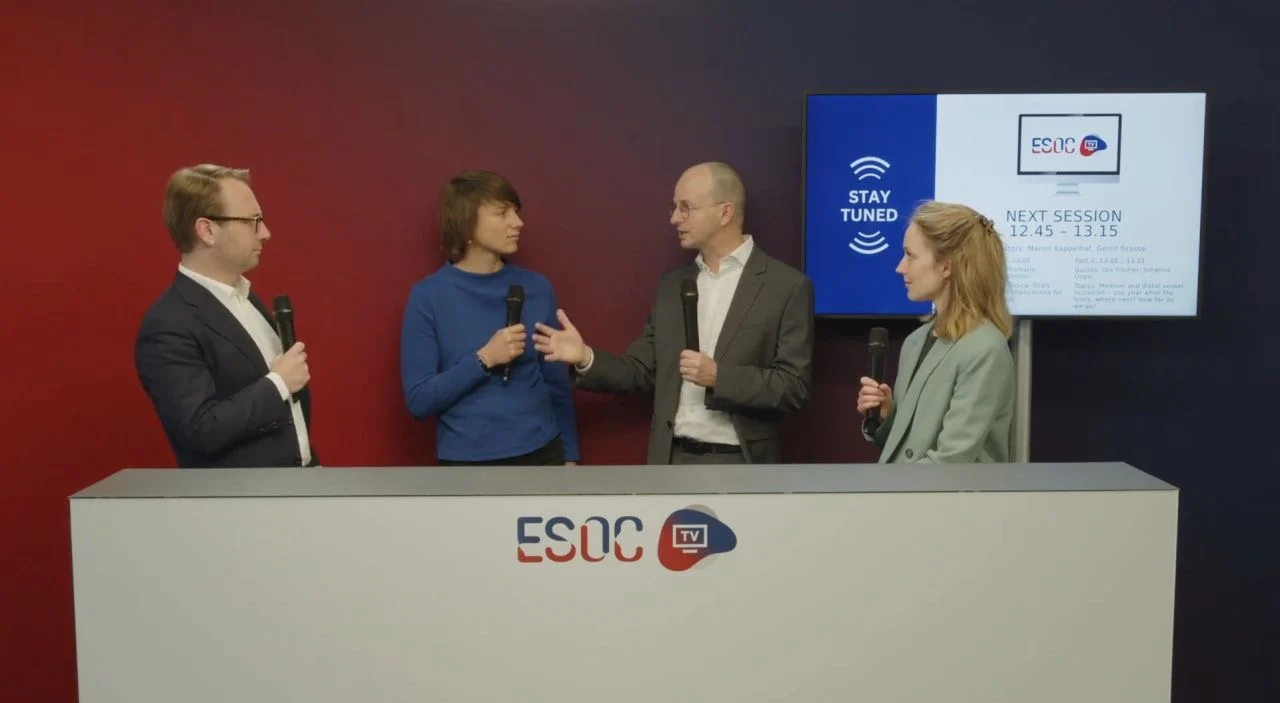
”In this ESOC 2026 TV Studio session, anchors Manon Kappelhof and Gerrit M. Große are joined by Urs Fischer and Johanna Ospel to reflect on the latest evidence surrounding medium and distal vessel occlusions and their implications for the future of stroke treatment.
Key themes include:
- Why improved reperfusion rates have not consistently translated into better clinical outcomes
- Whether specific patient subgroups, particularly those with more severe neurological deficits, may still benefit from endovascular treatment
- How future studies can optimise patient selection, outcome measures and trial design to better evaluate treatment effects”
Stay updated with Hemostasis Today.
-
Oct 20, 2026, 06:45Grant Garcia: Why Does a Blood Clot Diagnosis Immediately End an Athlete’s Season?
-
Oct 20, 2026, 06:35Parag Tamhankar: Landmark Study Reveals Genetic Spectrum and Targeted Therapies for ALPS in the Indian Population
-
Oct 20, 2026, 06:26Nina Houben: Neonatal Blood Transfusion Symposium and PhD Defense
-
Oct 20, 2026, 05:46Jan T. Kielstein: DNP Poisoning and Hemoadsorption The Limits of Rescue Therapy
-
Oct 20, 2026, 05:33Giulia Di Paolo: Connecting Plasma Donation to the Patients Who Depend on It
-
Oct 20, 2026, 05:20James Knowles: Exploring Plasma Manufacturing and Strengthening Industry Collaboration
-
Oct 20, 2026, 05:11Giuseppe Lippi։ Understanding Liver Test Abnormalities After AAV Gene Therapy
-
Oct 20, 2026, 05:02Sanam Loghavi: Test Your Hematology Knowledge at ASH 2026!
-
Oct 20, 2026, 04:13Ifeanyichukwu Ifechidere: DOACs Are Not the Answer to Every Anticoagulation Question