

Heavy Menstrual Bleeding in Adolescents Should Never Be Dismissed as “Just a Normal Period” – ICHCC
Iranian Comprehensive Hemophilia Care Center (ICHCC) shared a post on LinkedIn:
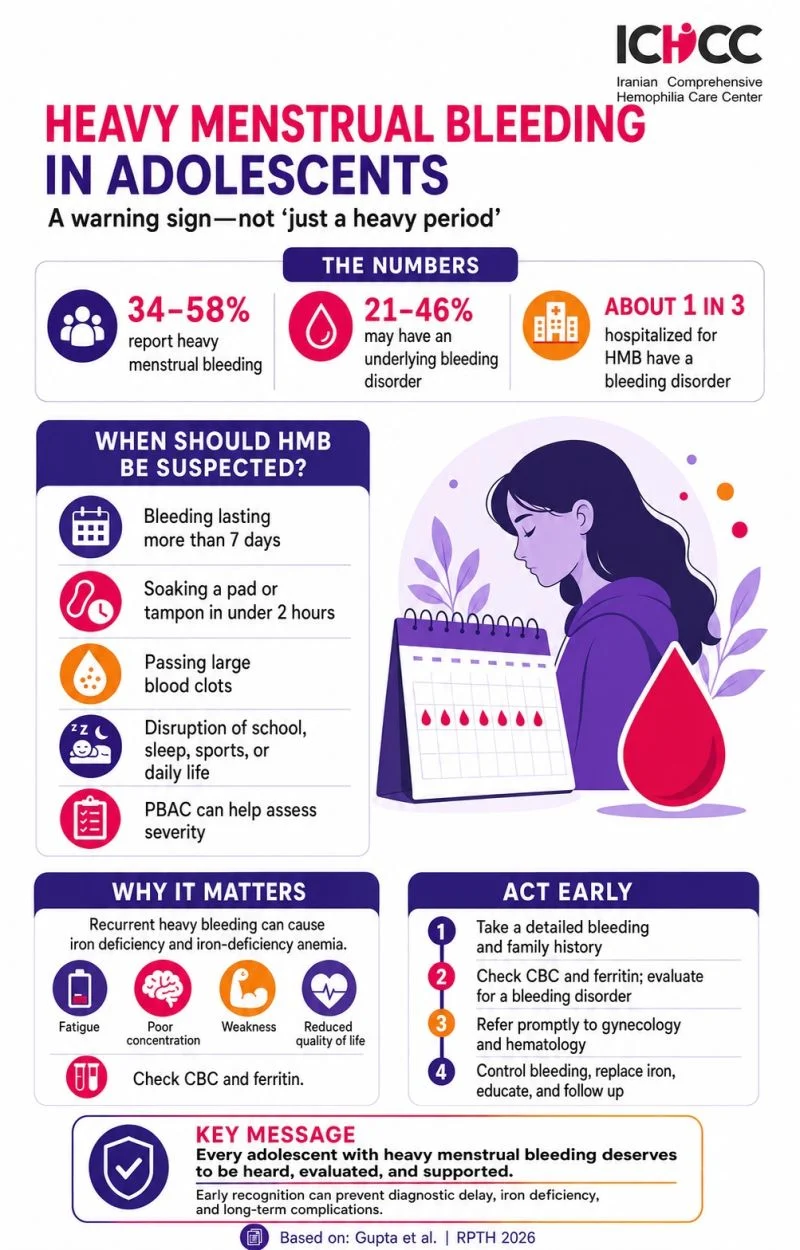
“Heavy menstrual bleeding in adolescents should never be dismissed as ‘just a normal period.’
It may be one of the earliest signs of an underlying bleeding disorder and can lead to iron deficiency, anemia, fatigue, reduced concentration, school absence, and a significant decline in quality of life.
Menstrual bleeding lasting more than seven days, frequent flooding, changing menstrual products every two hours or less, passing large clots, or having a personal or family history of abnormal bleeding should prompt further evaluation.
Early recognition, assessment of iron status, and timely referral to gynecology and hematology services can prevent years of delayed diagnosis and unnecessary suffering.
At the Iranian Comprehensive Hemophilia Care Center, we believe that listening carefully to menstrual history is an essential part of identifying women and girls with bleeding disorders.”
Stay updated with Hemostasis Today.
-
Sep 21, 2026, 15:56Anita Zaidi: Why Only 2% of Health Research and Development Goes to Women’s Conditions
-
Sep 21, 2026, 15:49Omid Khalafi: Gating Strategy and How Do We Decide Which Cells to Analyze
-
Sep 21, 2026, 15:44Levacetylleucine: A New Therapeutic Approach to Ataxia Telangiectasia
-
Sep 21, 2026, 15:40Andreas Tridimas: The Diagnostic Traps of Lipaemic Blood – Why a Normal Amylase Can Mislead You
-
Sep 21, 2026, 15:33Arsene Mekinian: Exploring Cardiac Involvement in Behçet’s Disease
-
Sep 21, 2026, 15:23Anis Mahjoubi: MRI Findings of Krukenberg Tumors
-
Sep 21, 2026, 15:08Fikreab Tesfaye Tefera: 10 Practical Take-Home Points for Diagnosing Iron Deficiency Anemia
-
Sep 21, 2026, 14:10Aswin K Mohan: Lessons from TRANSCON 2026 – Building Resilient Blood Supply Systems Before Crisis Hits
-
Sep 21, 2026, 14:00Vincent Lu: Beyond PT and aPTT – How Hemostasis Evolves Across a Lifetime