

Orlando Agrippa: Why Promising Sickle Cell Therapies Continue to Fall Short
Orlando Agrippa, Founder and CEO at Sanius Health, shared a post on LinkedIn:
“Sickle cell has seen extraordinary scientific progress, but the path from promising science to meaningful, lasting impact for patients remains difficult.
Recent setbacks across the therapeutic landscape should make us think more deeply about the evidence surrounding drug development, not just the drugs themselves.
We still understand too little about what happens between clinical encounters: pain managed at home, fatigue, sleep, crises that never reach hospital and whether improvements in biological markers genuinely translate into a better everyday life.
This is where longitudinal real-world evidence, patient-reported outcomes and continuous monitoring can make a real difference. Not by replacing clinical trials, but by giving researchers a richer picture of the disease, the patient and how treatments perform over time.
We have become incredibly sophisticated at understanding the biology of sickle cell. The opportunity now is to become just as sophisticated at understanding the people living with it.
The Missing Evidence Behind Sickle Cell’s Repeated Drug Setbacks
It’s been an amazing, but in some parts, disappointing summer. The molecular story has been extraordinary, from the first description of sickled cells in 1910 to gene therapies now reaching patients.
However, over the course of a hundred years of scientific progress in sickle cell disease and innovations in gene therapies, we have yet to see an extraordinary impact for patients.
But sit with the more uncomfortable version of that story and a pattern emerges: a run of promising programmes that have failed to differentiate, been discontinued, run into regulatory trouble or been withdrawn outright.
After more than a century of study, why does turning that understanding into medicines that reach and stay with patients remain so hard?
A summer of setbacks
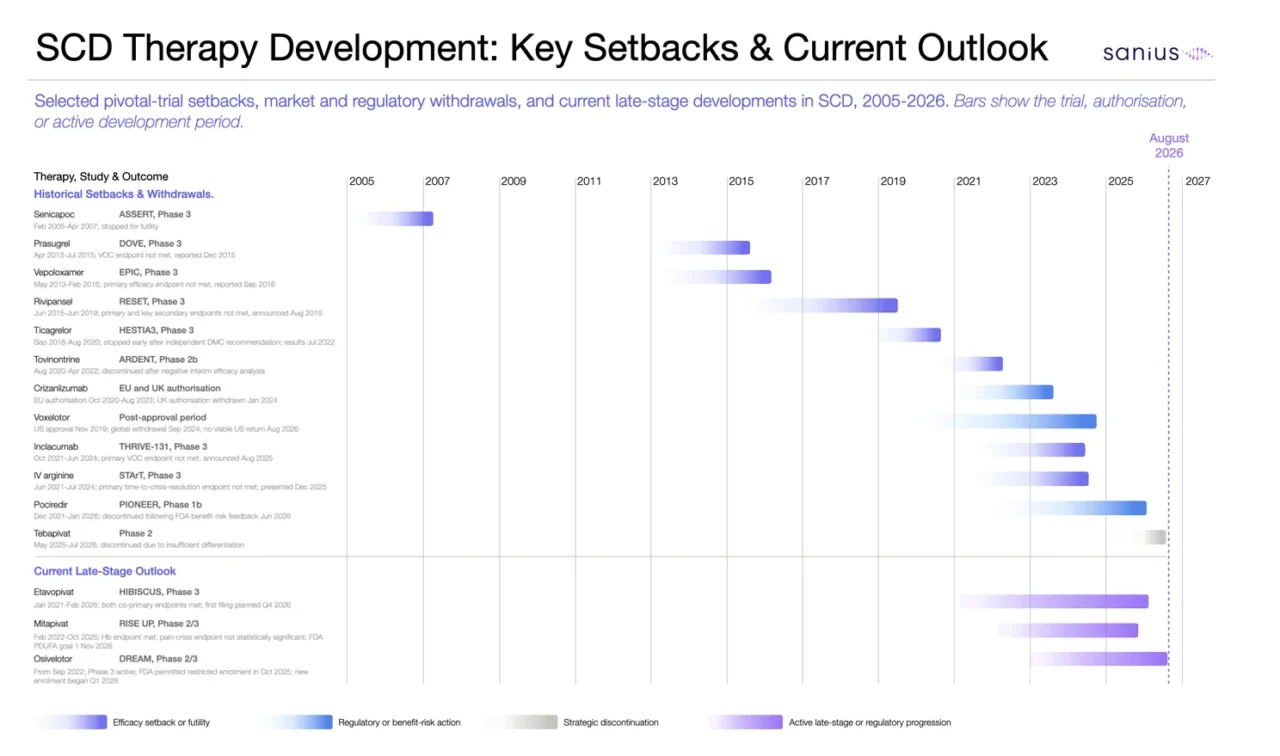
Two recent developments make the point, and they are not the same kind of failure. In July 2026, development of tebapivat in sickle cell disease was discontinued, but not because it failed biologically.
Haemoglobin response rates of 43.8%, 47.1% and 29.4% across three doses, against 33.3% on placebo, confirmed pyruvate kinase activation works as a therapeutic mechanism.
What the trial did not do was separate tebapivat clearly enough from a more advanced candidate in the same class, mitapivat, now under FDA Priority Review.
That is a commercial judgement as much as a scientific one: a medicine that works but fails to differentiate is a different problem to one that does not work at all.
Then there is Oxbryta (voxelotor). The therapy was withdrawn globally in September 2024 after trial and registry data showed more vaso-occlusive crises and deaths among patients taking it than expected, two further years of reanalysis with the US regulator followed, seeking a route back to market.
In August 2026 that route was closed: the conclusion, communicated directly to the sickle cell community, was that there is no viable path back to the United States.
Crizanlizumab is a related but distinct story.
Approved on Phase 2 data in 2019, it failed to beat placebo on its primary endpoint in the confirmatory Phase 3 STAND trial, losing its EU authorisation in 2023 and UK licence in January 2024, though it remains available in the United States, where regulators reached a different judgement on the same data.
None of these is simply ‘another failed sickle cell drug,’ and treating them as interchangeable obscures more than it reveals.
One is a strategic discontinuation of a working mechanism. One is a safety-driven withdrawal two years of analysis could not reverse. One is a confirmatory trial that overturned an earlier positive signal, with regulators still disagreeing about the result.
Each raises a related question: what does it say about how we develop medicines for this disease that promising signals so often fail to hold up?
The cost of getting it wrong
For industry, a discontinued programme or withdrawn licence means capital, years and opportunity lost. For patients, every delay is measured in pain crises, organ damage and years of life that do not come back.
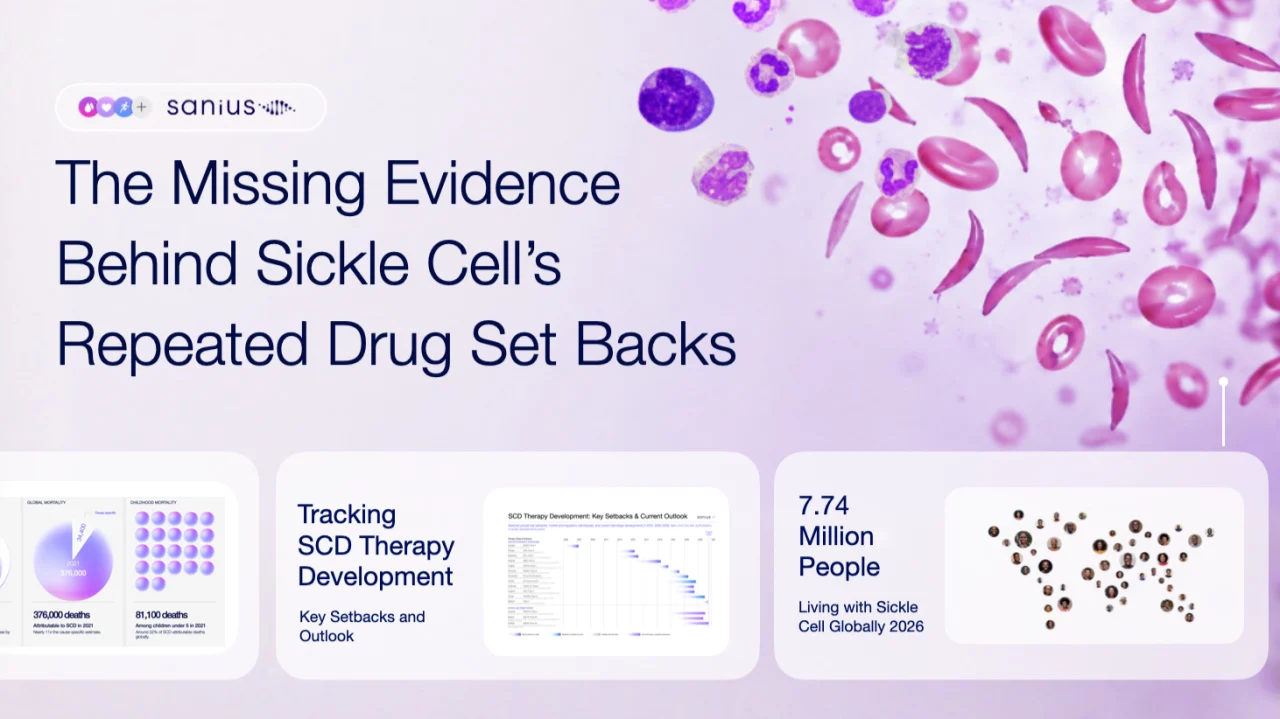
Global Burden of Disease modelling puts the scale in stark terms: 7.74 million people were living with sickle cell disease worldwide in 2021, up 41% since 2000.
Cause-specific deaths were recorded at 34,400, but total mortality attributable to the disease is estimated at 376,000 a year, including more than 81,000 children under five.
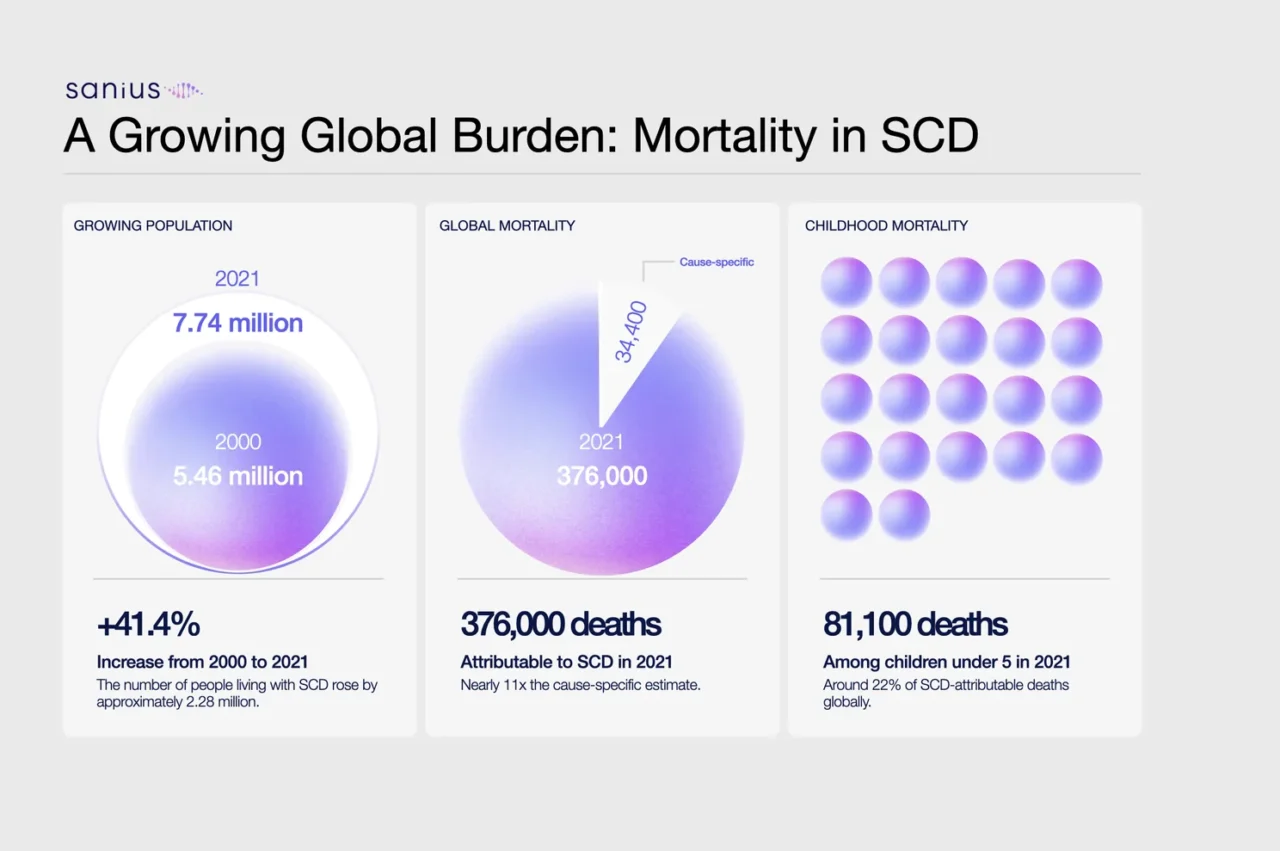
Roughly three-quarters of that burden falls on sub-Saharan Africa.
In the UK, cohort data shows adult life expectancy still trails the general population by decades; in the US, median survival has risen from the low forties in the 1990s to around 58 by 2014. Patients in Britain and America, for all these gaps, still have access most of the world does not.
An evidence problem, not just a drug problem
Part of what these setbacks expose is how thin our understanding still is of what happens between clinical encounters. Trials measure haemoglobin and hospital-recorded crises at scheduled visits.
They rarely capture the pain and fatigue managed quietly at home, or whether a biological improvement translates into a life someone experiences as better.
Incomplete natural-history data, fragmented trial populations and episodic rather than continuous measurement all make it harder to know, early, whether a signal is real. Perhaps the way we observe this disease has simply not kept pace with the therapies we are now trying to develop for it.
Across our ecosystem, longitudinal patient-reported outcomes, wearable and physiological data, self-reported crises and healthcare utilisation build a fuller picture before, during and after trials.
Not a substitute for clinical development, but a way of closing the distance between what a trial sees and what a patient lives. Before a study starts, that means natural-history datasets rich enough to inform patient stratification and more meaningful endpoints, rather than ones inherited from smaller, older studies.
During a trial, it means continuous monitoring of pain, fatigue, sleep and physiological signals alongside the traditional clinical endpoints, so a research team can see whether a biological improvement shows up in how a patient feels between visits, not only in their bloodwork at the next one.
After approval, it means longitudinal real-world evidence on effectiveness, safety and adherence gathered over months rather than reconstructed from hospital coding after the fact.
And across geographies, it means building more representative evidence from the populations, in Africa, India and Brazil, that trials have historically underrepresented, where the burden is heaviest and the evidence thinnest.
A hospital record tells a researcher what happened when somebody reached hospital. It says little about the weeks in between, where most of a patient’s life with this disease is actually lived.
None of this predicts which programme will succeed. What better longitudinal evidence can do is narrow the uncertainty a company operates under and give researchers a fuller account of how a therapy performs in the people taking it.
We have spent a century getting better at the biology of sickle cell disease. The next task is getting equally serious about the lived biology of the patient. The answer to repeated setbacks is not less investment; it is better evidence around the investment already being made.
Patients cannot afford another century of trial and error.”
Stay updated with Hemostasis Today.
-
Sep 27, 2026, 15:49Rana Al-Hrout: Iron Deficency – Is Ferritin 15ng/mL or Less Still the Cutoff?
-
Sep 27, 2026, 15:49Ayushi Sharma: What I Thought Transfusion Medicine Would Be vs What It Actually Is
-
Sep 27, 2026, 15:48William Wallace: How Much Human Research Is Behind the Supplements We Take?
-
Sep 27, 2026, 15:46Franck Perraudin: Lp(a) Lowering Alone May Not Be Enough
-
Sep 27, 2026, 15:41Ahmed Hamandi: Sharing Real-World HSCT Experience at the Iraqi Society of Haematology Conference
-
Sep 27, 2026, 15:39Co-creating Digital Support With Young Stroke Survivors – European Stroke Organisation
-
Sep 27, 2026, 15:39Eleri Schiavone: Celebrating 80 Years of the Welsh Blood Service
-
Sep 27, 2026, 15:38Jessica Garcia: Standing Where VWD Was First Recognized 100 Years Later
-
Sep 27, 2026, 15:37Heghine Khachatryan: A Meaningful Step Forward for Inherited Blood Disorders in Africa