


Melanie Jay: What Should Behavioral Support Look Like Alongside Obesity Medications?
Melanie Jay, Director, NYU Langone Comprehensive Program on Obesity, Professor of Medicine and Population Health at NYU Langone Health, Staff Physician and Physician Investigator, Co-Director, VETCARE Center of Innovation (COIN) at U.S. Department of Veterans Affairs, Board Advisor at Onsera Health and BONUS HEALTH, shared a post on LinkedIn:
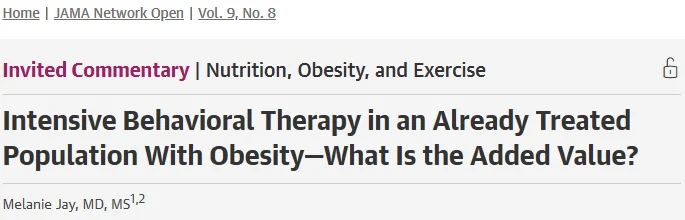
“If GLP-1 medications can produce 15–20% weight loss, what role is left for intensive behavioral treatment?
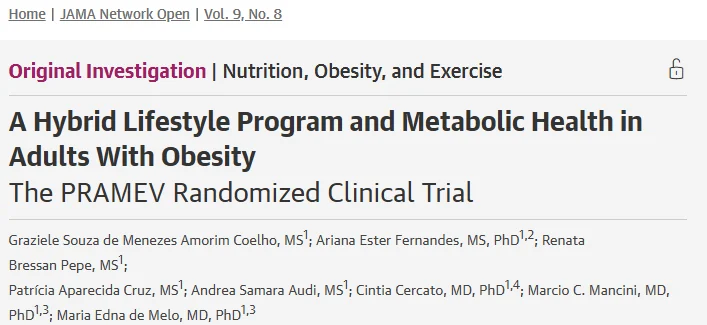
In a new editorial in JAMA Network Open, I discuss the PRAMEV randomized clinical trial, which tested a culturally adapted, hybrid intensive behavioral therapy program in adults with obesity receiving specialty care in Brazil.
The intervention did not significantly increase the proportion of participants achieving at least 5% weight loss compared with usual specialty obesity care.
But there’s an important detail: these patients had already lost a substantial amount of weight before the trial even began.
Median prior weight loss was 7.6% in the behavioral intervention group and 9.3% in the usual-care group. Thus, this was partly a study of weight maintenance and additional weight loss in patients already well into obesity treatment.
That matters. Weight loss commonly plateaus over time, making further weight loss increasingly difficult. Most participants were also already taking obesity care medications, and medication use increased further in the usual-care group during the study.
So the findings raise an important question about what we should expect behavioral treatment to accomplish in patients who are already on medications and engaged in subspeciality care.
Behavioral support may be particularly valuable for helping patients:
- maintain weight loss over time
- stay on medication
- manage GI side effects through practical dietary strategies
- maintain adequate nutrition
- preserve muscle mass through nutrition and physical activity
- develop habits that support long-term health
We still have surprisingly little evidence about what behavioral support should look like for people taking newer obesity medications and how intensive it needs to be.
As obesity care medications become more effective, we need better evidence about the behavioral support patients need alongside them.
What should that support look like?”
Title 1: A Hybrid Lifestyle Program and Metabolic Health in Adults With Obesity: The PRAMEV Randomized Clinical Trial
Authors: Graziele Souza de Menezes Amorim Coelho, Ariana Ester Fernandes, Renata Bressan Pepe, Patrícia Aparecida Cruz, Andrea Samara Audi, Cintia Cercato, Marcio C. Mancini, Maria Edna de Melo
Read the Full Article on JAMA Network Open
Title 2: Intensive Behavioral Therapy in an Already Treated Population With Obesity—What Is the Added Value?
Authors: Melanie Jay
Read the Full Article on JAMA Network Open
Stay updated on all scientific advances with Hemostasis Today.
-
Oct 8, 2026, 17:00Sally Mandour: Platelet Size And Shape Can Reveal The Diagnosis
-
Oct 8, 2026, 16:49Neil Morgan: Advancing Understanding Of Bleeding Disorders Of Unknown Cause
-
Oct 8, 2026, 16:38Beverley Hunt: Advancing Pulmonary Embolism Care Through Collaboration And Learning
-
Oct 8, 2026, 16:19Cedric Hermans: Six Webinars Advancing Haemophilia Care And Beyond
-
Oct 8, 2026, 16:09Luana Banu: Every Donation Connects A Human Chain
-
Oct 8, 2026, 15:51Khaled Musallam: A New Era In Thalassemia Care
-
Oct 8, 2026, 15:40Juan J. Ortiz։ Catheter Directed Therapy In Pulmonary Embolism
-
Oct 8, 2026, 15:34Petros Kountouris: Geostatistical Modelling Maps Global β-Thalassaemia Carrier Prevalence
-
Oct 8, 2026, 15:14Renzo Mancuso: Human Stem Cell Model Reveals Progenitor Fate in Tissue Macrophages