


Mili Jain: Key Causes and Diagnosis of Macrocytic Anemia
Mili Jain, Assistant Professor at Pacific Medical College and Hospital, shared a post on LinkedIn:
” ‘Macrocytic Anemia’
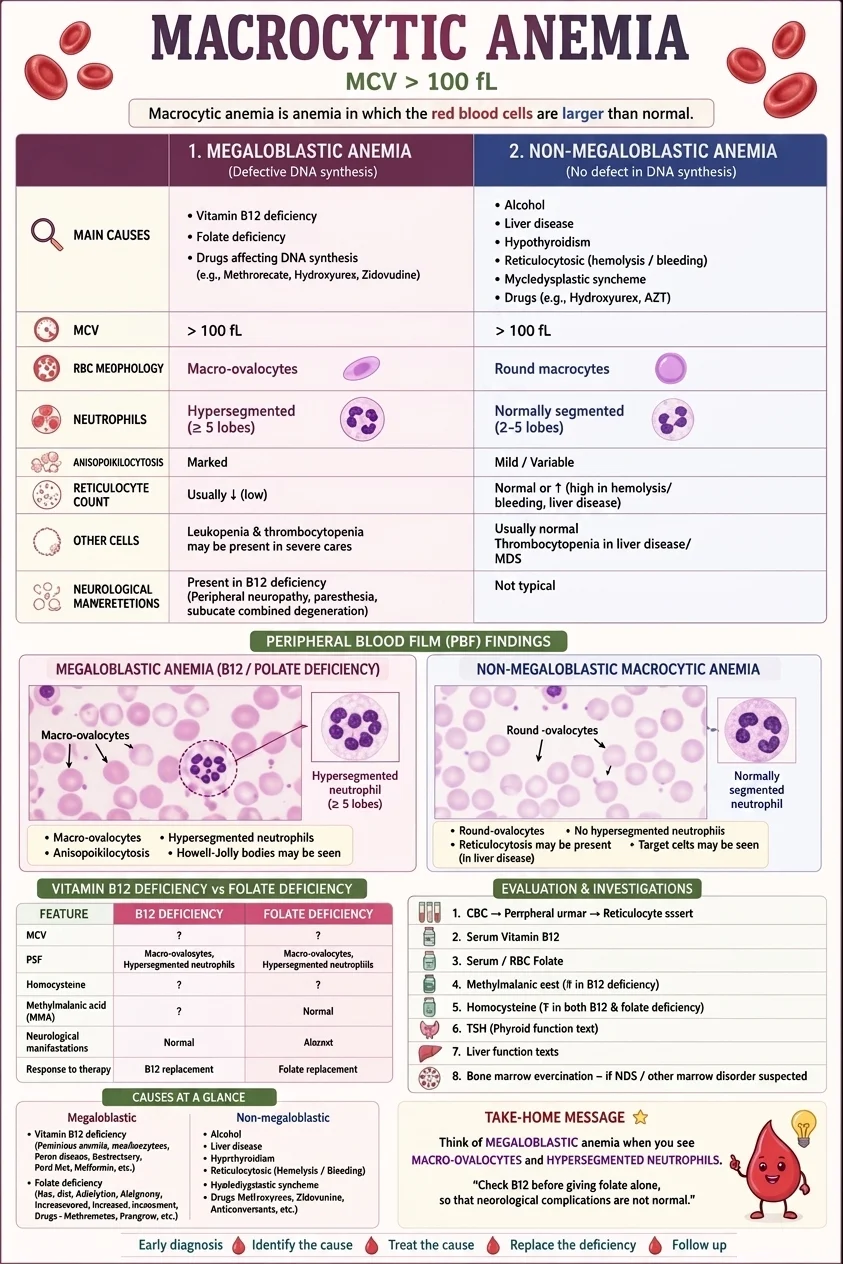
Macrocytic anemia is anemia in which the red blood cells are larger than normal, typically with MCV greater than 100 fL.
Important causes
1. Vitamin B12 deficiency:
- Pernicious anemia
- Malabsorption
- Gastrectomy/bariatric surgery
- Ileal disease
- Poor dietary intake
- Certain drugs, e.g. metformin
2. Folate deficiency:
- Poor diet/alcoholism
- Pregnancy
- Malabsorption
- Increased requirement
- Methotrexate and other antifolate drugs
3. Other causes:
- Alcohol
- Liver disease
- Hypothyroidism
- Myelodysplastic syndrome
- Reticulocytosis after hemolysis/bleeding
- Drugs such as hydroxyurea, zidovudine, and some anticonvulsants
Main Classification:
- ‘Megaloblastic’:– Vitamin B12 deficiency, folate deficiency, drugs affecting DNA synthesis
Key Clues: increased MCV
* Macro-ovalocytes
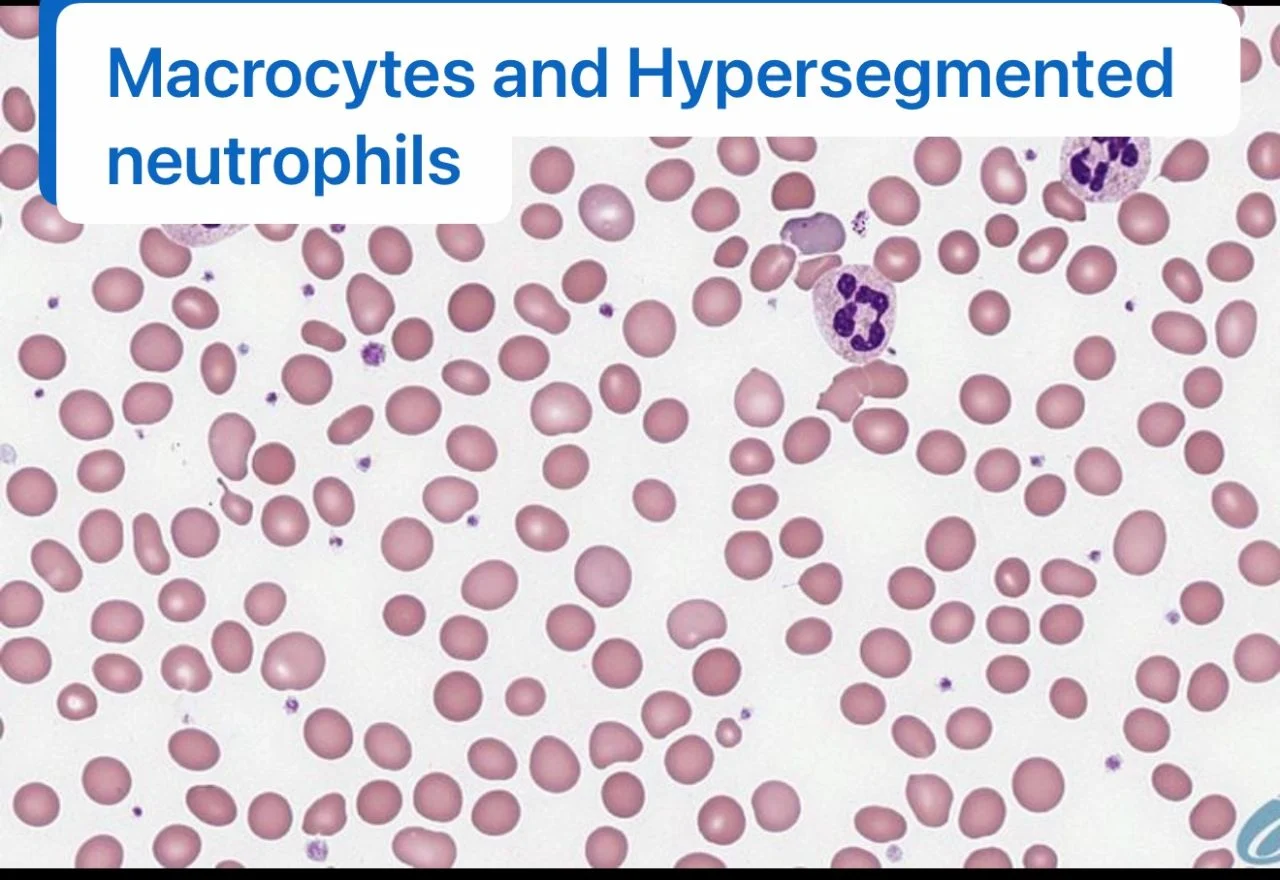
* Hypersegmented neutrophils, Sometimes leukopenia and thrombocytopenia
- ‘Non-megaloblastic’:– Alcohol, liver disease, hypothyroidism, reticulocytosis
Key Clues: No typical megaloblastic morphology.
Important PBF findings in Macrocytic Anemia
‘Megaloblastic anemia’ — classic PBF findings:
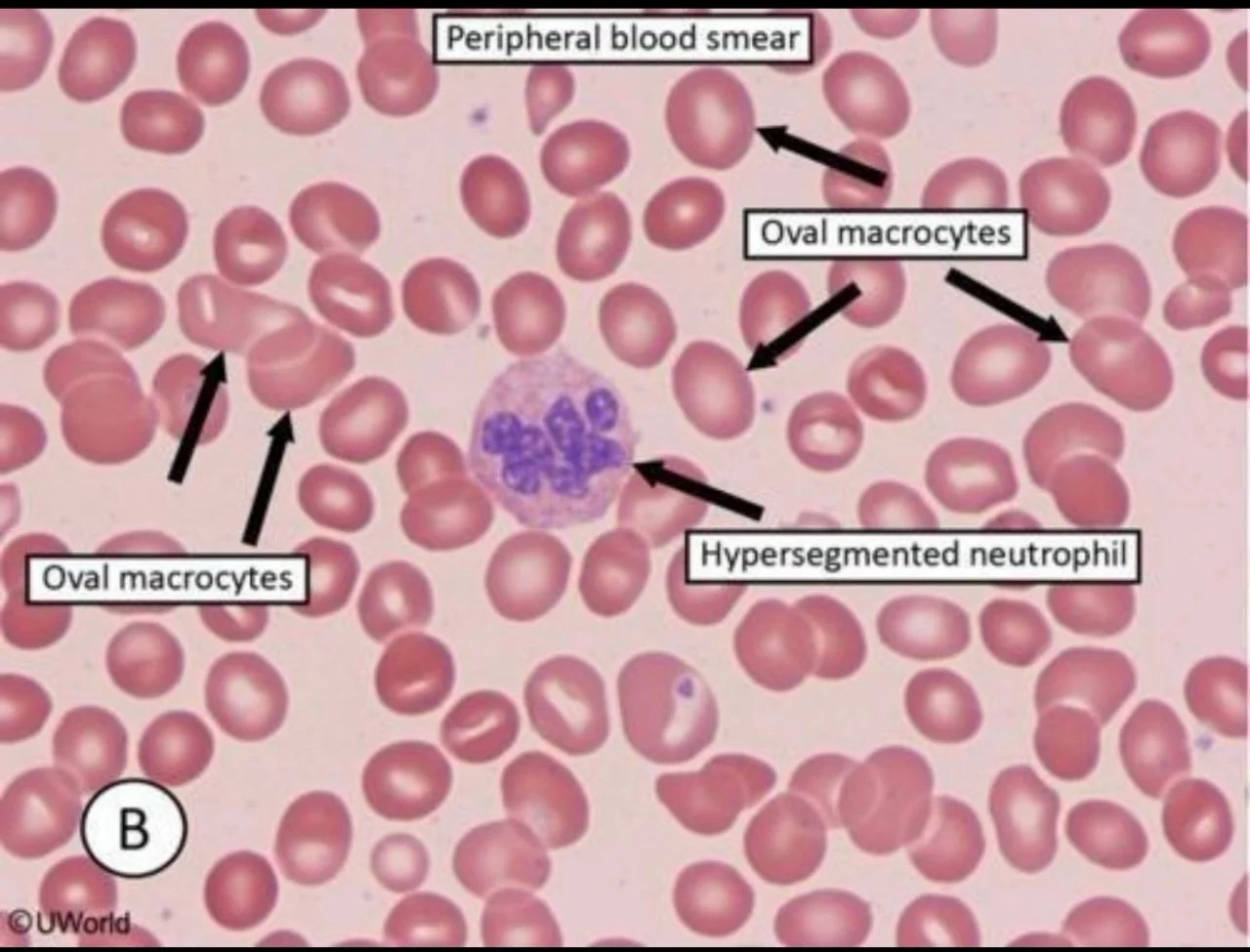
- Macro-ovalocytes — most characteristic
- Hypersegmented neutrophils — 5 or more lobes in a significant proportion of neutrophils, and 1% 6 lobes neutrphil.
- Anisocytosis and poikilocytosis
- Oval macrocytes
- Howell–Jolly bodies, basophilic stippling and may be seen
- Pancytopenia may occur in severe cases
Useful investigations
CBC, followed by a peripheral blood smear, followed by a reticulocyte count, followed by vitamin B12 and folate testing.
‘Non-megaloblastic macrocytosis’:
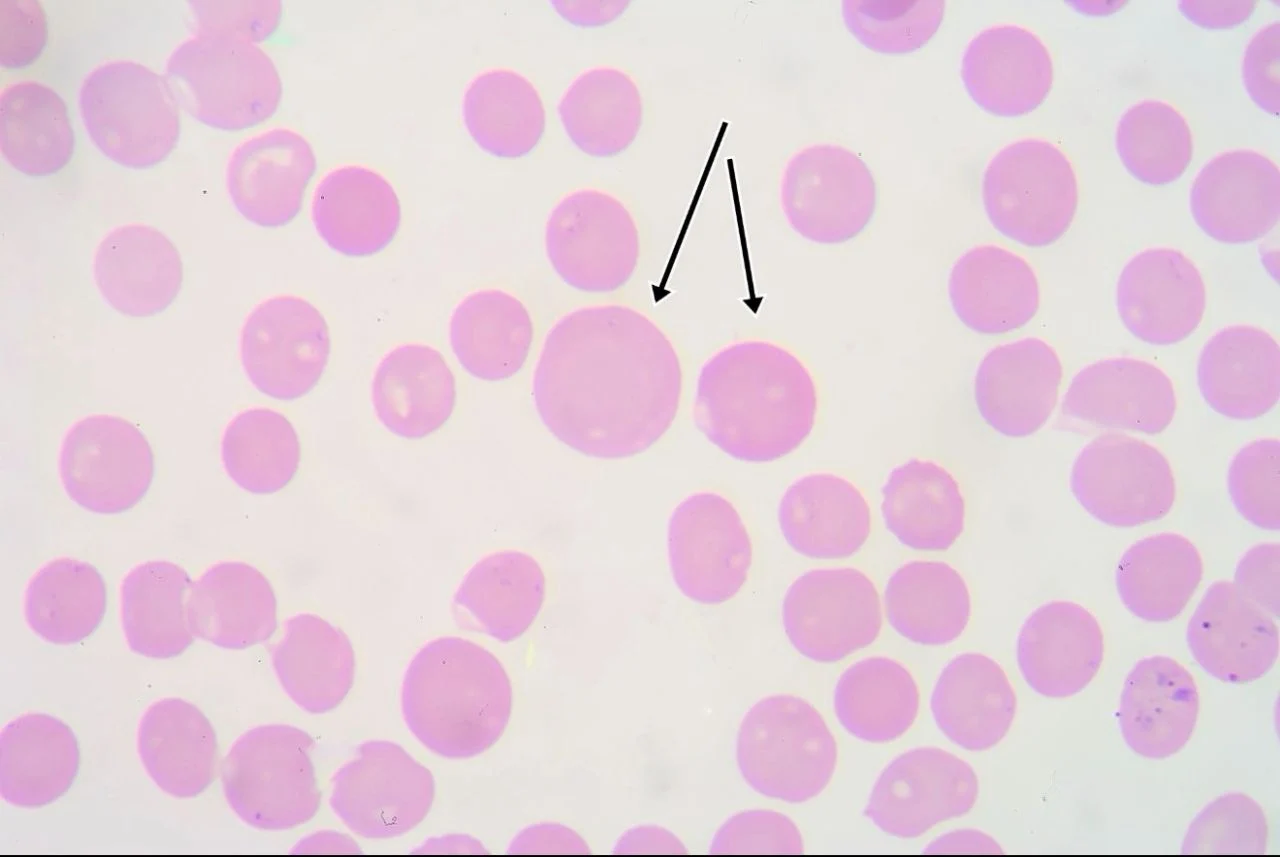
- Round macrocytes/macrocytic RBCs
- Reticulocytosis may be present
- Target cells may suggest liver disease
- No hypersegmented neutrophils.
Depending on the findings:
- Serum B12
- Serum/RBC folate
- Methylmalonic acid (MMA) – increased in B12 deficiency
- Homocysteine – increased in both B12 and folate deficiency
- TSH
- Liver function tests
- LDH, bilirubin, haptoglobin if hemolysis suspected
- Consider bone marrow examination if MDS or another marrow disorder is suspected.
B12 vs Folate — high-yield distinction
Finding:
B12 deficiency:
- MCV , Hypersegmented neutrophils- Present ,increased Homocysteine, increased Methylmalonic acid, Neurological manifestations- Common
Folate deficiency:
- increased MCV, Hypersegmented neutrophils – Present, increased Homocysteine , Methylmalonic acid- Normal, Neurological manifestations- Usually absent
Macro-ovalocytes and hypersegmented neutrophils: think B12/folate deficiency (megaloblastic anemia).
Important: If B12 deficiency is possible, check B12 before treating with folate alone, because folate can correct the anemia while allowing neurological damage from B12 deficiency to progress.”
Stay updated with Hemostasis Today.
-
Oct 19, 2026, 19:44Where You Live Should not Determine Whether You Receive Care – World Federation of Hemophilia
-
Oct 19, 2026, 19:42Belen Bianco: Prevention, Early Suspicion and an Interdisciplinary Approach Save Lives
-
Oct 19, 2026, 19:40Christina Chrysohoou: Catheter-Based LAAC vs OAC for Stroke Prevention in Atrial Fibrillation
-
Oct 19, 2026, 19:38Matthew Flick: A Two-Day Research Meeting on Fibrinogen, Hemostasis and Thrombosis
-
Oct 19, 2026, 19:37Hayat Saeed: Excited to Share Our Publication on the FGL1–Hepcidin Axis in Iron Homeostasis and Disease
-
Oct 19, 2026, 19:08IPAW 2026 Comes to a Close, but the Work Continues – PPTA
-
Oct 19, 2026, 17:44Paul Riley: Moderating a Webinar on Anticoagulation Monitoring
-
Oct 19, 2026, 16:36Christopher Pittman: Blood Clot Prevention Cannot End at Hospital Discharge
-
Oct 19, 2026, 16:13Javier M. Floren: When Immune Cells Move With Their Environment