

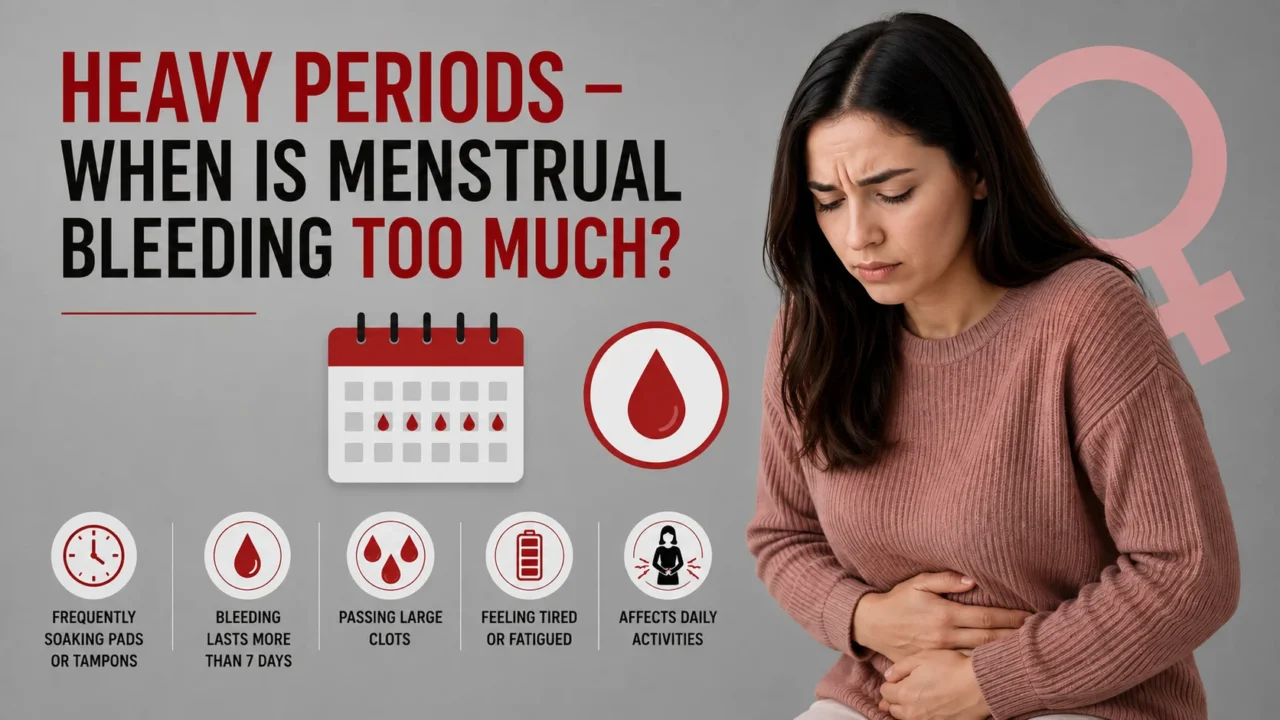
Oluwatoyin Iyabode Ajayi: Heavy Periods – When Is Menstrual Bleeding Too Much?
Oluwatoyin Iyabode Ajayi, Senior Nursing Officer at General Hospital Orile Agege, Health Service Commission, shared a post on LinkedIn:
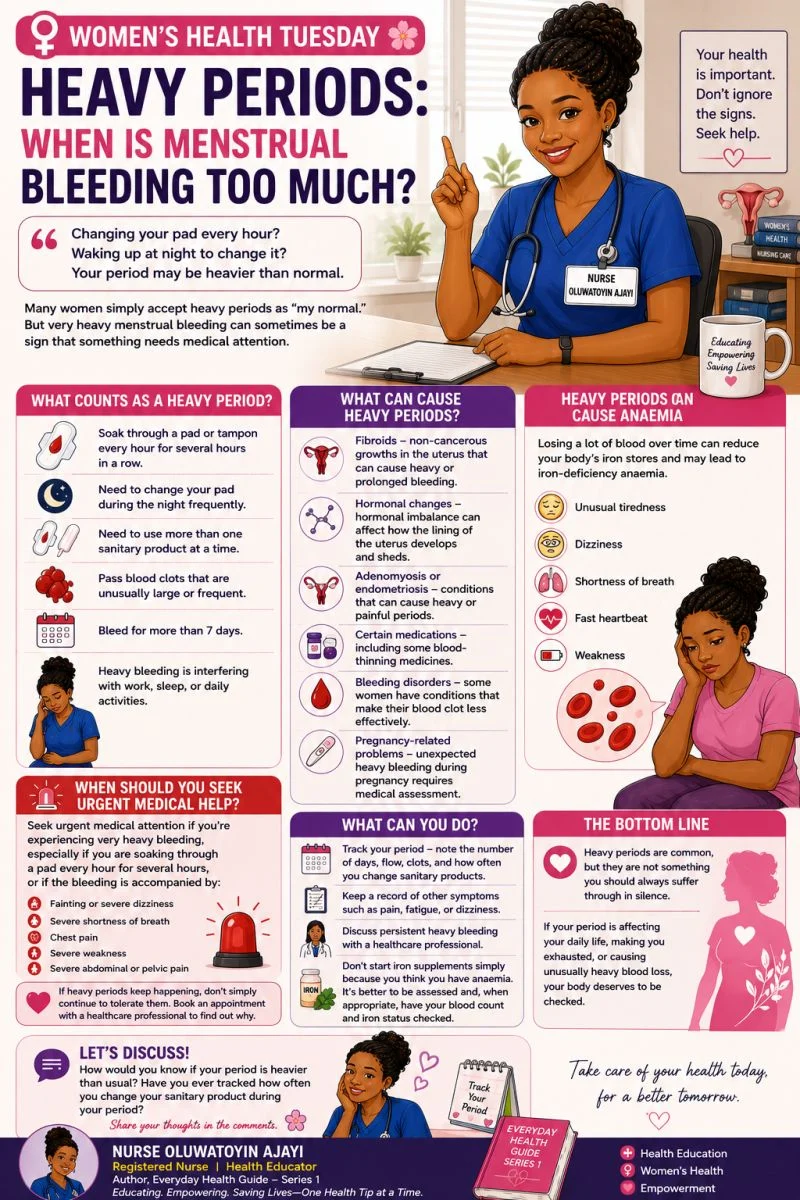
“Heavy Periods: When Is Menstrual Bleeding Too Much?
‘Changing your pad every hour?
Waking up at night to change it?
Your period may be heavier than normal.’
Many women simply accept heavy periods as ‘my normal.’
But very heavy menstrual bleeding can sometimes be a sign that something needs medical attention.
What counts as a heavy period?
You may have heavy menstrual bleeding if you:
- Soak through a pad or tampon every hour for several hours in a row.
- Need to change your pad during the night frequently.
- Need to use more than one sanitary product at a time.
- Pass blood clots that are unusually large or frequent.
- Bleed for more than 7 days.
- Find that heavy bleeding is interfering with work, sleep, or daily activities.
What can cause heavy periods?
There are many possible causes, including:
- Fibroids – non-cancerous growths in the uterus that can cause heavy or prolonged bleeding.
- Hormonal changes – hormonal imbalance can affect how the lining of the uterus develops and sheds.
- Adenomyosis or endometriosis – conditions that can cause heavy or painful periods.
- Certain medications – including some blood-thinning medicines.
- Bleeding disorders – some women have conditions that make their blood clot less effectively.
- Pregnancy-related problems – unexpected heavy bleeding during pregnancy requires medical assessment.
- Heavy periods can cause anaemia.
Losing a lot of blood over time can reduce your body’s iron stores and may lead to iron-deficiency anaemia.
And if heavy periods keep happening, don’t simply continue to tolerate them.
Book an appointment with a healthcare professional to find out why.
What can you do?
- Track your period – note the number of days, flow, clots, and how often you change sanitary products.
- Keep a record of other symptoms such as pain, fatigue, or dizziness.
- Discuss persistent heavy bleeding with a healthcare professional.
Don’t start iron supplements simply because you think you have anaemia. It’s better to be assessed and, when appropriate, have your blood count and iron status checked.
The Bottom Line
Heavy periods are common, but they are not something you should always suffer through in silence.
If your period is affecting your daily life, making you exhausted, or causing unusually heavy blood loss, your body deserves to be checked.
Let’s discuss
How would you know if your period is heavier than usual?
Have you ever tracked how often you change your sanitary product during your period?”
Stay updated with Hemostasis Today.
-
Oct 13, 2026, 11:24Brandon Daniel D’Costa: Building Stronger Stakeholder Relationships Through Empathy and Open Communication
-
Oct 13, 2026, 11:08Renel Tique: 5th International Conference on Hemophilia and Rare Bleeding Disorders
-
Oct 13, 2026, 02:01Nour Al-Mozain: Is It Really Anti-D? – Unraveling Auto-Anti-LW in the Transfusion Laboratory
-
Oct 13, 2026, 01:51Berenice Villegas: The Role of Morphologic Evaluation in Body Fluid Differential Analysis
-
Oct 13, 2026, 01:44Debadrita Ray: Evaluating vWF and VITRO Score for Detecting CSPH in cACLD Patients
-
Oct 13, 2026, 01:34Nagesh Ramesh: Donating Blood for International Plasma Awareness Week
-
Oct 12, 2026, 21:51Sam Botchey: Orthobiologics Are Advancing but the Evidence Must Keep Pace
-
Oct 12, 2026, 21:50Serum Vitamin D, Platelet Function, and Bleeding in Primary ITP – Platelets Journal
-
Oct 12, 2026, 21:30Nika Samadzadeh Tabrizi: Looking Forward to the PACeS Trial on Anticoagulation for POAF