


Milad Rezvani: Aggressive B-Cell Lymphoma Presenting as Bilateral Upper-Extremity SVT
Milad Rezvani, Medical Doctor, Clinical Researcher, shared a post on LinkedIn about a recent article he and his colleagues co-authored, published in Clinical Case Reports, adding:
“I’m pleased to share that our case report has been published in Clinical Case Reports.
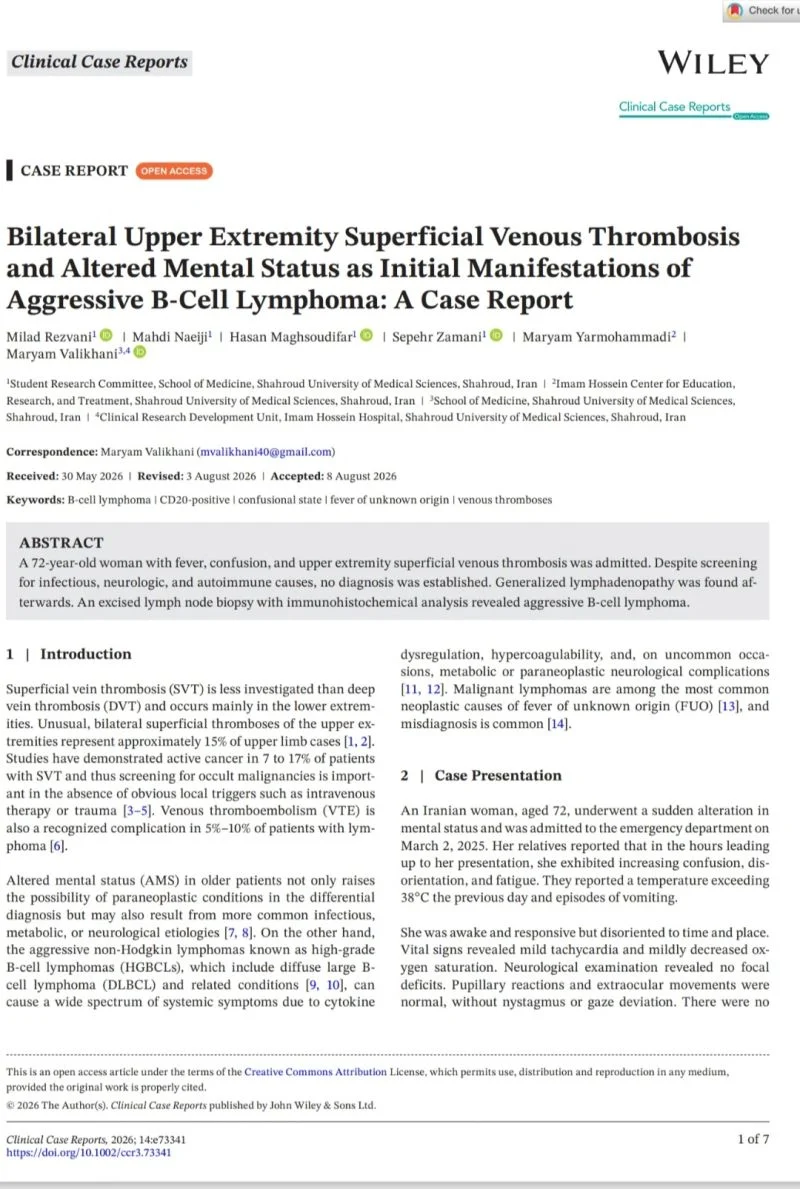
Bilateral Upper Extremity Superficial Venous Thrombosis and Altered Mental Status as Initial Manifestations of Aggressive B-Cell Lymphoma
This case highlights how aggressive B-cell lymphoma may initially present with thrombotic and neurological manifestations, emphasizing the importance of considering hematologic malignancy in patients with persistent systemic symptoms and unexplained bilateral upper-extremity superficial venous thrombosis.
Congratulations to my co-authors on this publication.”
Title: Bilateral Upper Extremity Superficial Venous Thrombosis and Altered Mental Status as Initial Manifestations of Aggressive B-Cell Lymphoma: A Case Report
Authors: Milad Rezvani, Mahdi Naeiji, Hasan Maghsoudifar, Sepehr Zamani, Maryam Yarmohammadi, Maryam Valikhani
Stay updated on all scientific advances with Hemostasis Today.
-
Oct 20, 2026, 06:45Grant Garcia: Why Does a Blood Clot Diagnosis Immediately End an Athlete’s Season?
-
Oct 20, 2026, 06:35Parag Tamhankar: Landmark Study Reveals Genetic Spectrum and Targeted Therapies for ALPS in the Indian Population
-
Oct 20, 2026, 06:26Nina Houben: Neonatal Blood Transfusion Symposium and PhD Defense
-
Oct 20, 2026, 05:46Jan T. Kielstein: DNP Poisoning and Hemoadsorption The Limits of Rescue Therapy
-
Oct 20, 2026, 05:33Giulia Di Paolo: Connecting Plasma Donation to the Patients Who Depend on It
-
Oct 20, 2026, 05:20James Knowles: Exploring Plasma Manufacturing and Strengthening Industry Collaboration
-
Oct 20, 2026, 05:11Giuseppe Lippi։ Understanding Liver Test Abnormalities After AAV Gene Therapy
-
Oct 20, 2026, 05:02Sanam Loghavi: Test Your Hematology Knowledge at ASH 2026!
-
Oct 20, 2026, 04:13Ifeanyichukwu Ifechidere: DOACs Are Not the Answer to Every Anticoagulation Question