

Anticoagulation and Contemporary Secondary Prevention of Thrombosis in Polycythemia Vera
Thrombosis remains the leading preventable cause of morbidity and mortality in polycythemia vera (PV).
Once thrombosis occurs, management should extend beyond treatment of the acute vascular event.
Contemporary PV care increasingly integrates anticoagulation, cytoreduction, hematocrit control and cardiovascular risk-factor modification into a single secondary-prevention strategy.
Management of Acute Venous Thromboembolism
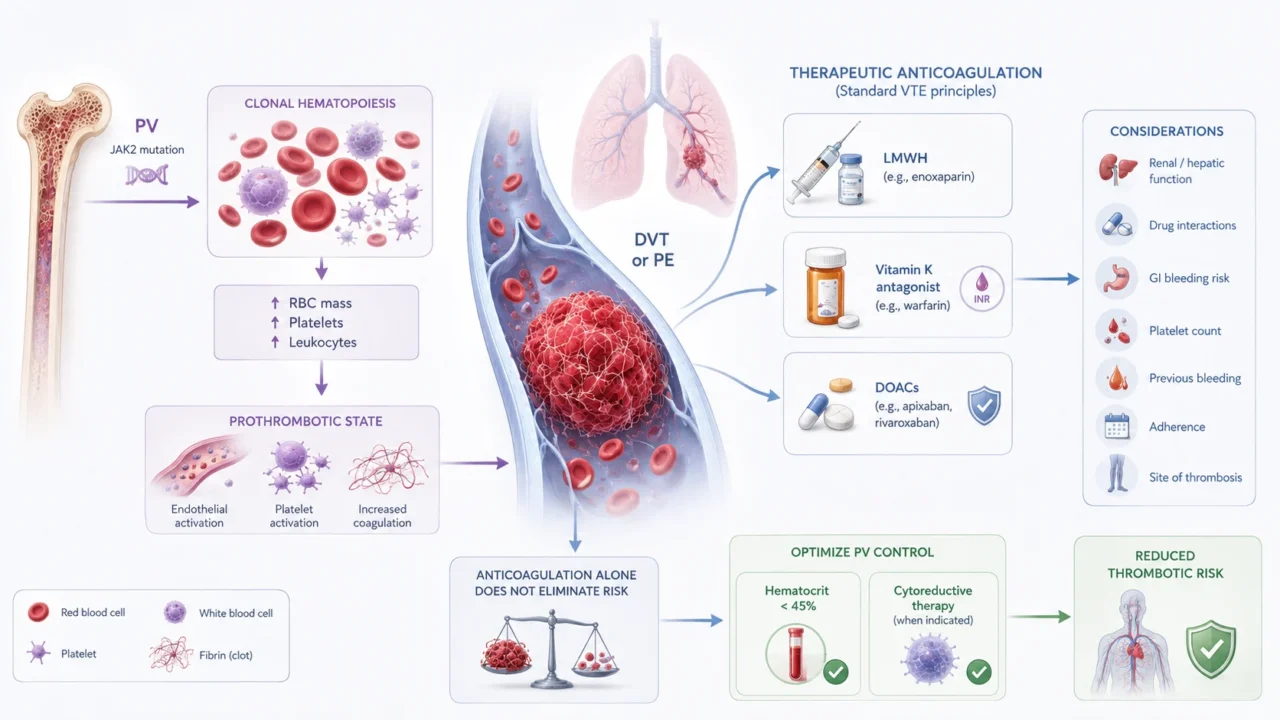
Patients with PV who develop deep-vein thrombosis or pulmonary embolism should receive therapeutic anticoagulation according to standard VTE principles while disease-directed treatment is optimized.
LMWH, vitamin K antagonists and direct oral anticoagulants (DOACs) are all used in clinical practice.
Although randomized MPN-specific data remain limited, observational evidence supports DOACs as a reasonable option for appropriately selected patients.
The choice of anticoagulant should take into account renal and hepatic function, drug interactions, gastrointestinal bleeding risk, platelet count, previous bleeding, adherence and the site of thrombosis.
Anticoagulation, however, does not eliminate the persistent prothrombotic drive associated with PV.
Hematocrit should remain below 45%, and cytoreductive therapy should be initiated or intensified when indicated.
How Long Should Anticoagulation Continue?
The optimal duration of anticoagulation after PV-associated VTE has not been established in randomized trials.
However, PV represents a persistent thrombotic risk factor, making extended or indefinite anticoagulation an important consideration after MPN-associated or unprovoked VTE when bleeding risk is acceptable.
This approach becomes particularly relevant after recurrent thrombosis and splanchnic vein thrombosis. Long-term therapy should not be viewed as static. Renal and hepatic function, platelet counts, bleeding history, acquired von Willebrand syndrome, portal hypertension, and concomitant antiplatelet therapy should be reassessed periodically.
Splanchnic Vein Thrombosis and MPN
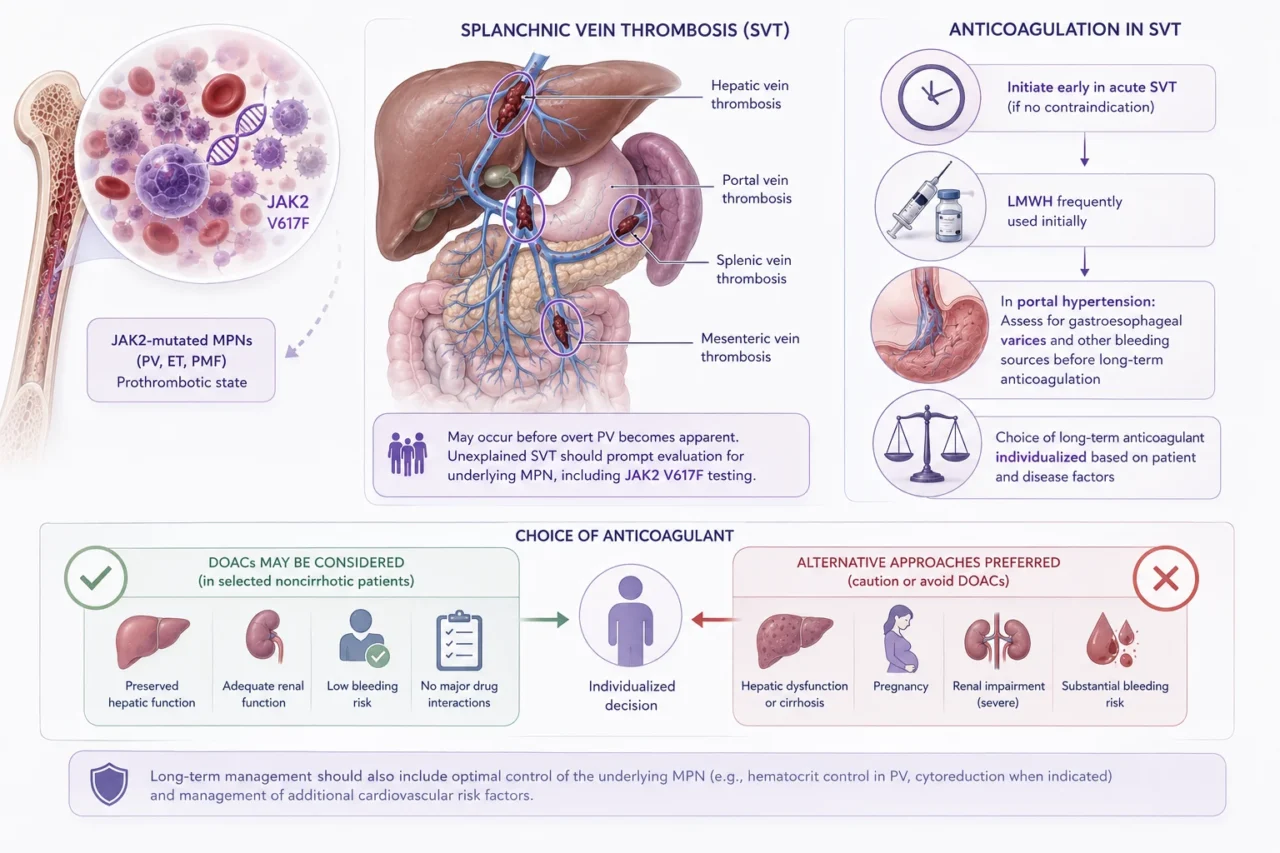
Splanchnic vein thrombosis – including portal, splenic, mesenteric, and hepatic vein thrombosis – is a characteristic thrombotic manifestation of JAK2-mutated MPNs. Importantly, it may occur before overt PV becomes apparent.
Therefore, unexplained splanchnic thrombosis should prompt evaluation for an underlying MPN, including JAK2 V617F testing.
Anticoagulation is generally initiated early in acute SVT when there is no contraindication.
LMWH is frequently used initially.
In patients with portal hypertension, assessment for gastroesophageal varices and other bleeding sources is particularly important before establishing long-term anticoagulation.
DOACs may be considered in selected noncirrhotic patients, whereas hepatic dysfunction, pregnancy, renal impairment, or substantial bleeding risk may favor alternative approaches.
Disease Control Is Part of Secondary Prevention
A thrombotic event in PV should trigger reassessment of the underlying disease rather than being treated as an isolated vascular complication.
Maintaining hematocrit below 45% remains central to thrombosis prevention.
Cytoreduction with hydroxyurea or interferon-based therapy should be individualized according to clinical characteristics, comorbidities, previous treatment, reproductive considerations, tolerance, and treatment goals.
Persistent leukocytosis or thrombocytosis, frequent phlebotomy requirements, progressive splenomegaly, uncontrolled symptoms, or difficulty maintaining hematocrit below target may indicate inadequate disease control and ongoing vascular risk.
Aspirin During Therapeutic Anticoagulation
The presence of PV does not automatically justify combining aspirin with full-dose anticoagulation.
Once therapeutic anticoagulation is started, the indication for aspirin should be reassessed because combination therapy increases bleeding risk. Aspirin may still be appropriate when there is an independent arterial indication, but the decision should be individualized, particularly in patients with extreme thrombocytosis, acquired von Willebrand syndrome, gastrointestinal pathology, portal hypertension, or previous major bleeding.
Arterial Thrombosis Requires a Different Approach
Secondary prevention after arterial thrombosis follows a different paradigm. Low-dose aspirin, effective control of PV and aggressive cardiovascular risk-factor management remain central.
Anticoagulation is not routinely required solely because an arterial thrombotic event has occurred. It should be used when another indication exists, such as atrial fibrillation, intracardiac thrombus, VTE, or another cardioembolic source.
Beyond Phlebotomy and Aspirin
PV management is moving beyond the traditional “phlebotomy plus aspirin” approach toward individualized, risk-adapted treatment.
Cytoreduction may be considered earlier in patients with excessive phlebotomy requirements, symptomatic iron deficiency, progressive leukocytosis or thrombocytosis, symptomatic splenomegaly, difficult-to-control symptoms, or persistent difficulty maintaining hematocrit below 45%.
Interferon-based therapy has also gained importance. Ropeginterferon alfa-2b can provide sustained hematologic control and reduce JAK2 V617F mutant allele burden. However, molecular response should not yet be interpreted as established evidence of reduced myelofibrotic or leukemic progression.
Rusfertide and the Changing Role of Iron Restriction
Repeated phlebotomy can produce iron deficiency, contributing to fatigue and other symptoms in patients with PV.
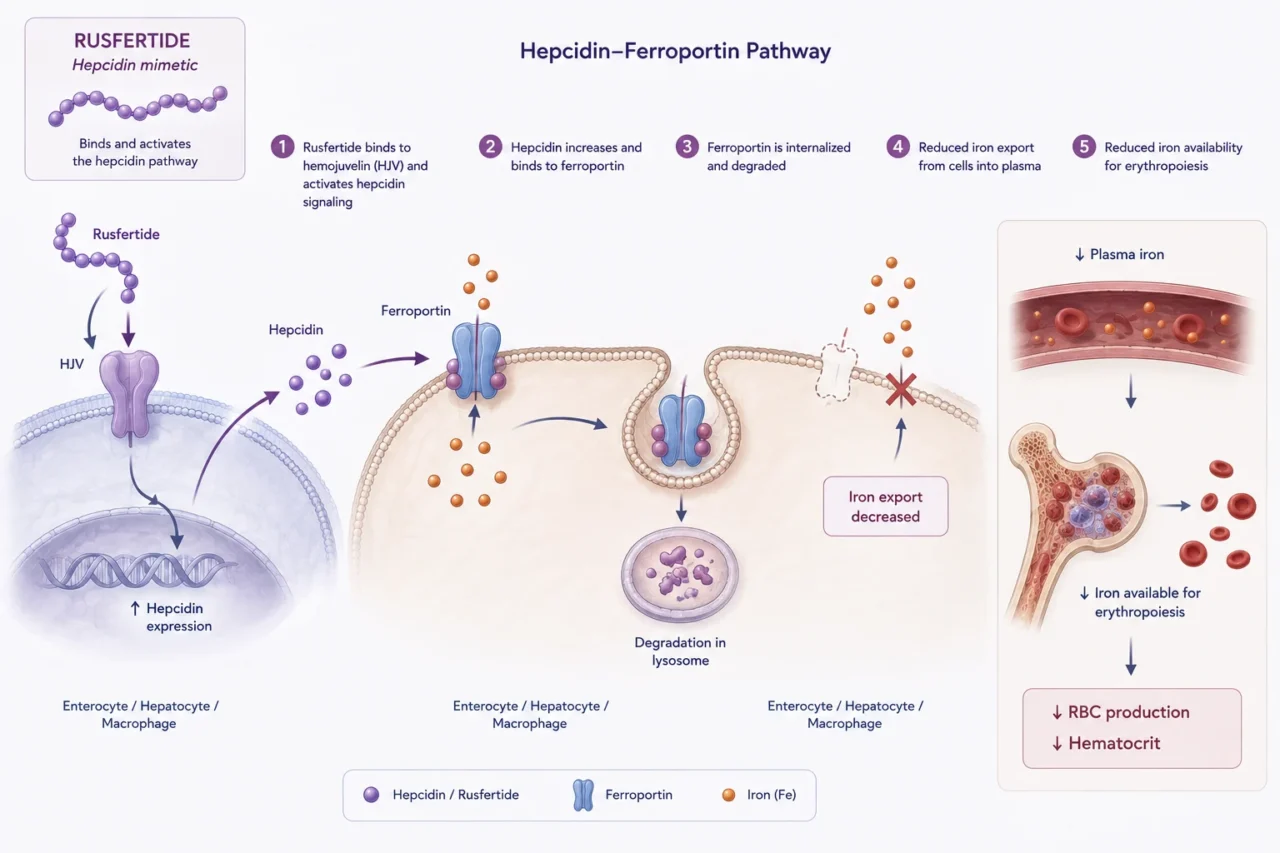
Rusfertide, a hepcidin mimetic, targets the hepcidin–ferroportin pathway and reduces iron availability for erythropoiesis.
The FDA approved rusfertide (MIMRYLO) in August 2026 for erythrocytosis in adults with PV based on the phase 3 VERIFY trial.
In the trial, 76.9% of patients receiving rusfertide required no phlebotomies between weeks 20 and 32, compared with 32.9% receiving placebo.
However, improved hematocrit control should not automatically be interpreted as thrombosis prevention. Whether rusfertide modifies thrombotic outcomes or the underlying malignant clone remains an important question for longer-term follow-up.
The Contemporary PV Approach
The modern approach to secondary thrombosis prevention in PV is therefore integrated rather than treatment-specific.
Anticoagulation is used when indicated, while hematocrit is maintained below 45%, cytoreduction is optimized, cardiovascular risk factors are addressed, and the need for concomitant aspirin is regularly reassessed.
The goal is not simply to treat the thrombus. It is to reduce the persistent biological conditions that make another thrombotic event possible.
FAQ
1.How long to anticoagulate after PV-associated VTE?
Indefinitely in most cases, given PV’s persistent thrombotic risk – especially after recurrent or splanchnic VTE – provided bleeding risk remains acceptable.
2.LMWH, VKA, or DOAC in PV?
All are used; DOACs are reasonable in selected patients. Choose based on renal or hepatic function, bleeding risk (including acquired von Willebrand), drug interactions, platelet count, adherence and thrombosis site.
3.Continue aspirin once on therapeutic anticoagulation?
Only if there is a clear independent arterial indication. Routine combination increases bleeding and is not required for venous events alone.
4.How to optimize disease control post-thrombosis?
Keep hematocrit <45% and intensify cytoreduction (hydroxyurea or interferon) when there is inadequate control (symptoms, splenomegaly, frequent phlebotomy, persistent leukocytosis, thrombocytosis).
5.Does rusfertide reduce thrombosis risk?
It reduces phlebotomy needs and improves hematocrit (VERIFY trial), but thrombosis-risk reduction is unproven; secondary prevention still depends on integrated anticoagulation, Hct control, cytoreduction, and risk-factor management.
Written by Heghine Khachatryan, MD, PhD, Editor-in-Chief at Hemostasis Today.
Stay updated with Hemostasis Today.
-
Oct 21, 2026, 18:13Wolfgang Miesbach: Hereditary Hemorrhagic Telangiectasia An Overlooked Bleeding Disorder
-
Oct 21, 2026, 17:55Gayatri Kotwal։ New Review on Anemia, Pain, and Nutritional Deficiencies in Cancer Patients
-
Oct 21, 2026, 17:40Tetsuzan Ron: Iron Deficiency Without Anemia Clinical Impact and Management
-
Oct 21, 2026, 17:29Amir Hossien Esfandiari։ The Association Between Viral Infections and Aplastic Anemia
-
Oct 21, 2026, 17:16Melissa Hollo: A Meaningful Step Forward for Women’s Health
-
Oct 21, 2026, 17:09Chipili Ng’onga: Have You Ever Seen a Result That Just Didn’t Make Sense?
-
Oct 21, 2026, 16:57Fabrice Cognasse: Celebrating the Next Generation of Platelet Research and Transfusion Medicine
-
Oct 21, 2026, 16:47Christabel Odeta: Treating Pediatric Cancer in Children With Sickle Cell Disease
-
Oct 21, 2026, 16:36Sharlene Haywood: Bringing Multidisciplinary Learning Into Nursing Practice