


Sandra Revill Tremulis: The Lp(a)HORIZON Topline Results Raise Important Questions Beyond Simply ‘Does Lowering Lp(a) Work?’
Sandra Revill Tremulis, Marketing Consultant at Tremulis Stractical Marketing Consulting and Founder of the Lipoprotein(a) Foundation, shared a post on LinkedIn:
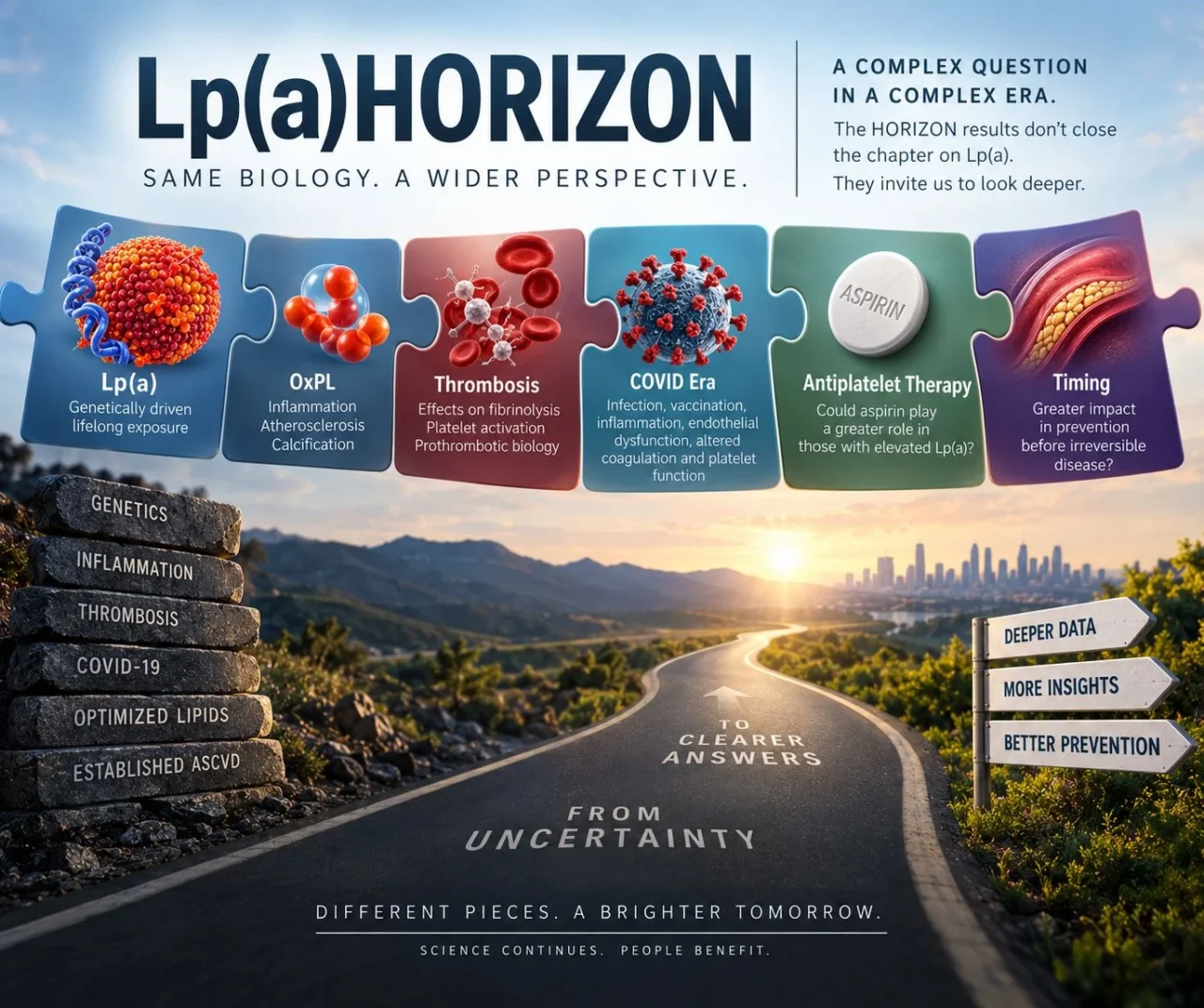
“The Lp(a)HORIZON topline results raise important questions beyond simply ‘Does lowering Lp(a) work?’
HORIZON began in December 2019 and was conducted largely during the COVID era – an extraordinary period of infection, reinfection, vaccination and changes in cardiovascular care.
That matters because Lp(a) biology extends beyond cholesterol. Lp(a) carries oxidized phospholipids (OxPL) and has potential pro-inflammatory, pro-atherogenic and prothrombotic effects, including possible effects on fibrinolysis and platelet activity.
COVID infection also affects endothelial function, inflammation, coagulation and platelet activation. Importantly, platelet count and platelet function are not the same thing: mild reductions in platelet count do not necessarily mean reduced thrombotic activity.
This makes the full HORIZON dataset particularly interesting.
Could outcomes have differed according to COVID history, platelet measures, aspirin/antiplatelet use, inflammatory status or OxPL burden?
Vaccination status is also worth examining as part of the COVID-era dataset – not because there is evidence it affected the HORIZON result, but because potential confounders deserve appropriate analysis.
And then there is aspirin.
Previous studies have suggested that individuals with elevated Lp(a) may derive greater cardiovascular benefit from aspirin, potentially providing another clue to Lp(a)’s thrombotic biology.
Perhaps HORIZON is asking us to look beyond one number.
How early should we lower Lp(a)?
How important is OxPL?
And how much of Lp(a)-associated risk is atherosclerotic versus inflammatory and thrombotic?
A negative primary endpoint doesn’t necessarily end the Lp(a) hypothesis.
It may tell us we need to ask better questions.”
Stay updated with Hemostasis Today.
-
Oct 22, 2026, 17:10Matthew Hazell: Optimizing the Use of Rare Red Blood Cell Units
-
Oct 22, 2026, 17:03Smita Patil: New Insights Into Platelet Alpha-Granule Secretion
-
Oct 22, 2026, 16:48Ahmed Alotaibi: Rare Rh Phenotype and Severe Fetal Anaemia
-
Oct 22, 2026, 16:36Alissa Odum: Every Blood Type Matters Every Donation Saves Lives
-
Oct 22, 2026, 16:33Mehul Malhotra: Targeted Therapies and Clinical Advances Transform the wAIHA Treatment Landscape
-
Oct 22, 2026, 16:13William Wallace: The Hidden Neurological Impact of Vitamin B12 Deficiency
-
Oct 22, 2026, 16:06Akram Farhadi: Anemia and Low Hemoglobin Associated With Higher Risk of Osteosarcopenia in Older Adults
-
Oct 22, 2026, 15:49Javed Iqbal: NUMC Pulmonary and Critical Care Team Showcases Research at CHEST 2026
-
Oct 22, 2026, 15:37Alina Mitina: Key Concerns Surrounding DVT and Pulmonary Embolism