


The New B12 Diagnostic Algorithm: From Serum Cobalamin to Functional Deficiency
For decades, standard laboratory evaluation of suspected cobalamin deficiency relied almost entirely on total serum B12 assays.
However, relying on total serum cobalamin as a sole biomarker routinely exposes clinicians to a diagnostic paradox: patients with overt clinical features-such as unexplained macrocytosis, subacute combined degeneration, or hyperhomocysteinemia-exhibiting “normal” total B12 levels, and conversely, individuals with low serum cobalamin who remain entirely asymptomatic without metabolic impairment.
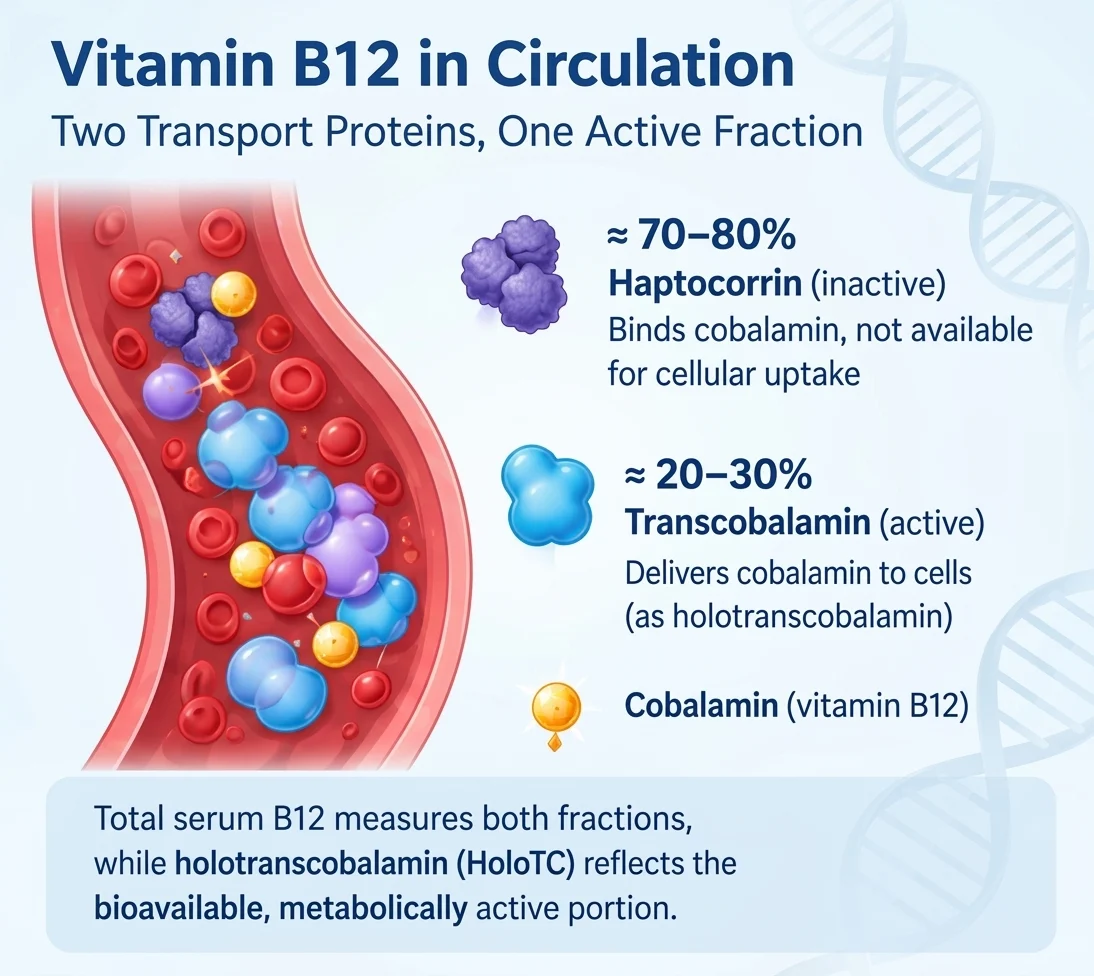
Because approximately 70-80 percent of circulating B12 is bound to inert haptocorrin rather than the metabolically active transport protein transcobalamin, total serum cobalamin is an imprecise tool.
The diagnostic paradigm has shifted away from static total serum concentrations toward a multi-step, functional framework.
By integrating holotranscobalamin (Active-B12) as a front-line marker of bioavailable B12 alongside downstream metabolic indicators-primarily methylmalonic acid (MMA) and total homocysteine (tHcy)-modern algorithms pinpoint cellular-level functional deficiencies long before irreversible neurological damage or severe cytopenias take hold.
The Pitfalls of Total Serum Cobalamin
Consequently, normal or even elevated total serum B12 concentrations can conceal severe, tissue-level cellular depletion in multiple clinical scenarios.
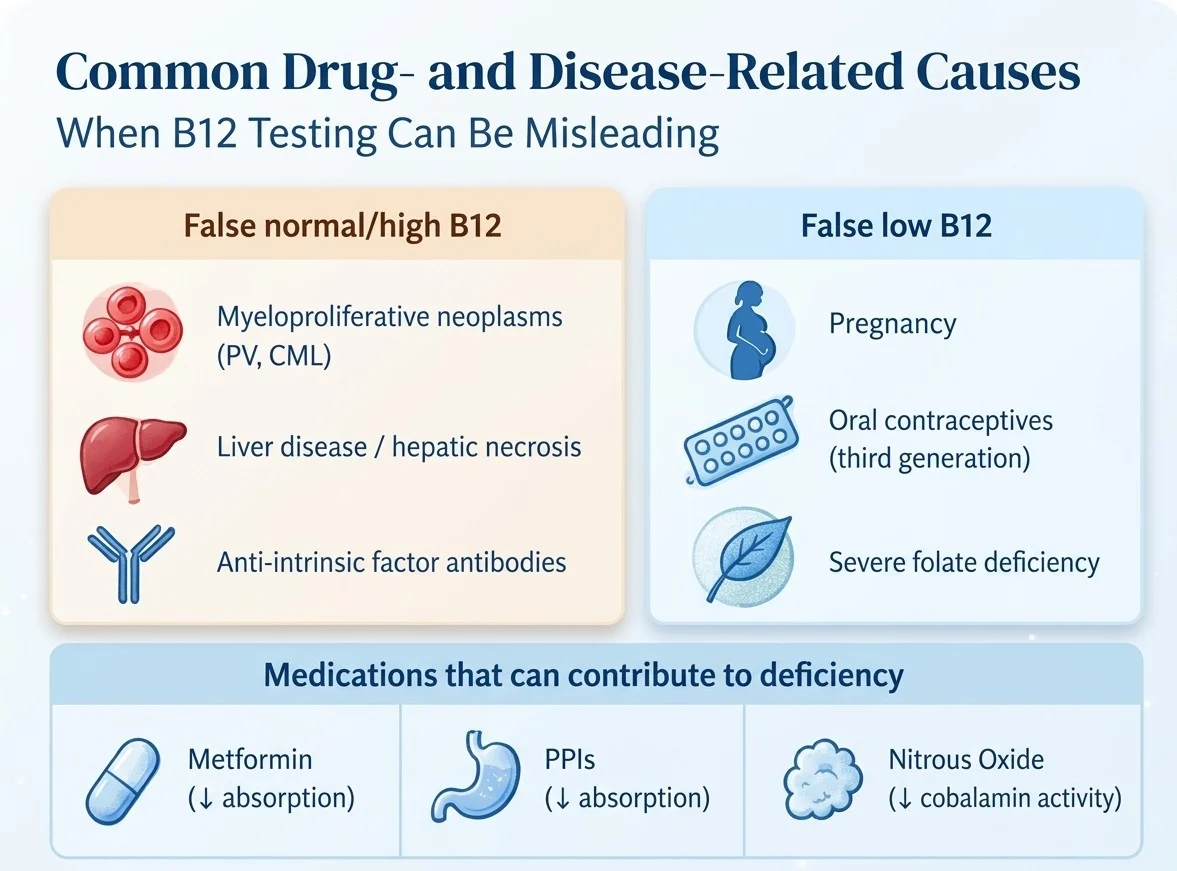
In myeloproliferative neoplasms, such as polycythemia vera or chronic myeloid leukemia, markedly increased haptocorrin synthesis falsely inflates total B12 assays while peripheral cellular starvation persists.
Similarly, high-titer anti-intrinsic factor antibodies can directly interfere with competitive binding immunoassays, generating spuriously normal or elevated B12 readouts.
In severe liver disease or active hepatic necrosis, the passive release of stored cobalamin and haptocorrin into the circulation masks severe functional depletion.
Conversely, low total B12 often occurs in low-risk scenarios due to transient drops in haptocorrin without metabolic significance.
Common examples include pregnancy, third-generation oral contraceptive use, and severe folate deficiency, wherein total serum B12 readings fall below classical thresholds despite preserved cellular endocytosis and normal downstream intracellular enzymatic activity.
First-Line Bioavailability: Holotranscobalamin (Active-B12)
Holotranscobalamin (HoloTC)-representing solely the cobalamin-transcobalamin complex-measures the active circulating fraction capable of cellular delivery.
Because transcobalamin has a rapid turnover rate and a significantly shorter plasma half-life than haptocorrin (hours versus days), a decline in HoloTC serves as the earliest biochemical indicator of negative B12 balance, preceding the exhaustion of hepatic stores, metabolic organic acid elevation, and morphological hematological changes.
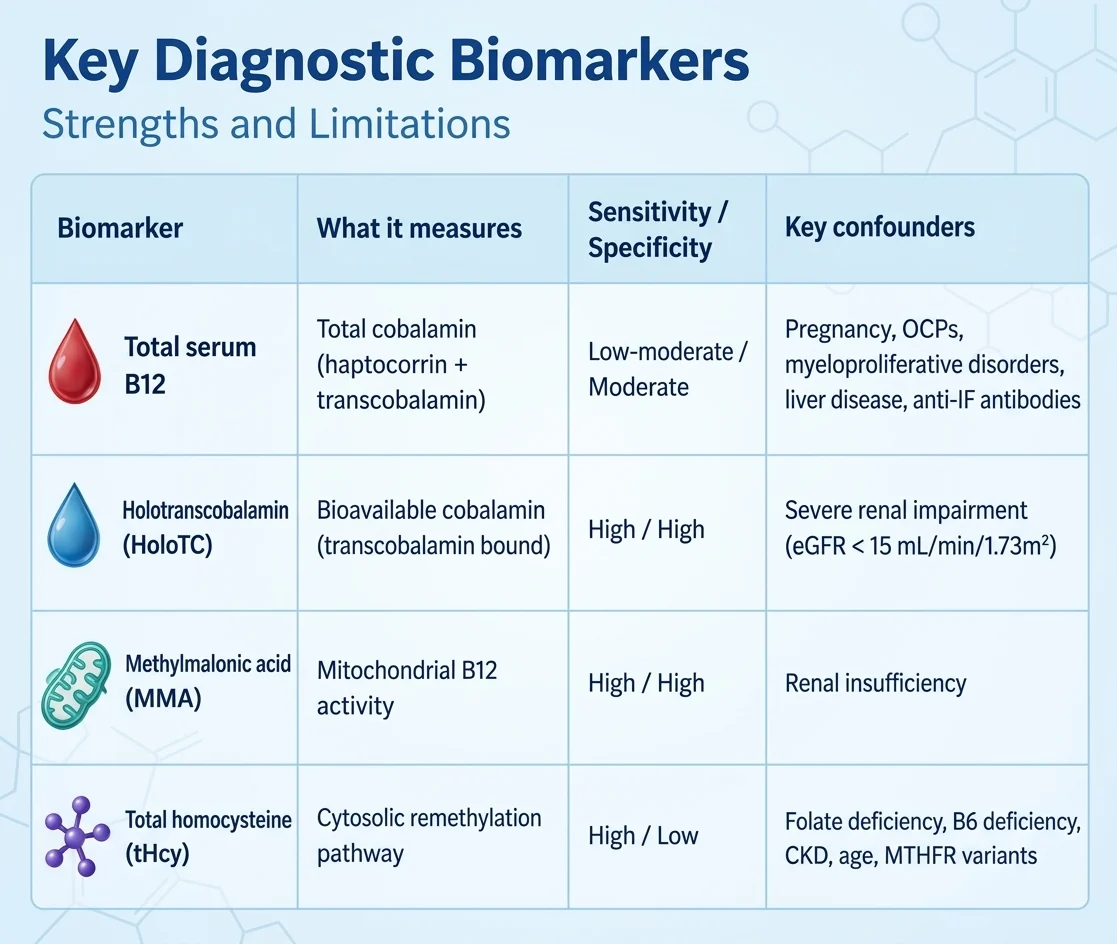
Evaluating diagnostic metrics reveals distinct functional profiles across available biomarkers:
- Total Serum Cobalamin: Measures total circulating cobalamin across both haptocorrin and transcobalamin fractions. It exhibits low to moderate diagnostic sensitivity and moderate specificity, burdened by confounders such as pregnancy, oral contraceptives, myeloproliferative disorders, hepatic disease, and autoantibody assay interferences.
- Holotranscobalamin (Active-B12): Specifically measures bioavailable, endocytosable cobalamin bound to transcobalamin. It demonstrates high sensitivity for early negative B12 balance and high overall diagnostic specificity. Its primary clinical limitation is severe renal impairment (eGFR less than 15 mL/min/1.73m²), which can lead to false elevations due to reduced clearance.
- Methylmalonic Acid (MMA): Evaluates intracellular mitochondrial adenosylcobalamin activity. It offers high diagnostic sensitivity and high specificity for tissue-level B12 depletion, with its primary confounding factor being renal insufficiency, which reduces urinary excretion and elevates serum concentrations independently of cobalamin status.
- Total Homocysteine (tHcy): Reflects cytosolic remethylation pathway activity requiring methylcobalamin. While demonstrating high sensitivity to early B12 depletion, its specificity is low because serum levels are elevated by folate deficiency, vitamin B6 deficiency, chronic kidney disease, advanced age, and genetic variants such as methylene tetrahydrofolate reductase (MTHFR) polymorphisms.
Intracellular Enzymatic Pathways and Metabolic Confirmation
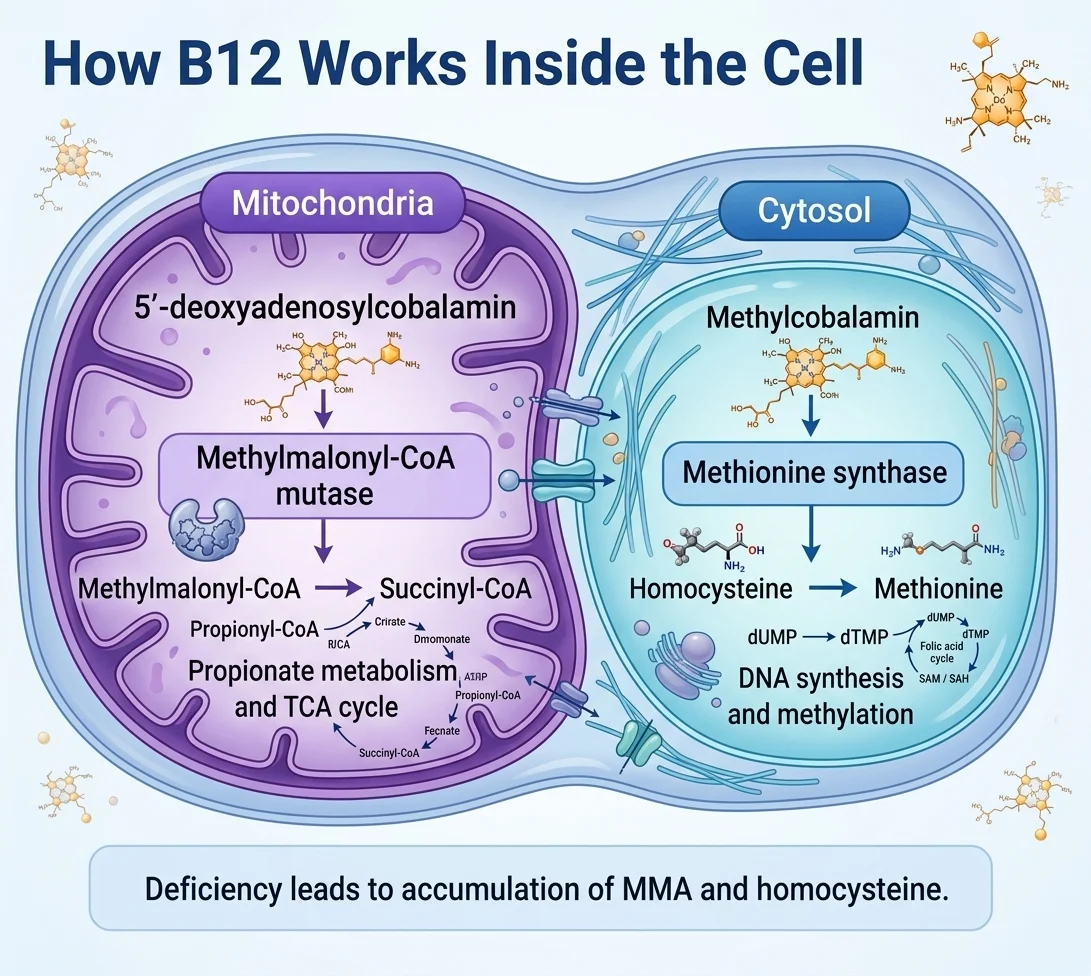
When front-line bioavailability assays yield equivocal or borderline results, downstream metabolic intermediates serve as essential surrogate markers of cellular cobalamin activity. Intracellular B12 functions as a critical cofactor in two distinct subcellular compartments: the mitochondria and the cytosol.
Within the mitochondrial matrix, cobalamin is converted to 5′-deoxyadenosylcobalamin, an indispensable cofactor for methylmalonyl-CoA mutase.
This enzyme catalyzes the isomerization of L-methylmalonyl-CoA to succinyl-CoA, a vital step in propionate catabolism and entry into the tricarboxylic acid (TCA) cycle.
When intracellular adenosylcobalamin levels fall below functional thresholds, methylmalonyl-CoA mutase activity is impaired, causing an accumulation of upstream methylmalonyl-CoA, which is subsequently hydrolyzed to methylmalonic acid (MMA) and released into the circulation.
Serum MMA elevation is highly specific for intracellular B12 depletion, provided that impaired renal clearance (which falsely elevates MMA) is excluded.
Concurrently, within the cytosol, cobalamin is converted to methylcobalamin, which serves as a cofactor for methionine synthase (homocysteine methyltransferase).
This enzyme transfers a methyl group from 5-methyltetrahydrofolate to total homocysteine (tHcy), forming methionine and regenerating free tetrahydrofolate for purine and pyrimidine synthesis.
Cytosolic methylcobalamin depletion inhibits this remethylation pathway, resulting in intracellular accumulation and subsequent plasma elevation of total homocysteine.
Although serum tHcy elevation is a sensitive marker of cobalamin depletion, it lacks specificity due to the overlapping metabolic requirements of folate and vitamin B6.
Pharmacological Mechanisms of Drug-Induced Functional B12 Deficiency
While autoimmune Pernicious Anemia remains the classic etiology of severe B12 deficiency, drug-induced malabsorption represents the most prevalent cause of insidious, unrecognized functional cobalamin depletion in contemporary clinical practice.
Two widely prescribed drug classes-metformin and proton pump inhibitors (PPIs)-disrupt cobalamin bioavailability through distinct physiological mechanisms.
Metformin-Induced Calcium-Dependent Ileal Antagonism
Metformin-induced B12 deficiency occurs in 10 percent to 30 percent of patients receiving long-term therapy, exhibiting a dose- and duration-dependent pattern.
The physiological absorption of the intrinsic factor-cobalamin (IF-B12) complex within the distal ileum is a calcium-dependent receptor-mediated process governed by the cubam receptor complex (cubilin and amnionless).
Metformin is a biguanide that carries a strong positive charge at physiological pH. At the intestinal brush border membrane, metformin competes with divalent calcium ions, displacing them from the cell membrane interface.
This charge disturbance impairs the calcium-dependent binding of the IF-B12 complex to the cubam receptor, blocking endocytosis.
In clinical practice, metformin-induced B12 deficiency often presents as distal symmetric sensory polyneuropathy.
Because this presentation mirrors diabetic peripheral neuropathy, clinicians frequently misattribute progressive paresthesias and numbness to glycemic dysregulation rather than cobalamin depletion, leading to escalated antidiabetic therapy while functional neuronal damage advances.
Acid Suppression and Food-Bound Cobalamin Malabsorption
Proton pump inhibitors (e.g., omeprazole, pantoprazole) and histamine-2 receptor antagonists cause a selective defect termed food-bound cobalamin malabsorption (FBCM). Naturally occurring dietary cobalamin is tightly bound to animal proteins.
In the stomach, gastric parietal cells secrete hydrochloric acid, which lowers gastric pH and activates pepsinogen into pepsin. Active pepsin cleaves dietary protein-B12 complexes, freeing cobalamin to bind salivary haptocorrin (R-protein) for transit into the duodenum.
By raising intragastric pH above 4.0, PPIs inhibit pepsinogen activation and abolish acid-mediated proteolysis, leaving dietary cobalamin bound within the food matrix and unable to attach to salivary haptocorrin or subsequently to intrinsic factor. However, unlike Pernicious Anemia, intrinsic factor secretion itself remains largely intact.
Consequently, patients with PPI-induced malabsorption retain the ability to absorb crystalline (unbound) B12 found in fortified foods or oral supplements.
Because body stores drain slowly, patients on long-term acid suppression often maintain normal or borderline total serum B12 levels for years; thus, measuring Active-B12 (HoloTC) and serum MMA is necessary to detect early tissue-level deficits.
Nitrous Oxide Toxicity
In addition to enteral malabsorption, acute functional B12 deficiency can occur via direct chemical inactivation by nitrous oxide, used recreationally or in anesthetic settings. N
itrous oxide rapidly oxidizes the monovalent cobalt core of active cob(I)alamin to the inactive cob(III)alamin form, irreversibly inactivating methionine synthase.
This leads to an acute, severe functional deficiency characterized by rapid-onset neurotoxicity and hyperhomocysteinemia, despite entirely normal total serum cobalamin levels.
The Integrated Stepped Diagnostic Algorithm
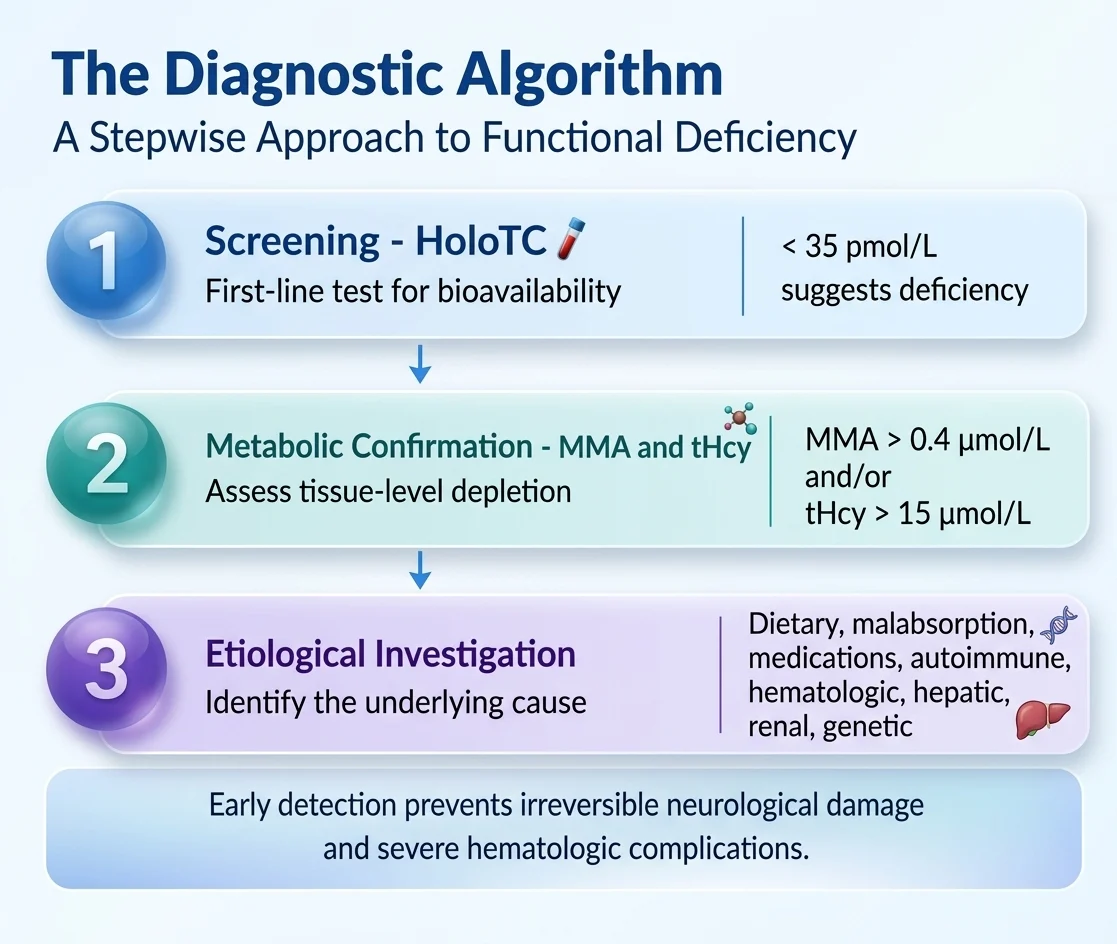
To operationalize these biochemical insights into clinical and laboratory workflows, modern practice guidelines recommend a multi-tiered, stepped reflex protocol for any patient presenting with suspected B12 deficiency (e.g., unexplained macrocytosis, cytopenias, peripheral neuropathy, or cognitive decline).
Step 1: Front-Line Bioavailability Assessment
Initial screening utilizes Holotranscobalamin (Active-B12) as the primary assay due to its high diagnostic accuracy for bioavailable B12. (If HoloTC is unavailable, total serum B12 is substituted alongside clinical risk scoring).
- Unambiguous Normal Status: A HoloTC concentration greater than 50 pmol/L (or total serum B12 greater than 350 ng/L) effectively excludes active B12 deficiency. Further evaluation should focus on alternative etiologies for symptoms or macrocytosis.
- Unambiguous Deficiency Status: A HoloTC concentration below 25 pmol/L (or total serum B12 below 180 ng/L) confirms tissue-level cobalamin depletion. Second-line metabolic testing is unnecessary; the clinician should proceed directly to an etiology workup.
- The Diagnostic Gray Zone: A HoloTC concentration between 25 and 50 pmol/L (or total serum B12 between 180 and 350 ng/L) represents an indeterminate, borderline zone wherein cellular B12 status cannot be determined by static concentration alone. This triggers an automated reflex to Step 2.
Step 2: Second-Line Metabolic Confirmation
Indeterminate samples automatically reflex to serum Methylmalonic Acid (MMA) measurement to assess intracellular mitochondrial enzyme function.
- Metabolic Confirmation: A serum MMA concentration greater than 271 nmol/L (in patients with preserved renal function, defined as an eGFR greater than 60 mL/min/1.73m²) confirms functional tissue deficiency. If renal impairment is present, an elevated MMA must be interpreted cautiously, and total homocysteine (tHcy) may be evaluated concurrently as a secondary indicator.
- Metabolic Exclusion: A normal serum MMA level in the setting of a borderline HoloTC excludes functional intracellular deficiency at the time of testing. Re-evaluation in 6 to 12 months is recommended if clinical suspicion remains high.
Step 3: Etiological Identification Protocol
Once a functional B12 deficiency is established, diagnostic efforts shift toward identifying the underlying etiology to guide lifelong management:
- Autoimmune Etiology: Assay for Anti-Intrinsic Factor Antibodies (IFAB) and Anti-Gastric Parietal Cell Antibodies (PCA). While IFAB exhibits moderate sensitivity (approximately 50-60 percent), its specificity for Pernicious Anemia approaches 100 percent. PCA demonstrates high sensitivity (approximately 90 percent) but lower specificity, serving as a secondary autoantibody marker.
- Pharmacological and Dietary Etiology: If serology is negative, perform a focused medication review (evaluating long-term metformin, PPIs, or recent nitrous oxide exposure) and assess for malabsorptive disorders (e.g., Celiac disease, Crohn’s disease, prior bariatric surgery) or strict vegan/vegetarian diets without oral supplementation.
Clinical and Hematological Implications
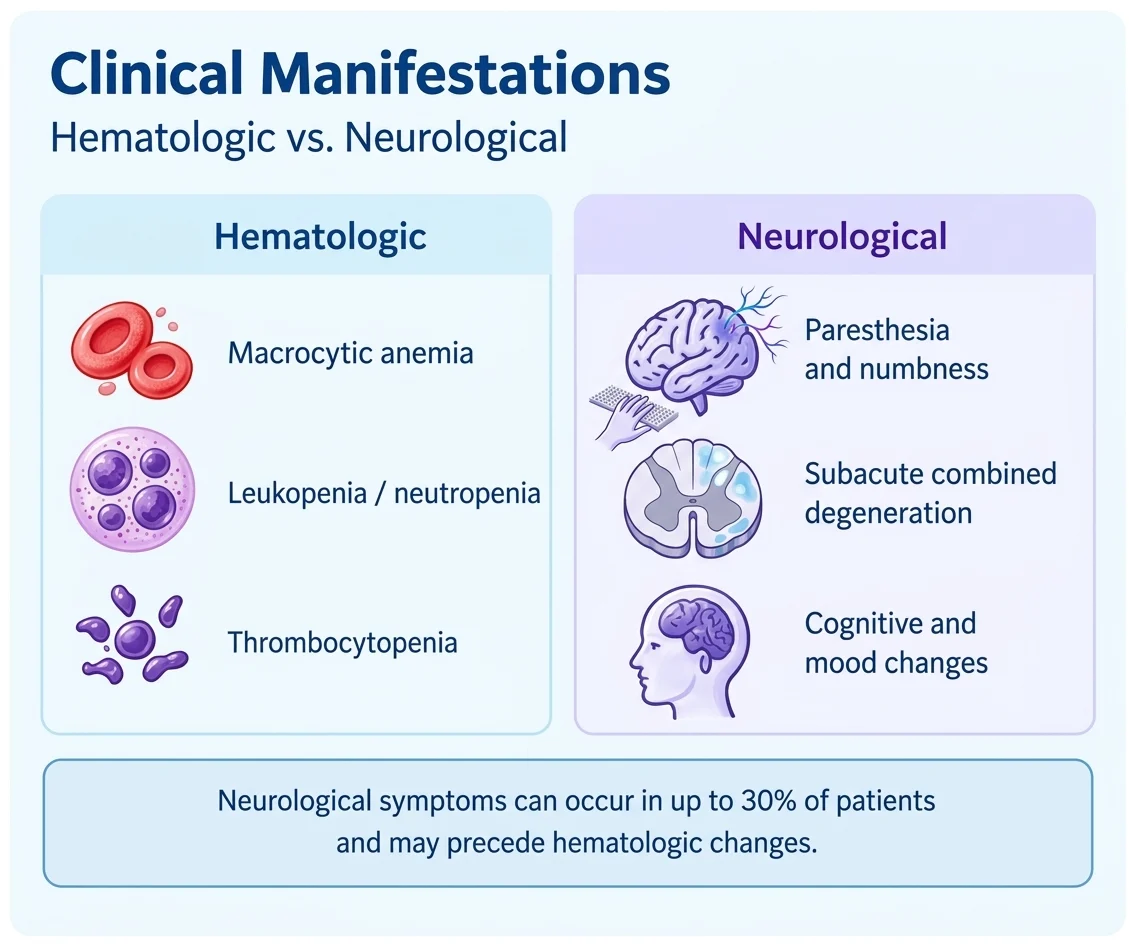
A crucial insight for modern hematology practice is the frequent decoupling of neurological and hematological manifestations in cobalamin deficiency. H
istorically, diagnostic triggers relied heavily on detecting classical megaloblastic anemia accompanied by pronounced macrocytosis (mean corpuscular volume, MCV>100 fL) and hypersegmented neutrophils on peripheral blood smears.
However, modern clinical data demonstrate that up to 30 percent of patients presenting with advanced neurodegenerative changes-including subacute combined degeneration of the posterior and lateral columns of the spinal cord, sensorimotor peripheral neuropathy, or optic neuropathy-exhibit entirely normal hemoglobin levels and normal red cell indices.
This clinical masking is further compounded by widespread dietary folate fortification, which can bypass the “folate trap,” maintaining nucleic acid synthesis and preventing overt megaloblastic erythropoiesis while leaving methylcobalamin- and adenosylcobalamin-dependent neurological pathways severely compromised.
Adopting a functional B12 testing framework-moving from total cobalamin screening to Active-B12 and reflex MMA quantification-enables hematologists and clinical pathologists to identify cellular depletion before irreversible neurological impairment or severe bone marrow failure occurs.
Conclusion and Key Takeaways
- Total Serum Cobalamin Assays are Insufficient: Because 70 percent to 80 percent of total B12 is bound to inert haptocorrin, total cobalamin measurements suffer from poor diagnostic sensitivity and specificity, yielding high rates of false-negative and false-positive results.
- Holotranscobalamin Measures Bioavailable B12: HoloTC measures the active transcobalamin-bound fraction and provides a more sensitive, early indicator of negative cobalamin balance before metabolic organic acid accumulation occurs.
- Reflex MMA Resolves Indeterminate Results: Quantification of serum methylmalonic acid serves as the primary functional reflex marker to confirm cellular-level mitochondrial dysfunction in patients with borderline B12 or HoloTC levels.
- Recognize Distinct Drug Mechanisms: Metformin disrupts calcium-dependent IF-B12 uptake in the ileum, whereas proton pump inhibitors induce food-bound cobalamin malabsorption by suppressing acid-mediated peptic cleavage.
- Neurological Damage Precedes Hematological Alterations: The absence of macrocytosis or anemia must not be used to rule out functional cobalamin deficiency, particularly in patients receiving folate fortification or presenting with progressive neuropathy.
FAQ
1. Why is total serum B12 unreliable?
Total B12 measures both inactive storage (haptocorrin, 70-80 percent) and bioavailable B12 (transcobalamin, 20-30 percent). Conditions like liver disease, myeloproliferative disorders, or autoantibody interference falsely elevate total B12 while tissues remain starved.
2. What makes Holotranscobalamin (Active-B12) superior?
HoloTC measures only the bioavailable B12 bound to transcobalamin-the exact fraction cells absorb via CD320 receptors. It drops significantly earlier than total B12 during negative balance.
3. What triggers second-line Methylmalonic Acid (MMA) testing?
Borderline Active-B12 (25-50 pmol/L) or total B12 (180-350 ng/L) creates a “diagnostic gray zone.” Elevated serum MMA (>271 nmol/L) proves cellular-level mitochondrial dysfunction.
4. How does kidney disease affect MMA results?
Because MMA is cleared by the kidneys, impaired renal function (eGFR < 60) causes MMA accumulation independent of B12 status, requiring cautious clinical interpretation.
5. Why is Total Homocysteine (tHcy) a secondary marker?
tHcy is highly sensitive but lacks specificity-it elevates due to folate deficiency, B6 deficiency, renal failure, or MTHFR variants.
6. How does long-term Metformin cause B12 deficiency?
Metformin competes with calcium at the distal ileum, blocking the calcium-dependent endocytosis of the Intrinsic Factor-B12 complex.
7. How do Proton Pump Inhibitors (PPIs) affect B12 absorption?
PPIs raise stomach pH, preventing pepsin from cleaving B12 from dietary protein. However, absorption of unbound crystalline supplements remains intact.
8. Can severe B12 neurotoxicity occur with normal red blood cells?
Yes. Up to 30 percent of patients with subacute combined degeneration present without anemia or high MCV. High folate intake masks red cell changes while neurological damage advances.
9. Can patients on long-term PPIs take oral B12 supplements?
Yes. PPIs only block the stomach acid needed to free B12 from food proteins. Unbound crystalline B12 in oral supplements does not need acid cleavage and absorbs normally.
10. Does kidney disease ruin the MMA test?
It confounds it. Reduced kidney function (eGFR < 60) slows MMA clearance, causing falsely high levels. In renal patients, evaluate Active-B12 trends and clinical signs alongside MMA.
Written by Marieta Aleksanyan, MD
Stay updated with Hemostasis Today.
-
Sep 23, 2026, 13:56Noha Soror: Preparing for Hematology and Medical Oncology Board Certification
-
Sep 23, 2026, 13:46Ugochi Ogu: What Can Platelet Proteomics Reveal about Pain and Neurocognitive Vulnerability in Sickle Cell Disease?
-
Sep 23, 2026, 13:42Melissa Hollo: Connecting Obesity and Anemia for Earlier Maternal Risk Intervention
-
Sep 23, 2026, 13:16Beverley Hunt: Advances in Haemostatic Management of Postpartum Haemorrhage
-
Sep 23, 2026, 13:13Ioanna Mela: Recruiting a Research Associate on DNA nanotechnology
-
Sep 23, 2026, 13:04Ben Samelson-Jones: Do Gene Variants Drive PK Differences in FIX-Fusion and N9-GP Therapies?
-
Sep 23, 2026, 12:57Shelly Reed: Advocating for HTCs and CDC Funding with the Hemophilia Federation of America
-
Sep 23, 2026, 12:51Domenico Girelli: How Verona Hospital Transformed ED Anemia Care with Patient Blood Management
-
Sep 23, 2026, 12:45Lina Camacho-Arteaga: ENTIS Study Uncovers Safety Data on Early Pregnancy Exposure to Direct Oral Anticoagulants