


Jonathan Douxfils: Navigating the VTE Risk Continuum in Reproductive Medicine
Jonathan Douxfils, Director of the Research Unit in Clinical Pharmacology and Toxicology at University of Namur, shared a post on LinkedIn:
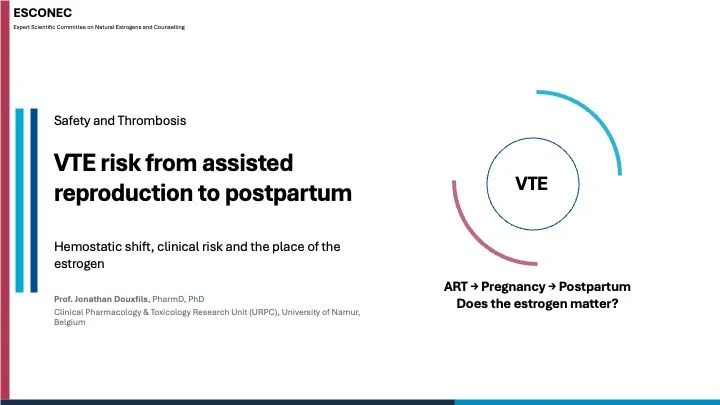
“I was pleased to participate in the FFER meeting in Montpellier, where I presented on VTE risk from assistedreproduction to postpartum.
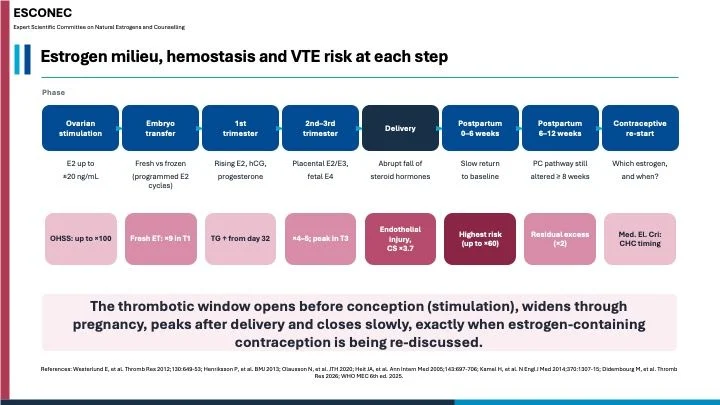
The key message: thrombotic risk in reproductive medicine is not a single event, but a continuum:
ART – pregnancy – delivery – postpartum – contraception restart.
Although VTE remains uncommon in absolute terms, the burden is clinically relevant:
- In the general obstetric population, VTE occurs in 1.2–1.4 per 1,000 pregnancies, with >50% of events occurring after delivery.
- Pregnancy increases VTE risk 4–5-fold, while the early postpartum period can increase it up to 60-fold compared with non-pregnant women.
- The first postpartum weeks are critical: around 9 VTE events per 10,000 deliveries in week 1, decreasing to 1 per 10,000 by week 4.
- ART adds a specific early risk window. In IVF pregnancies, first-trimester VTE risk is increased, particularly after fresh embryo transfer. OHSS remains the major red flag, with an absolute VTE risk reported around 1.7%.
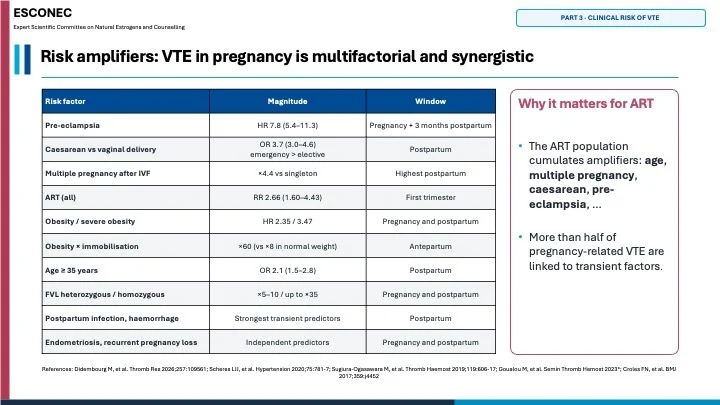
- But ART alone is not an indication for systematic anticoagulation. The clinical challenge is to identify who accumulates risk: previous VTE, OHSS, fresh transfer, multiple pregnancy, caesarean section, pre-eclampsia, obesity, infection or postpartum haemorrhage.
Another important point: estrogens are not interchangeable. Ethinylestradiol, and Natural Estrogens like E2 and E4 differ in hepatic impact, thrombin generation, APC resistance and expected thrombotic profile.
Why does this matter?
In programmed frozen embryo transfer, E2 is used to prepare the endometrium, but oral estrogen substitution can modify thrombin generation and fibrinolysis.
E4 may offer a pharmacologically attractive alternative because of its lower hepatic impact and more neutral haemostatic profile.
However, replacing E2 by E4 would first require dedicated ART studies showing preserved endometrial receptivity, pregnancy outcomes and improved haemostatic markers.
For now: a research priority, not a clinical recommendation.
Many thanks to the FFER organisers and Gedeon Richter France for the invitation and the excellent discussions.”
Stay updated with Hemostasis Today.
-
Sep 29, 2026, 17:31Rajnikant Patel: Bridging Ayurvedic Concepts and Modern Toxin-Mediated Disease
-
Sep 29, 2026, 17:13Nicholas Lang։ A Meaningful Case of Immune Thrombocytopenia
-
Sep 29, 2026, 16:55Ayatullah Gamal Wahab: When the CBC Lies
-
Sep 29, 2026, 16:35Chaima Rajeh: Types of Anemia and Their Laboratory Features
-
Sep 29, 2026, 16:27Scott Isaacs: How GLP-1 RAs Target Systemic Inflammation to Drive Cardio, Autoimmune, and Gut Health
-
Sep 29, 2026, 16:21Yitshak Kreiss: From Treating Patients to Defining the Standard of Knowledge
-
Sep 29, 2026, 16:18Edward Lee Carter: Why Periprocedural DOAC Guidance Needs a Common Output Standard
-
Sep 29, 2026, 16:07Yasmine Laraba: Deep Vein Thrombosis Causes, Signs and Management
-
Sep 29, 2026, 16:01Stephen Cornelissen: How Joining the Stem Cell Registry Can Save Patients with Blood Cancers