


Chaza Alaji: Dyslipidemia, Thrombosis and the DIC Diagnostic Trap
Chaza Alaji, Medical Laboratory Specialist and Supervisor at Privat university-private laboratory-general hospital, shared a post on LinkedIn:
”Dyslipidemia and Hemostasis: When Thrombotic Risk Meets a Diagnostic Paradox
Dyslipidemia—particularly elevated LDL-C and triglyceride-rich lipoproteins—is a major cardiovascular risk factor. But the relationship between lipid metabolism and hemostasis is more complex than ‘high lipids are associated thrombosis.’
Evidence shows that dyslipidemia can create a prothrombotic and proatherogenic environment through endothelial dysfunction, vascular inflammation, platelet hyperreactivity and altered coagulation signaling. Oxidized LDL (oxLDL) can promote Tissue Factor (TF) expression in monocytes and atherosclerotic plaques, contributing to thrombin generation after plaque disruption.
But dyslipidemia is NOT DIC
Disseminated intravascular coagulation (DIC) is an acquired, life-threatening systemic disorder involving coagulation activation, dysregulated fibrinolysis and endothelial injury, leading to microthrombosis and, in advanced disease, consumption of platelets and coagulation factors with bleeding and/or organ dysfunction.
Therefore:
Dyslipidemia is associated with a prothrombotic and atherothrombotic environment.
This does not mean:
Dyslipidemia causes consumptive coagulopathy and bleeding.
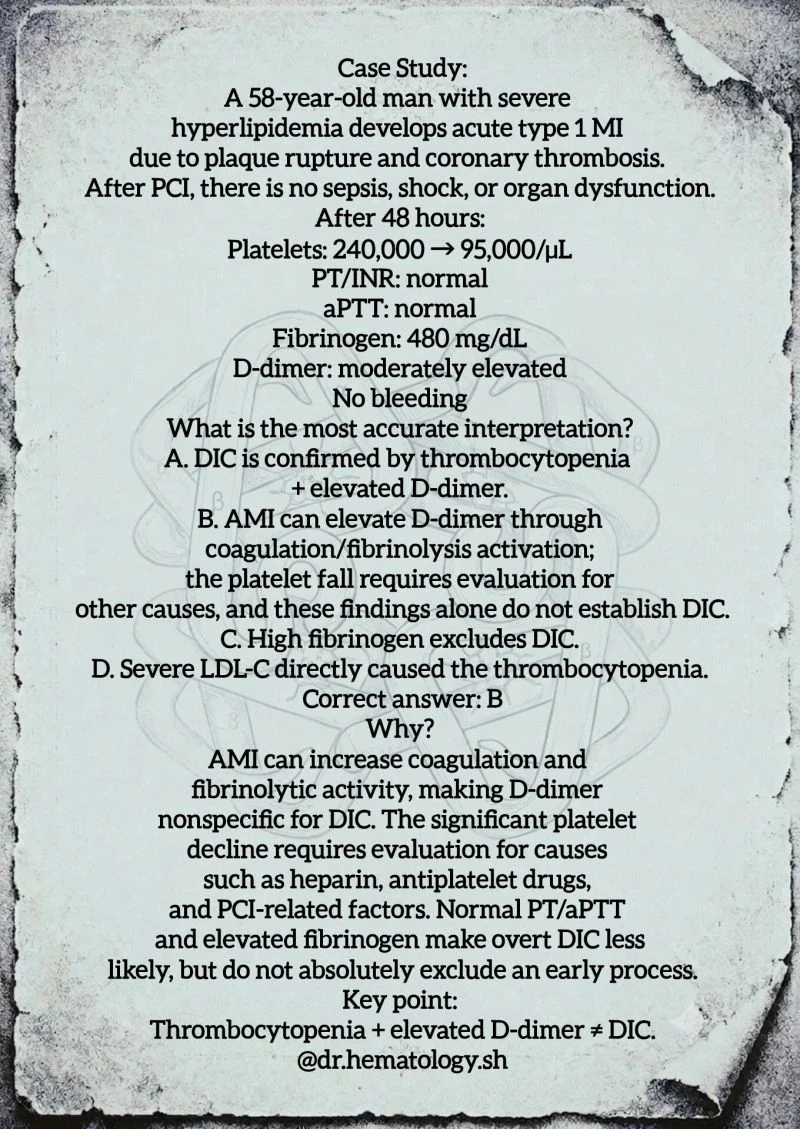
A patient with high LDL and thrombocytopenia should not be labeled as having DIC without appropriate clinical context and coagulation findings.
The laboratory perspective
When DIC is suspected, interpretation should integrate:
Platelet count plus PT/INR plus aPTT pluplus fibrinogen plus D-dimer/FDP plus clinical context plus serial trends.
The 2025 ISTH update emphasizes that DIC can evolve from an early phase to overt disease, making dynamic, context-based assessment important.
A low platelet count is nonspecific. Fibrinogen may initially remain normal or increase as an acute-phase reactant. D-dimer is useful in context but is not specific for DIC.
Where can AI add value?
Rather than applying simplistic rules such as:
High LDL plus low platelets – consumptive bleeding
AI could integrate:
Lipid profile plus platelet count plus PT/INR plus aPTT plus fibrinogen plus D-dimer plus medications plus liver function plus clinical diagnosis plus serial changes.
The goal should not be to diagnose DIC from a single laboratory value, but to recognize patterns and temporal relationships that warrant clinical evaluation.
AI should remain a decision-support tool, not replace clinical judgment or established diagnostic criteria.
Take-home message
Dyslipidemia can contribute to atherothrombosis through interactions among lipoproteins, platelets, endothelium and Tissue Factor.
DIC is a different systemic disorder requiring an underlying trigger and characteristic clinical-laboratory evolution.
The key question is not: ‘Is the lipid level high?’
but:
‘What biological pattern do the lipids, platelets, coagulation markers and clinical context create together?’
Modern laboratory medicine—and carefully validated AI—can help move from isolated numbers to meaningful patterns.”
Stay updated with Hemostasis Today.
-
Sep 29, 2026, 19:00Caitlin Raymond: Can Artificial Blood Solve Blood Supply Shortages?
-
Sep 29, 2026, 17:31Rajnikant Patel: Bridging Ayurvedic Concepts and Modern Toxin-Mediated Disease
-
Sep 29, 2026, 17:13Nicholas Lang։ A Meaningful Case of Immune Thrombocytopenia
-
Sep 29, 2026, 16:55Ayatullah Gamal Wahab: When the CBC Lies
-
Sep 29, 2026, 16:35Jonathan Douxfils: Navigating the VTE Risk Continuum in Reproductive Medicine
-
Sep 29, 2026, 16:35Chaima Rajeh: Types of Anemia and Their Laboratory Features
-
Sep 29, 2026, 16:27Scott Isaacs: How GLP-1 RAs Target Systemic Inflammation to Drive Cardio, Autoimmune, and Gut Health
-
Sep 29, 2026, 16:21Yitshak Kreiss: From Treating Patients to Defining the Standard of Knowledge
-
Sep 29, 2026, 16:18Edward Lee Carter: Why Periprocedural DOAC Guidance Needs a Common Output Standard