


The Rebalanced Patient: New Therapies and New Thrombotic Risks in Hemophilia
For decades, the central therapeutic principle in hemophilia was straightforward: replace what was missing.
In hemophilia A, this meant replacing factor VIII (FVIII); in hemophilia B, factor IX (FIX).
Prophylactic factor replacement transformed hemophilia from a condition dominated by recurrent spontaneous bleeding and progressive hemophilic arthropathy into a chronic disorder that could increasingly be managed preventively.
Yet factor replacement has never completely solved the therapeutic problem. Intravenous administration, pharmacokinetic variability, frequent infusions, venous-access difficulties, inhibitor development and breakthrough bleeding have continued to limit treatment for some patients.
These limitations helped drive the development of a fundamentally different approach: rather than replacing the missing factor, could hemostasis be restored by modifying other components of the coagulation system?
The answer became clinically convincing with Emicizumab.
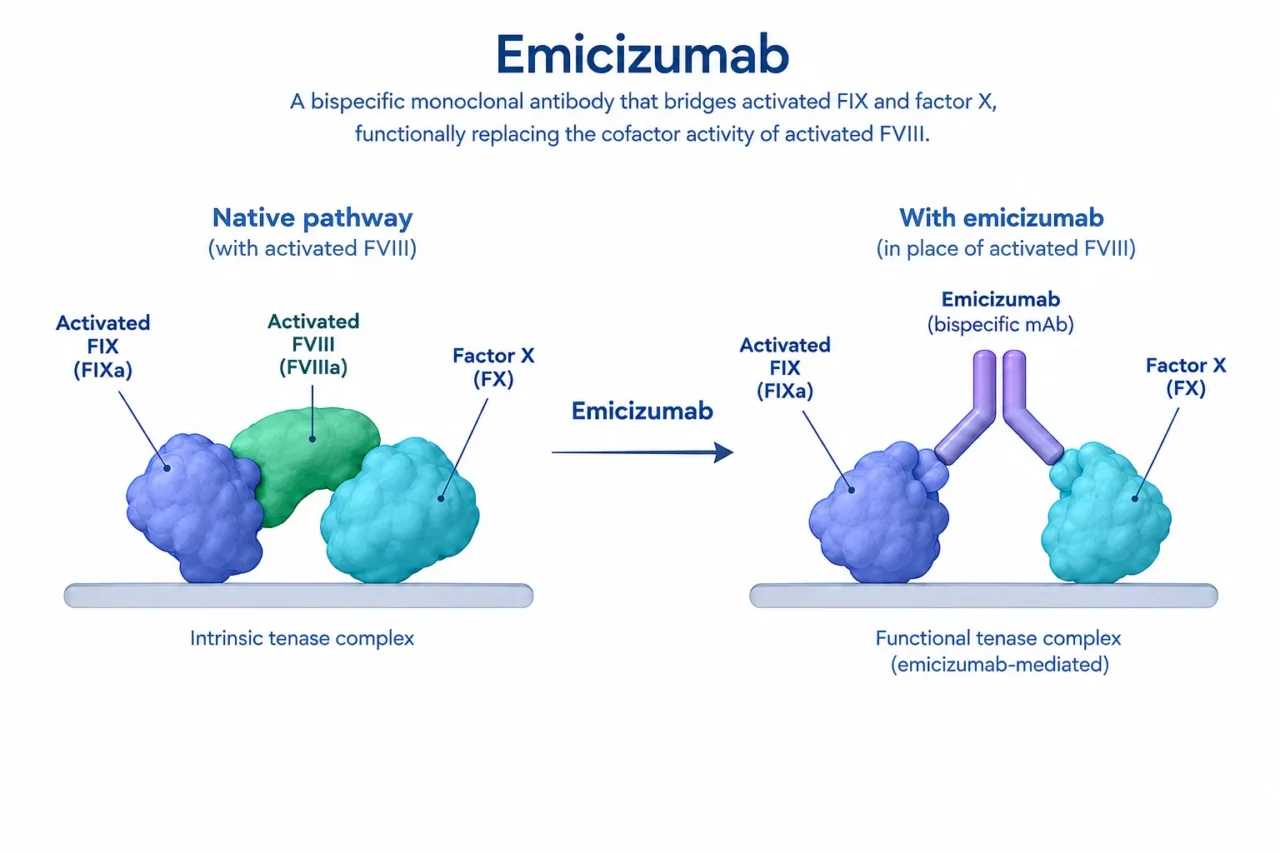
Emicizumab is a bispecific monoclonal antibody that bridges activated FIX and factor X, functionally replacing the cofactor activity of activated FVIII.
In the HAVEN 3 trial, prophylaxis reduced treated bleeding rates by approximately 96–97% compared with no prophylaxis in patients with hemophilia A without inhibitors. In patients with FVIII inhibitors, HAVEN 1 similarly demonstrated major reductions in bleeding with subcutaneous prophylaxis.
The success of Emicizumab was followed by a second conceptual development: Hemostatic Rebalancing.
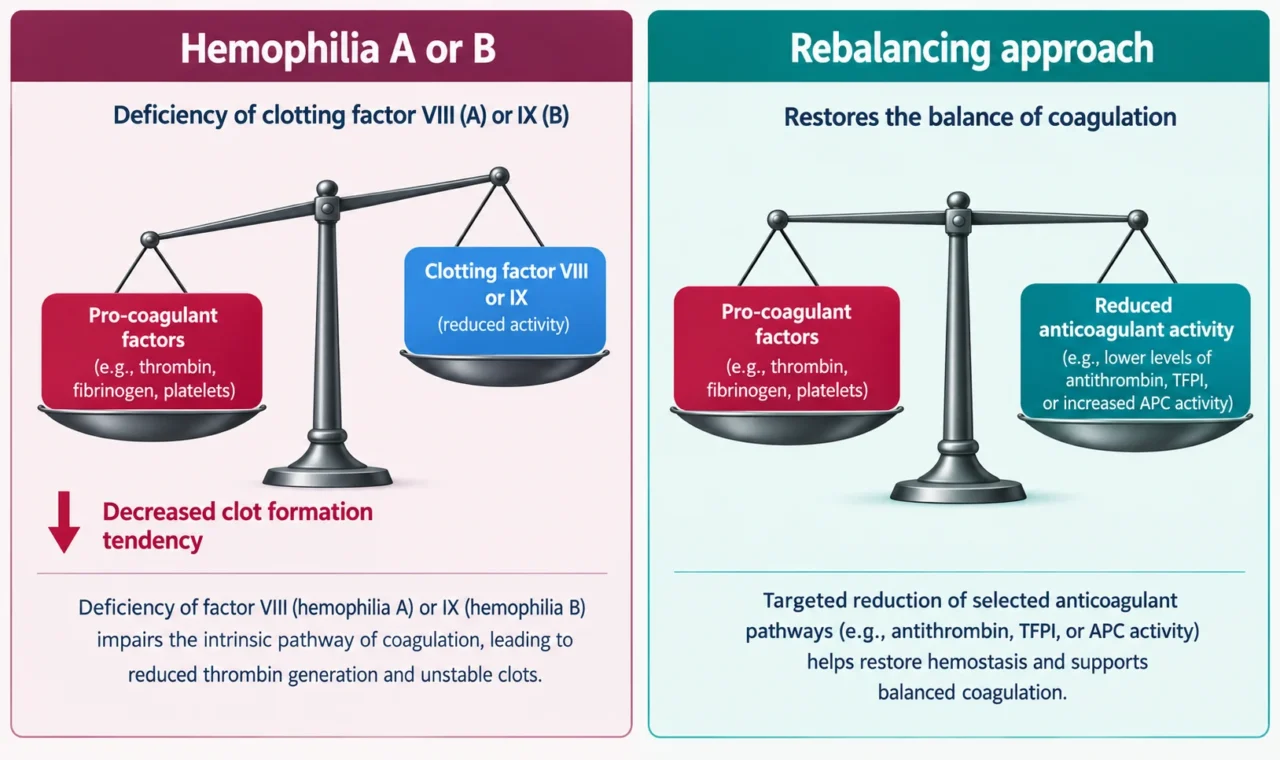
Instead of directly replacing FVIII or mimicking its activity, rebalancing agents reduce physiological anticoagulant mechanisms.
Fitusiran lowers antithrombin production through RNA interference, whereas Concizumab and Marstacimab inhibit TFPI. The objective is not to reproduce the missing factor itself, but to shift the coagulation system toward sufficient thrombin generation.
This approach has changed the therapeutic landscape. It has also introduced a new question.
How much coagulation is enough?
The bleeding phenotype of hemophilia reflects insufficient thrombin generation. Rebalancing therapies deliberately increase thrombin generation.
At some point, however, the therapeutic correction of hypocoagulability may become excessive, particularly when combined with additional hemostatic agents, surgery, inflammation, vascular disease, or other prothrombotic conditions.
The modern hemophilia patient is therefore increasingly a rebalanced patient, and the clinical challenge is maintaining that balance.
From Factor Replacement to Hemostatic Rebalancing
Normal hemostasis is not determined by a single coagulation factor. It is the product of interactions between procoagulant and anticoagulant pathways, platelets, endothelial biology, fibrinolysis, and inflammatory signaling.
Hemophilia disrupts this equilibrium primarily by reducing FVIII- or FIX-dependent thrombin generation. Conventional replacement therapy restores the missing component. Non-factor therapies approach the same problem from different directions.
Factor VIII Mimetics
Emicizumab acts as a functional FVIIIa substitute. By bringing activated FIX and FX into proximity, it facilitates FX activation and downstream thrombin generation without requiring endogenous FVIII. This mechanism is clinically important because it is independent of the patient’s FVIII inhibitor status and allows subcutaneous administration.
Anticoagulant-Pathway Inhibitors
Rebalancing agents take a different approach.
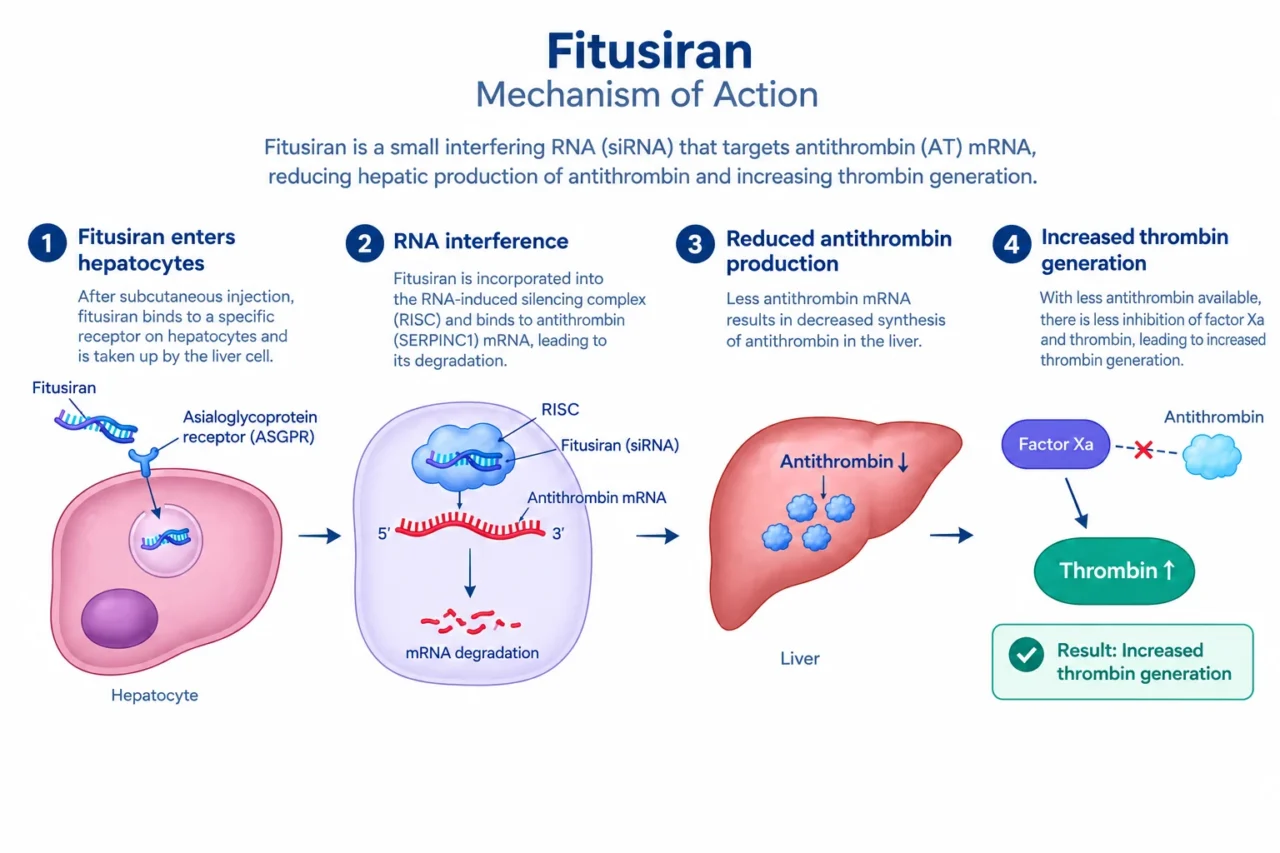
Fitusiran uses small interfering RNA to suppress hepatic production of antithrombin, one of the body’s major physiological anticoagulants. Reducing antithrombin increases thrombin generation and therefore partially compensates for the impaired intrinsic coagulation pathway.
Concizumab and Marstacimab target TFPI, an endogenous inhibitor of tissue-factor-driven coagulation. By reducing TFPI activity, these agents facilitate FX activation through the tissue factor/FVIIa pathway. This distinction matters because the safety profile of a therapy is inseparable from its mechanism.
A replacement product primarily increases the concentration of a deficient factor. A rebalancing therapy modifies an endogenous regulatory system. The latter may therefore produce a more sustained shift in coagulation that is less readily described by a conventional factor VIII or IX level.
The First Warning:
Emicizumab and Thrombotic Microangiopathy
Emicizumab established the feasibility of non-factor prophylaxis, but its early development also provided one of the most important lessons in modern hemophilia therapeutics.
In HAVEN 1, thrombotic microangiopathy (TMA) occurred in three patients and thrombosis in two patients.
These events occurred in the context of concomitant treatment with activated prothrombin complex concentrate (aPCC), generally involving repeated or high-dose exposure for breakthrough bleeding.
The mechanism is clinically instructive. Emicizumab already enhances thrombin generation by mimicking FVIIIa activity. aPCC provides multiple activated and non-activated coagulation factors.
When high amounts of aPCC are administered repeatedly on top of Emicizumab, the resulting coagulation potential can become excessive. Importantly, this experience did not establish that Emicizumab alone is intrinsically highly thrombogenic.
Subsequent clinical experience demonstrated that the major safety problem was the interaction between Emicizumab and high-dose aPCC.
Current prescribing information reports TMA in 3 of 391 patients in clinical trials and emphasizes the association with cumulative aPCC exposure exceeding approximately 100 U/kg over 24 hours.
Thrombotic events were also reported in association with this combination.
The clinical lesson is broader than Emicizumab itself:
A breakthrough bleed cannot necessarily be treated in the same way once the patient’s hemostatic system has been pharmacologically rebalanced.
This is why treatment of acute bleeding in patients receiving non-factor prophylaxis requires therapy-specific protocols.
The WFH guidelines recommend recombinant activated factor VII (rFVIIa) rather than aPCC when possible for breakthrough bleeding in patients receiving Emicizumab, specifically because of the TMA and thrombosis risk associated with aPCC.
Fitusiran: Rebalancing Through Antithrombin Suppression
Fitusiran represents perhaps the clearest example of the rebalancing concept. Rather than adding a procoagulant factor, Fitusiran reduces production of antithrombin through RNA interference. The resulting reduction in anticoagulant activity increases thrombin generation downstream. The therapeutic effect has been substantial.
In the ATLAS-A/B phase 3 study, 120 patients with severe hemophilia A or B without inhibitors were randomized to Fitusiran prophylaxis or on-demand factor replacement.
The estimated mean annualized bleeding rate was 3.1 with Fitusiran compared with 31.0 with on-demand therapy, corresponding to a rate ratio of 0.101. Approximately 51% of patients receiving Fitusiran had no treated bleeds.
The ATLAS-INH trial extended the concept to patients with inhibitors. Among 57 participants with hemophilia A or B and inhibitors, mean annualized bleeding rates were 1.7 with Fitusiran prophylaxis compared with 18.1 with on-demand bypassing agents, a 90.8% relative reduction. Two participants in the Fitusiran group experienced suspected or confirmed thromboembolic events. These results demonstrate the therapeutic power of anticoagulant-pathway modulation. They also illustrate its principal safety challenge.
The Antithrombin Threshold
Unlike Emicizumab, for which the major early thrombotic concern involved an interaction with aPCC, Fitusiran itself directly alters a physiological anticoagulant pathway.
This creates a dose-response problem: too little antithrombin suppression may provide insufficient bleeding protection, whereas excessive suppression may increase thrombotic risk. The contemporary Fitusiran strategy therefore incorporates antithrombin-guided dosing.
The current U.S. prescribing information for Qfitlia specifies a target antithrombin activity range of approximately 15–35%, with monitoring intended to reduce thrombotic risk. Persistent antithrombin activity below 15%, an indwelling venous catheter, the postoperative setting, inappropriate breakthrough-bleed treatment, and the previously studied 80-mg once-monthly regimen have been identified as important risk factors.
The evolution of Fitusiran is therefore particularly instructive: the field moved from demonstrating that antithrombin suppression could control bleeding toward determining how much suppression is safe.
This is a major conceptual change from traditional factor replacement.
Concizumab and Marstacimab: Targeting TFPI
TFPI represents another endogenous brake on coagulation. By inhibiting TFPI, Concizumab and Marstacimab enhance tissue-factor-dependent thrombin generation.
- Concizumab
Concizumab is best understood as a “brake-release” therapy: it is an anti-TFPI monoclonal antibody that enhances tissue-factor–initiated FXa generation by neutralizing TFPI, thereby increasing thrombin generation and restoring hemostasis independently of FVIII or FIX.
The phase 3 explorer7 trial evaluated Concizumab in patients with hemophilia A or B with inhibitors.
Among patients receiving Concizumab prophylaxis, the estimated mean annualized bleeding rate was 1.7 episodes compared with 11.8 episodes in the non-prophylaxis group, corresponding to a rate ratio of 0.14. Concizumab subsequently received U.S. regulatory approval for routine prophylaxis in patients aged 12 years and older with hemophilia A or B with inhibitors.
However, the regulatory safety information emphasizes a potential thromboembolic risk.
In clinical trials, venous and arterial thromboembolic events occurred in 6 of 320 patients (1.9%). Several affected patients had additional risk factors, including high-dose or prolonged treatment with factor products or bypassing agents.
This is an important distinction. The presence of thrombotic events does not mean that TFPI inhibition is inherently unsafe. Rather, it demonstrates that a therapy designed to increase coagulation must be evaluated in the context of the patient’s entire hemostatic environment.
- Marstacimab
Marstacimab, another tissue factor pathway inhibitor (TFPI) antagonist, has demonstrated efficacy in hemophilia A and B, including patients without inhibitors.
In the phase 3 BASIS trial, annualized bleeding rates fell from 39.86 to 3.20 with on-demand treatment and from 7.90 to 5.09 with routine prophylaxis. No thromboembolic events occurred in the primary analysis.
However, U.S. prescribing information reports thromboembolic events in 2 of 259 patients in an open-label extension, underscoring the need for continued safety monitoring as TFPI inhibition expands into broader clinical practice.
The Rebalanced Patient Has a Different Risk Profile
The emergence of non-factor therapies changes not only how bleeding is prevented, but also how bleeding and thrombosis must be considered clinically.
With conventional factor replacement, the therapeutic objective was largely to restore the concentration of a deficient procoagulant protein.
With hemostatic rebalancing, the therapeutic intervention acts on the relationship between procoagulant and anticoagulant forces.
Fitusiran reduces antithrombin activity, while Concizumab and Marstacimab inhibit TFPI; Emicizumab increases effective intrinsic tenase activity by mimicking the cofactor function of FVIIIa. In each case, the patient’s baseline coagulation system is deliberately shifted toward greater thrombin generation.
This creates a narrower and more dynamic therapeutic window.
The same increase in thrombin generation that prevents spontaneous and joint bleeding may become problematic when another strong procoagulant stimulus is introduced. Consequently, thrombotic risk cannot be evaluated solely according to the identity of the drug. It must be considered in relation to concomitant hemostatic therapy, tissue injury, inflammation, vascular risk factors, and the patient’s underlying pharmacodynamic state.
Drug–Drug and Drug–Hemostatic Interactions
The clinical risks of rebalancing therapies are particularly evident with emicizumab.
In HAVEN 1, thrombotic microangiopathy and thrombotic events occurred predominantly in patients receiving repeated or high-dose activated prothrombin complex concentrate (aPCC) for breakthrough bleeding. This combination can excessively increase thrombin generation.
Similar considerations apply to fitusiran, concizumab, and marstacimab, although the risks and recommended rescue treatments differ by agent.
Because these therapies alter coagulation through mechanisms independent of conventional factor replacement, breakthrough bleeding requires an individualized approach that accounts for the underlying prophylaxis, the rescue agent, and its potential additive effects on coagulation.
The key principle is that rescue treatment must be guided not only by the bleeding episode, but also by the patient’s existing hemostatic therapy.
Surgery and Tissue Injury
Surgery presents a particular challenge with rebalancing therapies because tissue injury activates coagulation while the underlying treatment has already altered thrombin generation.
Inadequate hemostatic support may cause bleeding, whereas excessive procoagulant supplementation may increase thrombotic risk.
Fitusiran highlights this concern: antithrombin suppression persists beyond individual doses, making perioperative management dependent on the patient’s existing hemostatic balance.
Surgical planning must therefore account for the specific therapy, the procedure, and the need for additional hemostatic support rather than simply applying conventional factor-replacement protocols.
Patient-Specific Thrombotic Risk
The thrombotic risk of a rebalanced patient is also determined by factors that are independent of the hemophilia therapy itself.
A young patient with few cardiovascular risk factors and no previous thrombotic history is biologically different from an older patient with obesity, smoking exposure, cardiovascular disease, malignancy, previous venous thromboembolism, an indwelling venous catheter, prolonged immobility, or active systemic inflammation.
These factors matter because rebalancing therapy increases the available coagulation potential, while many acquired conditions simultaneously increase tissue-factor expression, platelet activation, endothelial activation, or venous stasis. The resulting risk is therefore context-dependent rather than drug-dependent alone.
Laboratory Monitoring Is Becoming More Complex
One of the less visible consequences of non-factor therapy is that conventional coagulation assays may become difficult to interpret. Emicizumab substantially interferes with clot-based FVIII assays and aPTT-based measurements because the drug itself alters the reaction being measured. Specialized chromogenic assays using bovine reagents are therefore required for appropriate FVIII activity and inhibitor assessment in patients receiving Emicizumab. The problem is conceptually broader.
If a therapy acts by altering the balance between procoagulant and anticoagulant pathways, a single factor concentration may no longer describe the patient’s overall hemostatic state.
For Fitusiran, antithrombin activity becomes a pharmacodynamic parameter directly relevant to dosing and safety. Current prescribing information specifically recommends monitoring antithrombin activity and maintaining it within the target range.
Concizumab labeling also recognizes pharmacodynamic changes, including increases in D-dimer and prothrombin fragment 1.2. These observations suggest a future in which hemophilia monitoring may increasingly incorporate global hemostasis, rather than relying exclusively on FVIII or FIX activity.
Potential tools include thrombin-generation assays, viscoelastic testing, clot waveform analysis, and other global coagulation measurements. However, these approaches are not yet standardized sufficiently to replace established product-specific monitoring.
What the Recent Evidence Actually Shows
The overall evidence supports a major reduction in bleeding with non-factor prophylaxis, but the certainty of evidence is not uniform across therapies.
A 2026 Cochrane review identified six randomized trials involving 397 males aged 12–75 years evaluating non-clotting-factor prophylaxis with Emicizumab, Fitusiran, or Concizumab. The review found substantial reductions in bleeding compared with on-demand treatment, although certainty varied and the trials were generally relatively small and industry sponsored.
A separate 2025 meta-analysis similarly found substantial reductions in treated, spontaneous, and joint bleeding with non-factor prophylaxis compared with on-demand therapy, but found no statistically significant difference in treated bleeding rates between Fitusiran, Emicizumab, and Concizumab in exploratory comparisons. These findings support an important conclusion:
The major advance is the transition from episodic rescue toward effective prophylaxis, not proof that one non-factor mechanism is universally superior to another.
Head-to-head comparisons remain limited. Moreover, many pivotal studies have open-label designs, relatively short primary efficacy periods, and selected populations. Consequently, evidence for long-term comparative safety, particularly thrombosis, remains less mature than the evidence for bleeding efficacy.
A New Definition of Treatment Success
Treatment success in hemophilia is no longer defined by annualized bleeding rate alone. Joint health, treatment burden, quality of life, predictable pharmacology, safe management of breakthrough bleeding and surgery, and the risks of immunogenicity and thrombosis are equally important considerations.
The goal is to optimize the hemostatic window: prevent bleeding while avoiding excessive coagulation. Achieving this balance across diverse patient populations remains a central challenge in modern hemophilia care.
Current Challenges and Controversies
- Thrombosis versus bleeding
The central unresolved question is how much thrombin generation is optimal. There is no universally accepted laboratory threshold that defines “safe” hemostatic rebalancing.
- Breakthrough bleeding
Non-factor therapies do not eliminate the need for rescue treatment. Instead, breakthrough bleeding becomes more complicated because the background pharmacology must be considered when selecting FVIII, FIX, rFVIIa, aPCC, or other hemostatic agents.
- Surgery
Perioperative management is one of the areas in greatest need of standardized evidence. The ideal approach must simultaneously provide sufficient hemostasis for tissue injury while avoiding excessive thrombin generation.
- Rare thrombotic events
Because thrombotic events are relatively uncommon, individual phase 3 trials may be underpowered to define their true incidence. Large post-marketing registries and international pharmacovigilance systems will therefore be essential.
- Access and cost
The biological sophistication of non-factor therapies does not guarantee equitable access. Subcutaneous administration may reduce treatment burden, but acquisition costs, laboratory monitoring requirements, specialized care, and regulatory availability remain important barriers.
- Evidence gaps
Evidence on rebalancing therapies remains limited in patients with previous venous thromboembolism, cardiovascular disease, active malignancy, severe obesity, chronic inflammation, prolonged immobilization, or complex perioperative needs. Their safety in patients receiving multiple hemostatic therapies also requires further study.
Evaluating these higher-risk populations will be essential to defining the real-world safety and appropriate use of hemostatic rebalancing.
Future Directions
The future of hemophilia treatment may lie in individualized hemostatic control.
Biomarker-guided dosing, global coagulation assays, and carefully studied combination therapies could help tailor treatment to each patient’s bleeding and thrombotic risks. Fitusiran’s antithrombin-guided dosing provides an early example of this approach.
Gene therapy adds another dimension by enabling sustained endogenous factor expression, although durability, immunogenicity, liver toxicity, and long-term monitoring remain important considerations.
The 2026 World Federation of Hemophilia AAV gene therapy guidelines reflect the growing need for standardized implementation and follow-up.
Ultimately, the field is moving beyond correcting an individual factor deficiency toward personalizing treatment according to each patient’s hemostatic phenotype, while maintaining a careful balance between bleeding prevention and thrombotic safety.
FAQ
What does “hemostatic rebalancing” mean?
Hemostatic rebalancing refers to increasing coagulation by reducing natural anticoagulant mechanisms rather than replacing the deficient FVIII or FIX. Fitusiran reduces antithrombin, while Concizumab and Marstacimab inhibit TFPI.
Is Emicizumab a rebalancing therapy?
Not in the strict mechanistic sense. Emicizumab is a bispecific FVIII-mimetic antibody that functionally replaces FVIIIa activity. It is generally classified as a non-factor therapy rather than an anticoagulant-pathway rebalancing agent.
Why can hemophilia patients develop thrombosis?
Modern therapies can substantially increase thrombin generation. Thrombosis becomes particularly relevant when pharmacological hemostasis is excessive or when additional prothrombotic factors, such as surgery, inflammation, vascular disease, catheters, or high-dose rescue therapy are present.
Why is aPCC problematic with Emicizumab?
aPCC contains activated and non-activated coagulation factors that can substantially augment coagulation in a patient whose coagulation system is already being enhanced by Emicizumab. High cumulative aPCC exposure was associated with thrombotic microangiopathy and thrombotic events in early Emicizumab trials.
Does Fitusiran always increase thrombosis risk?
Not necessarily. The risk appears strongly influenced by the degree of antithrombin suppression, patient characteristics, dosing strategy, and management of breakthrough bleeding and surgery. Contemporary Fitusiran dosing is designed to maintain antithrombin activity within a specified target range.
Can conventional FVIII or FIX assays be used for all non-factor therapies?
No. Assay interpretation depends on the specific therapy. Emicizumab, in particular, interferes with clot-based FVIII assays and requires specialized testing strategies.
Are non-factor therapies safer than factor replacement?
The available evidence does not support a simple statement that one category is universally safer. Non-factor therapies reduce bleeding and treatment burden, but they introduce mechanism-specific risks and more complex management of breakthrough bleeding and surgery.
What is the biggest unanswered question?
The most important unresolved issue is how best to quantify the patient’s overall hemostatic state and determine the therapeutic range that provides maximal protection from bleeding with minimal thrombotic risk.
What does the future of hemophilia treatment look like?
The field is moving toward individualized hemostatic management using non-factor therapies, gene therapy, long-acting factor products, pharmacodynamic monitoring, and potentially global coagulation assays. The long-term goal is not simply to normalize a factor level, but to maintain a stable and clinically safe hemostatic phenotype.
Written by Mane Kurghinyan
Stay updated with Hemostasis Today.
-
Oct 9, 2026, 13:11Ayshathul Noora։ Carbetocin vs Oxytocin in Preventing Postpartum Hemorrhage
-
Oct 9, 2026, 12:48Santiago Cepeda Chafla: CereBleed Simplifies Brain Hemorrhage Assessment
-
Oct 9, 2026, 12:34Abdul Muqtadir Abbasi: Pancytopenia Is a Finding, Not a Diagnosis
-
Oct 9, 2026, 12:24Mercy Lung’aho: When Diet Quality and Nutritional Biomarkers Tell Different Stories
-
Oct 9, 2026, 12:22Eugene Fan: Bridging Therapeutic Breakthroughs and Equitable Thalassaemia Care
-
Oct 9, 2026, 12:14Brittany Busse: A New Focus on Iron Deficiency Before Anemia
-
Oct 9, 2026, 12:13Akshat Jain: A New Textbook Bringing Global Perspectives on Sickle Cell Disease
-
Oct 9, 2026, 12:03Heather Case: Bridging Awareness and Action in Women’s Hemophilia Care
-
Oct 9, 2026, 11:58Brandon Luu: Can Iron Deficiency Cause Fatigue Without Anemia?