

Rodrigo Arreola Diaz: The Rise of Concizumab for Hemophilia A and B
Rodrigo Arreola Diaz, Phd of Immunology, Commercial Executive at Johnson and Johnson Innovative Medicine, shared a post on LinkedIn about a recent article by Erum Siddiqui at al., published in Clinical and Applied Thrombosis/Hemostasis, adding:
“Concizumab in the tretment of Hemophilias
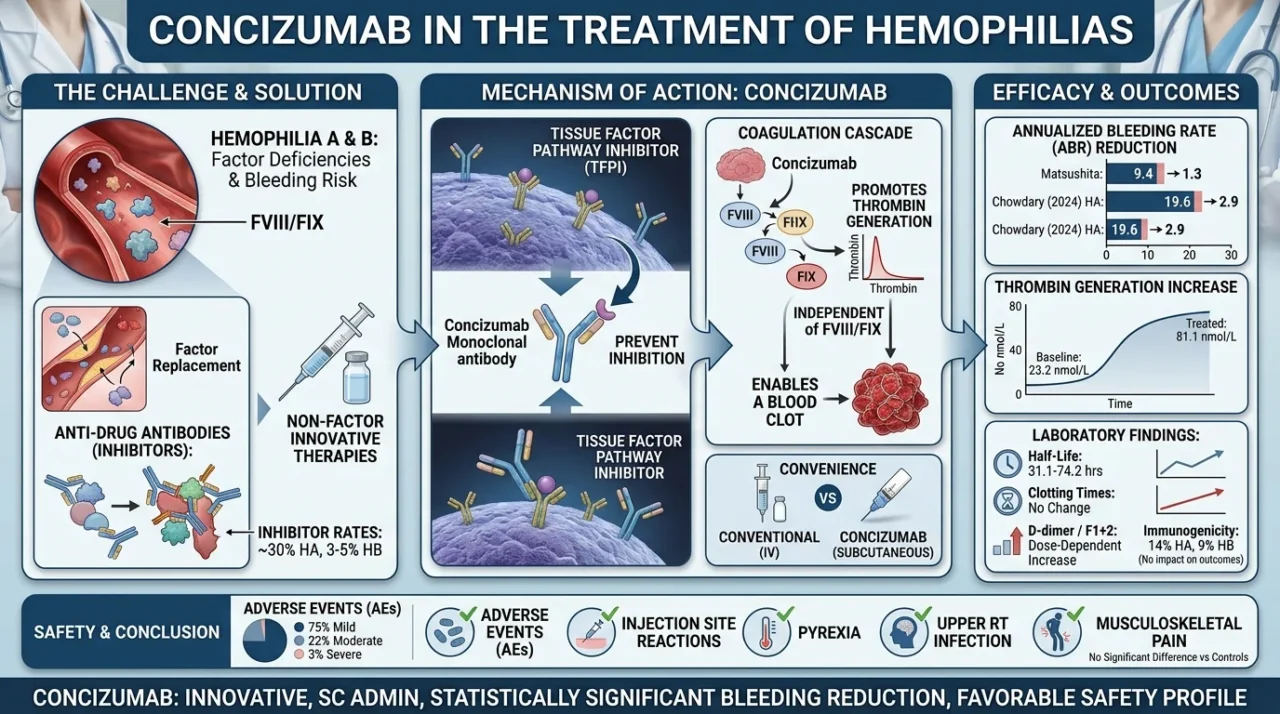
Hemophilia A (HA) and Hemophilia B (HB) are X-linked bleeding disorders caused by deficiencies of factor VIII (FVIII) or factor IX (FIX), respectively.
Factor replacement therapy, either as prophylaxis can lead to the formation of anti-drug antibodies (inhibitors), which limit treatment effectiveness, rendering it less effective and more costly.
Inhibitors occur in about 30% of patients with HA and 3–5% of patients with HB.. Consequently, non–factor-based innovative therapies are being developed for hemophilia treatment.
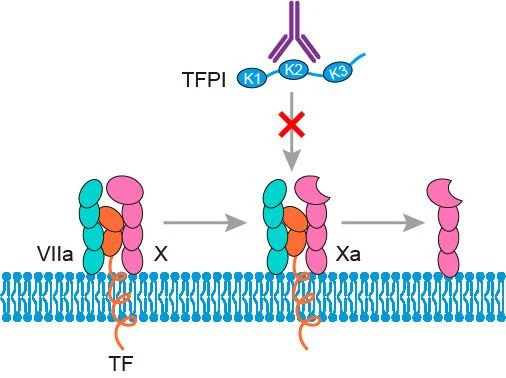
Concizumab is a humanized monoclonal antibody that targets the tissue factor pathway inhibitor (TFPI). By blocking TFPI, concizumab prevents inhibition of activated factor X (FXa), thereby promoting thrombin generation in a FVIII/FIX-independent manner.
Its subcutaneous route of administration makes it more convenient and less invasive compared with intravenous infusion, improving treatment adherence and patient outcomes.
However, there is no comprehensive real-world evidence (RWE) on the effectiveness and safety of concizumab in broader populations, which motivated the authors to write this article.
Efficacy outcomes:
The annualized bleeding rate (ABR) was consistently reduced in patients receiving concizumab.
For example, Matsushita reported a decline from 9.4 to 1.3 episodes per year, while P. Chowdary (2024) observed a decrease in ABR among HA patients from 19.6 to 2.9.
Thrombin generation increased significantly, with Chowdary reporting a rise from 23.2 nmol/L at baseline to 81.1 nmol/L.
Pharmacokinetics and laboratory findings:
Chowdary (2015) reported a half-life ranging from 31.1 to 74.2 hours with IV administration, with maximum concentration positively correlated with dose.
No alterations in clotting times were observed, though D-dimer and prothrombin fragment F1+2 levels increased in a dose-dependent manner.
Eichler (2018) reported dose-dependent increases in endogenous thrombin potential, approaching normal values.
Immunogenicity was reported at 14% in HA patients and 9% in HB patients, with no significant impact on outcomes.
Safety outcomes:Chowdary (2015) reported incidences of mild, moderate, and severe adverse events at 75%, 22%, and 3%, respectively.
Risks of injection-site reactions, musculoskeletal pain, pyrexia, and upper respiratory tract infections showed no statistically significant differences compared with controls.
In summary, Concizumab represents an innovative therapeutic alternative for hemophilia, offering a statistically significant reduction in bleeding episodes.
Its subcutaneous administration improves adherence and patient convenience, while maintaining a favorable safety profile.”
Title: Evaluating the Safety and Efficacy of Concizumab in Hemophilia A/B Patients: A Systematic Review
Authors: Erum Siddiqui, Maliha Khalid, Muhammad Saad Khan, Kanza Farhan, Muhammad Mohsin Khan, Aminath Waafira
Stay updated on all scientific advances with Hemostasis Today.
-
Oct 9, 2026, 00:54Mary Catherine Moffett: Advancing Advocacy Together – Highlights from the Sanofi Bleeding Disorders Summit
-
Oct 9, 2026, 00:46Paris Margaritis: Assays vs Outcomes – Connecting FVIII Expression to Bleeding Phenotype in Hemophilia A
-
Oct 8, 2026, 23:27Shayan Mohammadmoradi: Happy to Be Back at the Midwest Platelet Conference for Its 20th Meeting
-
Oct 8, 2026, 23:18Lorena Arranz: Honoured to Contribute to the 6th Global MPN Symposium
-
Oct 8, 2026, 23:06Denis Oduor: Serving Citizens and Saving Lives Through Blood Donation During National Customer Service Week 2026
-
Oct 8, 2026, 22:51Jan Hartmann: Speaking on Global Trends in Plasma Collection at the 50th Meeting of the Japanese Society of Blood Services
-
Oct 8, 2026, 22:49Akshat Jain: Proud to Announce the Publication of Advances in Sickle Cell Disease
-
Oct 8, 2026, 22:49Ed Shovelin: Extending the Platelet Aggregation Testing Window to 72 Hours
-
Oct 8, 2026, 22:48Abdulla A. Damluji: Anticancer Drugs and Thrombosis Mechanisms, Risk Factors, and Prevention