

Abdulla A. Damluji: Anticancer Drugs and Thrombosis Mechanisms, Risk Factors, and Prevention
Abdulla A. Damluji, Director of the Cardiovascular Center on Aging at Cleveland Clinic, shared on X about a recent article by Hessam Kakavand et al, published in Circulation, adding:
“Anticancer Drugs and Cancer-Associated Thrombosis:
I have done many STEMIs in patients who are on active anti-cancer therapies. Sometimes, they are difficult, specially in RCA distributions.
Venous thromboembolism is a leading cause of death in patients with cancer. Risk is up to 12 times higher than in the general population and up to 23 times higher during systemic anticancer treatment, and specific drug classes contribute to this excess.
This umbrella review searched PubMed through November 2025 and prioritized randomized trials and meta analyses. Cohort and pharmacovigilance data were added because trials often underreport thrombotic events. Included studies are listed in Table S3.
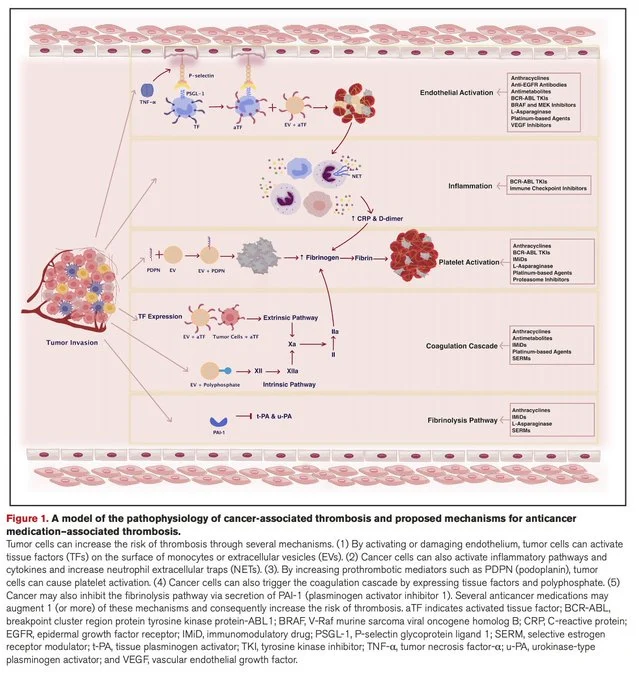
Figure 1 summarizes the biology: tumor cells shed tissue factor bearing vesicles, promote neutrophil extracellular traps, activate platelets through podoplanin, and suppress fibrinolysis through plasminogen activator inhibitor 1. Anticancer drugs can amplify these pathways.
Anthracycline use was an independent risk factor for venous thromboembolism in the COMPASS cancer associated thrombosis study (odds ratio 5.33; 95% confidence interval 2.73 to 10.41) and adds 6 points to that risk score. The excess appears smaller in breast cancer and lymphoma.
In a pooled analysis of 38 randomized trials with 8216 patients, cisplatin increased venous thromboembolism risk by 67% compared with cisplatin free regimens (relative risk 1.67; 95% confidence interval 1.25 to 2.23). Carboplatin and oxaliplatin showed lower rates (0.9% versus 7.8%).
In 17 prospective cohorts of children with acute lymphoblastic leukemia, venous thromboembolism incidence was 5.2%, rising to 9.6% when asparaginase was given for 9 or more days. In young adults receiving pegaspargase, incidence was 11.2% over a median of 64 months.
In chronic myeloid leukemia, second and third generation breakpoint cluster region ABL1 tyrosine kinase inhibitors increased arterial thrombosis compared with imatinib (odds ratio 3.32; 95% confidence interval 2.29 to 4.81), without a significant increase in venous events.
In melanoma, BRAF inhibitor monotherapy did not increase venous thromboembolism risk, but adding a MEK inhibitor did (odds ratio 3.57; 95% confidence interval 1.33 to 9.06). Pulmonary embolism risk was 4.36 times higher with combination therapy than with BRAF inhibitors alone.
In hormone receptor positive breast cancer, adding cyclin dependent kinase 4/6 inhibitors to endocrine therapy increased venous thromboembolism risk, with higher rates in real world cohorts than in trials. Abemaciclib carried higher risk than palbociclib or ribociclib (relative risk 6.77).
Cetuximab and panitumumab, epidermal growth factor receptor antibodies used in colorectal and head and neck cancers, increased venous thromboembolism in 17 randomized trials with 12870 patients (relative risk 1.46; 95% confidence interval 1.26 to 1.69).
Amivantamab, a bispecific antibody used in non small cell lung cancer, carries a large signal. In the MARIPOSA trial, venous thromboembolism occurred in 40% of patients receiving amivantamab plus lazertinib versus 10% with osimertinib. The label advises prophylaxis for the first 4 months.
Tamoxifen nearly doubled venous thromboembolism risk compared with placebo (relative risk 1.9; 95% confidence interval 1.4 to 2.6) and increased ischemic stroke (odds ratio 1.82). Aromatase inhibitors carry lower venous risk but higher myocardial infarction risk than tamoxifen (relative risk 1.20).
In prostate cancer, androgen receptor signaling inhibitors increased acute coronary syndrome and stroke but not venous thromboembolism. Across 5 cohorts with more than 400000 patients, combined androgen deprivation therapy was associated with venous thromboembolism (hazard ratio 2.55).
In multiple myeloma, thalidomide increased venous thromboembolism risk during induction (relative risk 1.53) and maintenance (relative risk 1.96). Lenalidomide regimens carried a 6% cumulative incidence despite prophylaxis, and carfilzomib carried higher risk than bortezomib.
Across 63 randomized trials, immune checkpoint inhibitors increased myocardial infarction (odds ratio 1.51) and stroke (odds ratio 1.56). Trials showed no clear venous signal, but a cohort of 10638 patients reported venous thromboembolism in 11.1% at 12 months.
Poly ADP ribose polymerase inhibitors approximately doubled venous thromboembolism risk across 8 randomized trials in prostate cancer with more than 3800 patients (odds ratio 1.98; 95% confidence interval 1.06 to 3.70). Pharmacovigilance data showed a similar signal (odds ratio 2.60).
Venous findings for vascular endothelial growth factor inhibitors are inconsistent, although cabozantinib increased risk (relative risk 3.21).
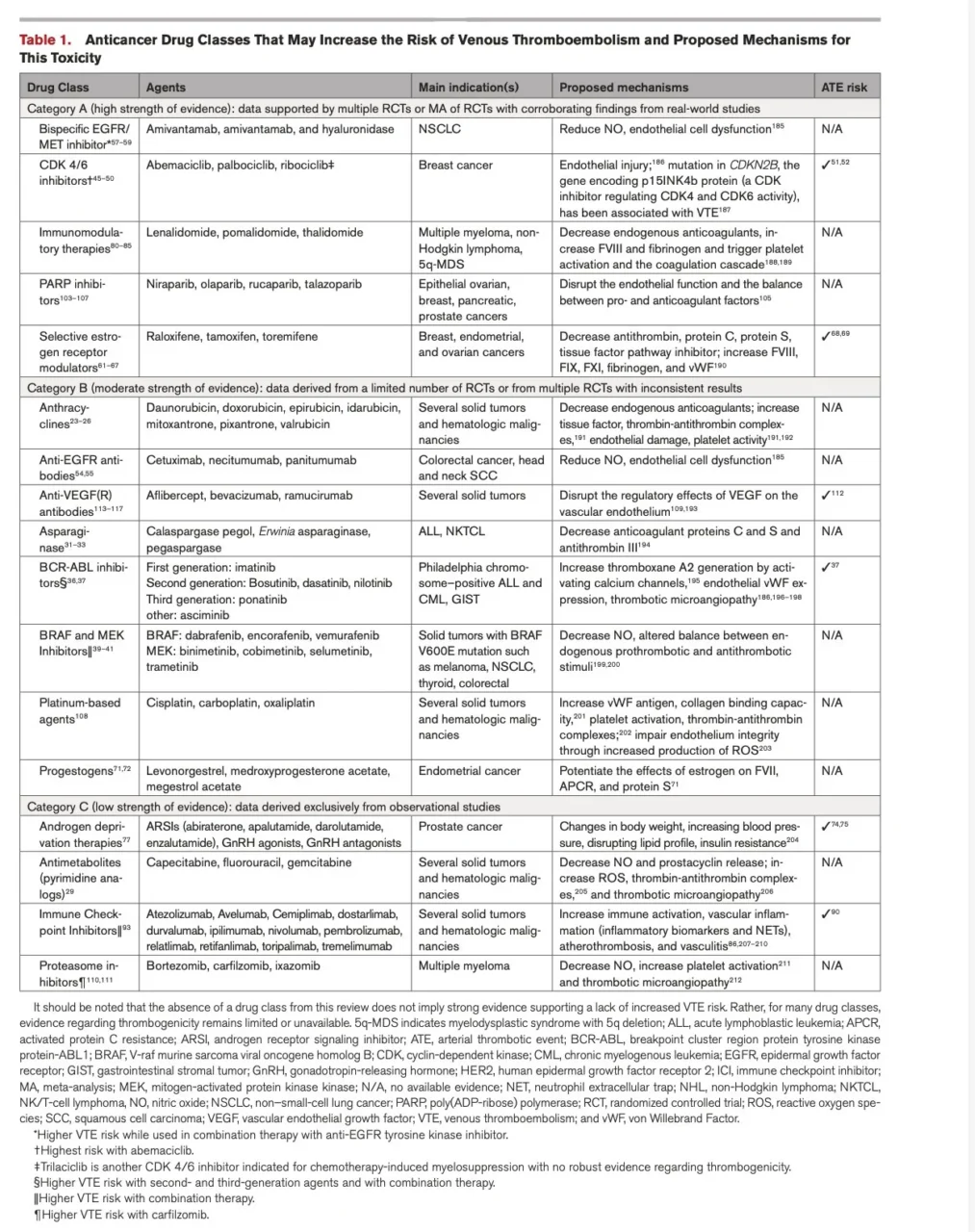
The arterial signal is stronger: bevacizumab increased acute coronary syndrome (relative risk 2.13). Table 1 grades evidence across drug classes.
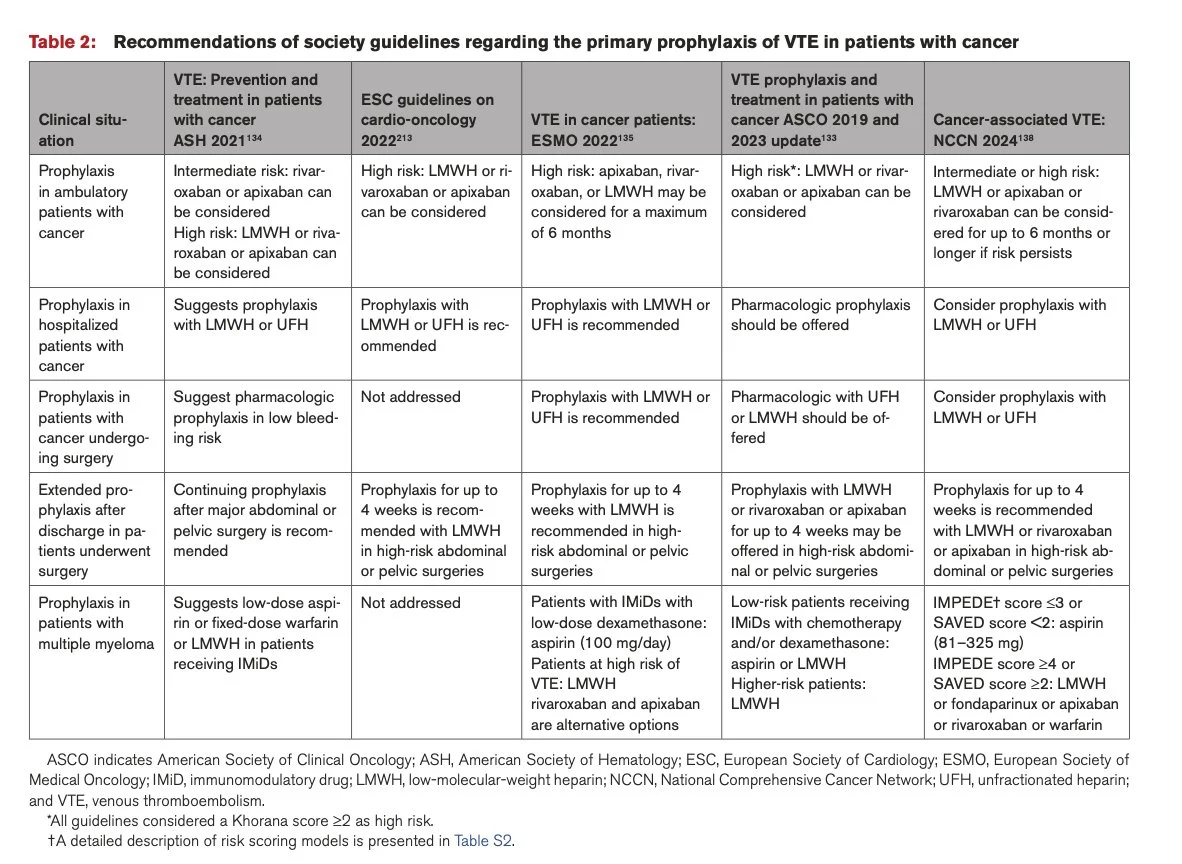
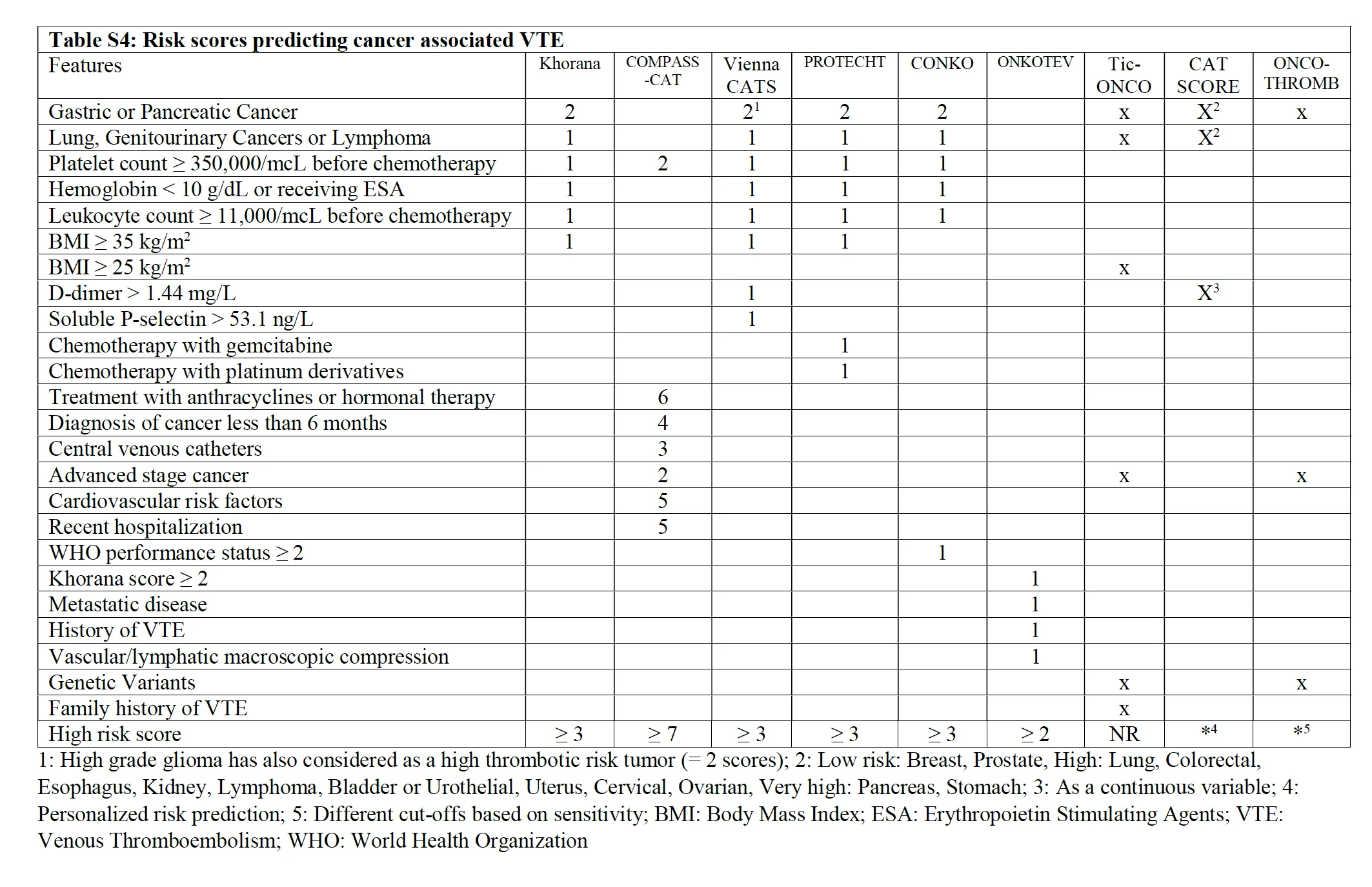
For primary prevention, the Khorana score is the most widely used tool, although it omits drug type and dose (Table S4). In the AVERT and CASSINI trials, apixaban and rivaroxaban reduced venous thromboembolism in high risk outpatients. Guideline positions appear in Table 2.
Low molecular weight heparin and factor Xa inhibitors are both treatment options (Table 3); heparin is preferred in luminal gastrointestinal or urothelial cancers. In the API CAT trial, extended apixaban 2.5 mg twice daily was noninferior to 5 mg, with less bleeding (12.1% versus 15.6%).
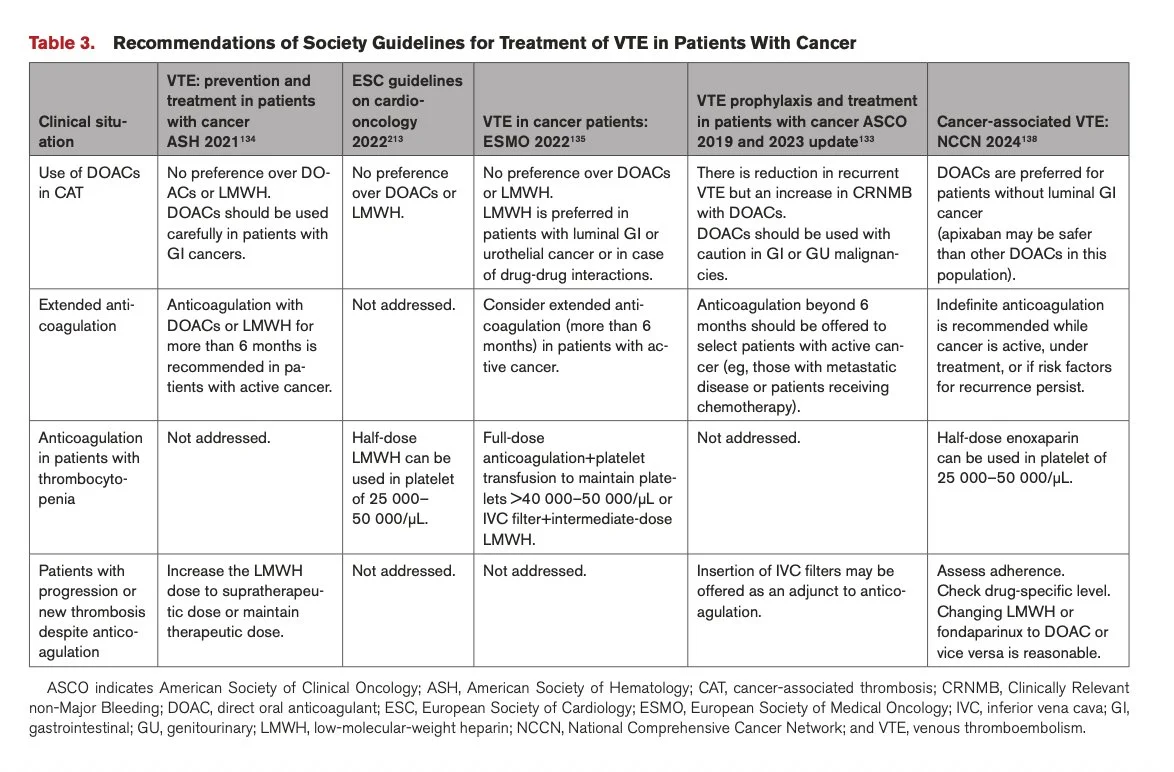
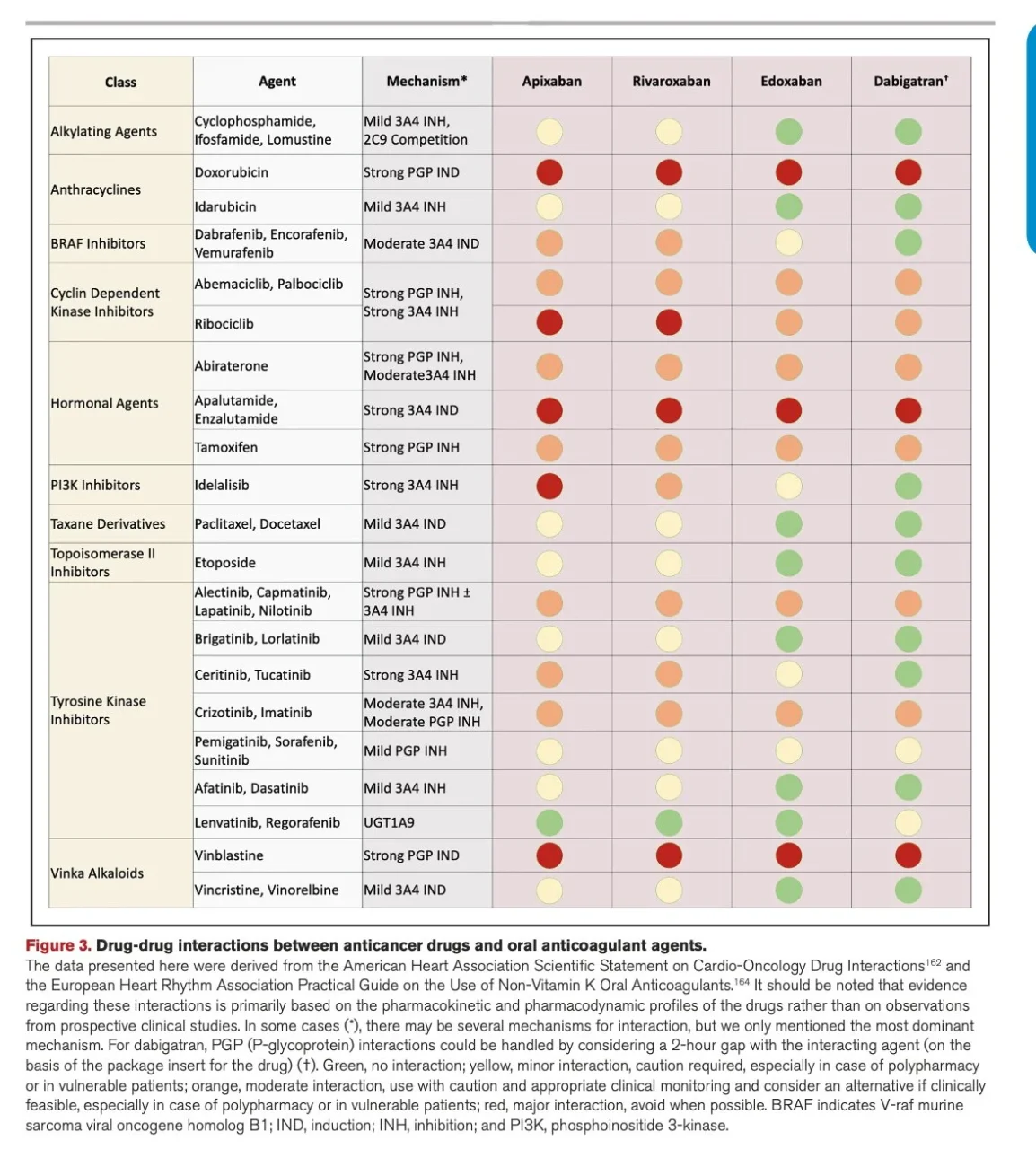
Figure 3 maps interactions between anticancer drugs and oral anticoagulants through P glycoprotein and cytochrome P450 pathways. Attribution of risk to individual drugs remains limited by confounding from cancer type, tumor burden, and central venous catheters.”
Title: Anticancer Drugs and Cancer-Associated Thrombosis
Authors: Hessam Kakavand, Maryam Aghakouchakzadeh, Parham Sadeghipour, Armin Pasukanovic, Jean M. Connors, Adam Cuker, Craig Beavers, Benjamin Van Tassell, Michelle Weisfelner Bloom, Behnood Bikdeli, Antonio Abbate, Nicola Potere, Jayant K. Raikhelkar, Azita H. Talasaz
Stay updated on all scientific advances with Hemostasis Today.
-
Oct 8, 2026, 22:46Miguel Escobar: My Research on Oral Health and Hemophilia
-
Oct 8, 2026, 22:44ISTH 2027 Abstract Submission Opens November 23
-
Oct 8, 2026, 22:41Kunihiro Hattori Pioneering Research for People With Hemophilia A – The Albert and Mary Lasker Foundation
-
Oct 8, 2026, 17:00Sally Mandour: Platelet Size And Shape Can Reveal The Diagnosis
-
Oct 8, 2026, 16:49Neil Morgan: Advancing Understanding Of Bleeding Disorders Of Unknown Cause
-
Oct 8, 2026, 16:38Beverley Hunt: Advancing Pulmonary Embolism Care Through Collaboration And Learning
-
Oct 8, 2026, 16:19Cedric Hermans: Six Webinars Advancing Haemophilia Care And Beyond
-
Oct 8, 2026, 16:09Luana Banu: Every Donation Connects A Human Chain
-
Oct 8, 2026, 15:51Khaled Musallam: A New Era In Thalassemia Care