

Jesus Ardila Novoa: Why the WHO’s Historic Essential Medicines List Decision Is Just the Beginning
Jesus Ardila Novoa, Pediatric Hematologist and Oncologist at Club Noel Children’s Hospital Foundation, shared a post on LinkedIn:
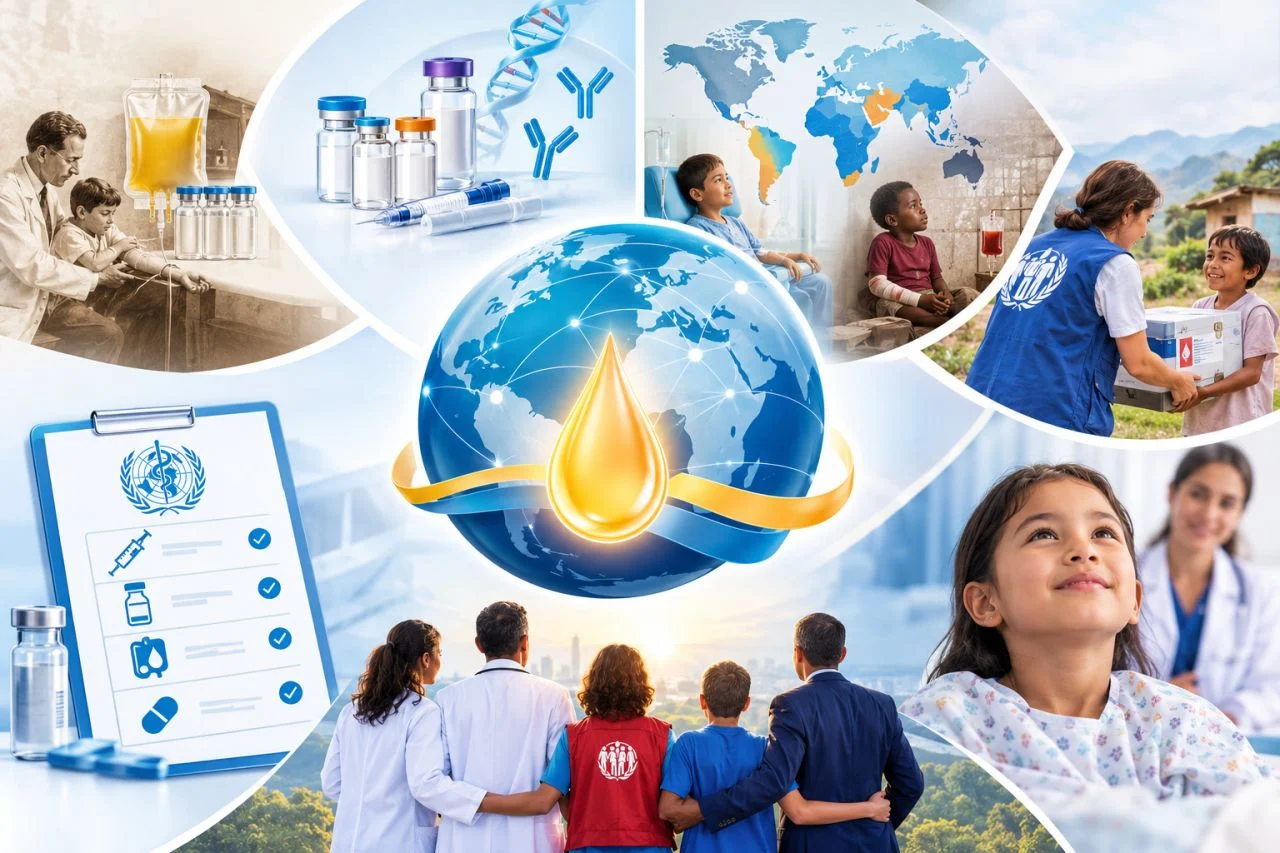
“This week is International Plasma Awareness Week – and for the haemophilia and other coagulopathies community, plasma is not just a scientific concept.
It is a lifeline that has shaped the entire history of our field.
For decades, plasma-derived clotting factor concentrates were the only treatment available for people with haemophilia around the world.
In many high-income countries, that chapter has evolved – recombinant factors, extended half-life products, emicizumab, and gene therapy have transformed what is possible. But the gradient of access is stark:
Others have no concentrates at all – their patients with haemophilia depend on fresh frozen plasma or cryoprecipitate transfusions, a reality that means pain, disability, and preventable death. The World Federation of Hemophilia’s humanitarian aid program works to bridge that gap, ensuring that concentrates reach the countries where they are most needed.
Since 2025, there is something historic to celebrate.
The WHO Expert Committee on Essential Medicines made a landmark decision – one that the haemophilia community has advocated for over many years:
- Emicizumab, the bispecific monoclonal antibody that mimics factor VIII, was added to the core Essential Medicines List.
- Recombinant FVIII and FIX concentrates were added to the core list.
- Plasma-derived FVIII and FIX concentrates were moved from the complementary to the core list.
- Desmopressin was moved from the complementary to the core list.
These are not administrative changes.
They are a signal to health systems, governments and payers worldwide that these medicines are no longer optional – they are essential.
But they did not happen automatically.
They happened because of years of collective, directed advocacy by the World Federation of Hemophilia, CLAHT across Latin America, national haemophilia organisations, patient groups, and clinical societies that refused to accept that geography should determine whether a person with haemophilia lives or bleeds.
International Plasma Awareness Week is a reminder that science alone does not change the world.
Advocacy does.
And the work is not done – the EML listing is the argument.
Now we must make it the reality.”
Stay updated with Hemostasis Today.
-
Oct 9, 2026, 14:07Chokri Ben Lamine: Pain After Allogeneic Stem Cell Transplantation in Sickle Cell Disease
-
Oct 9, 2026, 13:55Chandler Purser: AABB 2026 Focuses on Transfusion Safety and Audit-Driven Practice Improvement
-
Oct 9, 2026, 13:48Maxime Dely: Raising Awareness for Blood Donation
-
Oct 9, 2026, 13:48Vera Ghali: Anemia in Myelofibrosis and Its Impact on Treatment Outcomes and Overall Survival
-
Oct 9, 2026, 13:32W David Freeman։ The Mechanical Penumbra in Intracerebral Hemorrhage and Its Potential for Tissue Recovery
-
Oct 9, 2026, 13:11Ayshathul Noora։ Carbetocin vs Oxytocin in Preventing Postpartum Hemorrhage
-
Oct 9, 2026, 13:07The Rebalanced Patient: New Therapies and New Thrombotic Risks in Hemophilia
-
Oct 9, 2026, 12:48Santiago Cepeda Chafla: CereBleed Simplifies Brain Hemorrhage Assessment
-
Oct 9, 2026, 12:34Abdul Muqtadir Abbasi: Pancytopenia Is a Finding, Not a Diagnosis