


Kalyan Roy/LinkedIn
Oct 13, 2026, 14:54
Kalyan Roy: Understanding Blood Transfusion Sets for Safe Clinical Administration
Kalyan Roy, Specialist Transfusion Medicine Center at Square Hospitals LTD, shared a post on LinkedIn:
“Blood Transfusion Set: Know Every Component. Ensure Safe Transfusion.
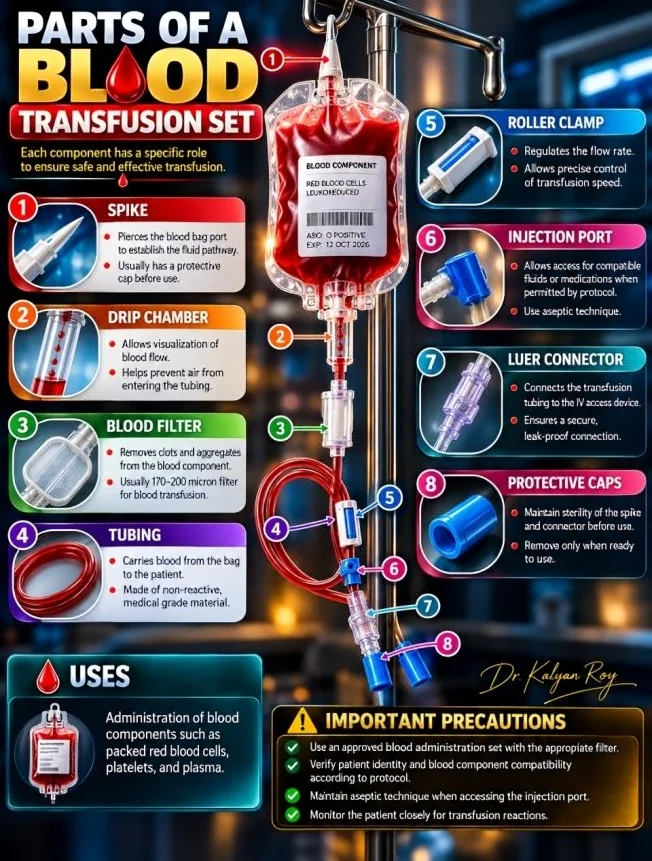
A blood transfusion set may look simple, but every component plays an essential role in the safe administration of blood and blood components.
Let’s understand the key components:
- Spike — Pierces the blood bag port and establishes the fluid pathway.
- Drip Chamber — Allows visualization of blood flow and helps prevent air from entering the tubing.
- Blood Filter — Removes clots and particulate aggregates from the blood component. Standard blood administration sets commonly use a 170–260 µm filter, depending on the device and applicable standards.
- Tubing — Provides the pathway for blood to flow from the bag to the patient.
- Roller Clamp — Regulates the flow rate during transfusion.
- Injection Port — Provides access for compatible fluids or medications when clinically indicated and permitted by protocol.
- Luer Connector — Connects the administration set securely to the appropriate vascular access device.
- Protective Caps — Maintain the sterility of critical connection points before use.
Key Safety Reminders
- Verify patient identity and blood component compatibility.
- Use an approved blood administration set with the appropriate filter.
- Maintain aseptic technique during setup and connections.
- Follow institutional protocols for transfusion initiation, observation, and monitoring.
- Monitor the patient for signs of an acute transfusion reaction and respond promptly according to protocol.
Remember:
Transfusion safety is not just about the blood component — it is also about the equipment, the procedure, and the vigilance of the healthcare professional. Let’s promote a culture of knowledge, precision, and patient safety in every transfusion.
Dr. Kalyan Roy
Specialist in Transfusion Medicine
Square Hospitals Ltd., Dhaka, Bangladesh.”
Stay updated with Hemostasis Today.
-
Oct 13, 2026, 15:51Merel Timmer: Hemophilia Twinning Partnership Strengthens Care and Quality of Life in Indonesia
-
Oct 13, 2026, 15:41Sarah Alam: ASH 2026 Guidelines on Iron Deficiency Diagnosis and Updated Ferritin Thresholds
-
Oct 13, 2026, 15:35Jamie Elmawieh: Prophylactic Anticoagulation Improves Survival in Isolated Tumor Thrombus
-
Oct 13, 2026, 15:30Sally Mandour: Methemoglobinemia When Hemoglobin Cannot Carry Oxygen
-
Oct 13, 2026, 15:21Renel Tique: Advancing Hemophilia Care Through Global Collaboration and Clinical Innovation
-
Oct 13, 2026, 15:08Anastasia Chatzistamati: Unilateral Adrenal Haemorrhage in Primary Antiphospholipid Syndrome
-
Oct 13, 2026, 15:08Yousma Khan: Hematology Practical Series Day 11 Reticulocyte Count and Its Role in Anemia Diagnosis
-
Oct 13, 2026, 14:56Manal Rayyan: Multidisciplinary Collaboration in Rare Bleeding Disorders – Reflections from Abu Dhabi
-
Oct 13, 2026, 14:52Chedia Aroua: When Pharmacokinetics Meets Geophysics – Finding Unlikely Connections in Hemophilia Care