

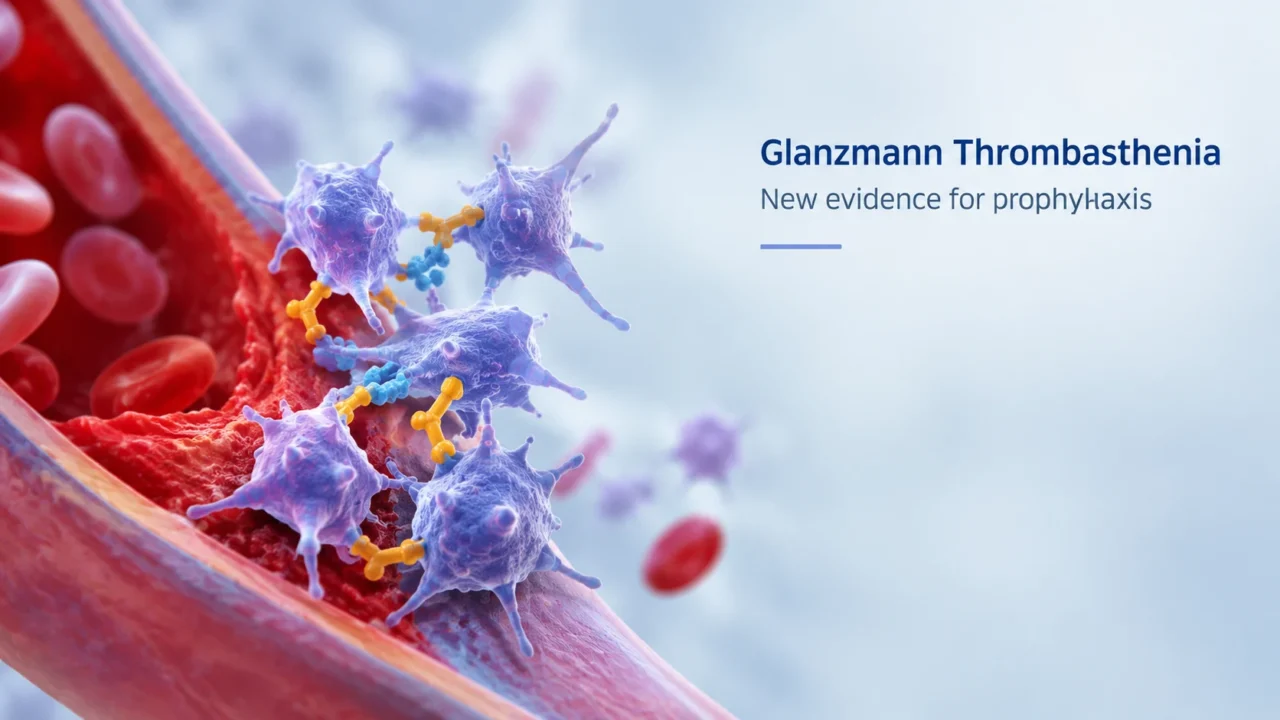
Alan Nurden: rFVIIa Prophylaxis May Reduce Bleeding-Related Healthcare Burden in Glanzmann Thrombasthenia
Alan Nurden, Emeritus Research Director at CNRS, Co-Founder of the French National Reference Centre for Inherited Platelet Disorders (CRPP), shared a post on LinkedIn about a recent article by Ahmad Tarawah et al, published in Blood VTH, adding:
“An excellent and much-needed paper now published in Blood VTH, examines in detail the use of rVIIa as prophylaxis in a group of 11 children with severe Glanzmann thrombasthenia in Saudi Arabia.
They show the benefits following a mean 18-month period and relate the high cost of the treatment to savings in hospitalization and blood transfusions over the treatment period.
The paper should be read together with that of Garcia-Jaen P et al who examined rFVIIa as prophylaxis in adult GT patients in Spain.
As, regrettably, gene therapy or gene repair is still not on the horizon, the search for prophylaxis for severe bleeders with GT is gaining strength.
Despite the promise of the above papers, the high cost of rVIIa will prove prohibitive in many countries and particularly for ethnic groups.
Furthermore, the need for a minimum of 3 intravenous administrations weekly will represent a heavy burden for the patients and their families.
The potential for twice monthly subcutaneous injections of the Hemab bivalent monoclonal antibody, sutacimig, that recruits endogenous FVIIa to the sites of vascular injury through its binding to TLT-1 of activated platelets remains if safety concerns can be met.
With these potential advances, I hope that pharmaceutical companies will make every effort to ensure that all GT patients can profit from the new treatments no matter where they live.”
Title: Clinical and economic impact of rFVIIa prophylaxis in Glanzmann thrombasthenia: cohort analysis in Saudi Arabia
Authors: Ahmad Tarawah, Sami Albattat, Ayman Shahba, Mohamed Nashat, Sarah Brighton, Emily Back, Sam Bristow, George Morgan
Stay updated on all scientific advances with Hemostasis Today.
-
Oct 27, 2026, 11:43Tareq Abadl: Hidden Interferences Behind Unexpected Laboratory Results
-
Oct 27, 2026, 11:42Cece Calhoun: ASH Promotes Clinical Research Training and Mentorship for Emerging Hematologists
-
Oct 27, 2026, 11:41Ifeanyichukwu Ifechidere: The Laboratory Challenges of Measuring Direct Factor Xa Inhibitors
-
Oct 27, 2026, 11:39Gene Therapy Offers New Possibilities for Patients with Thalassaemia in the UAE – Thalassaemia International Federation
-
Oct 27, 2026, 10:12Cesar Garrido: WFH Connects with Spanish Thrombosis and Haematology Societies
-
Oct 27, 2026, 10:01Chokri Ben Lamine: CAPS After Autologous SCT – Diagnostic Criteria and Key Mimics
-
Oct 27, 2026, 09:45Jean Terrier: COBRRA Trial – Comparing Bleeding Risks Between DOACs
-
Oct 27, 2026, 08:42Kathleen Freson: SLFN14 at the Crossroads of RNA Regulation, Platelet Biogenesis and Inherited Thrombocytopenia
-
Oct 27, 2026, 08:22Ashenafi Tazebew Amare: Transfusion medicine is no longer just about the blood bag.