


Joseph R. Shaw: Pharmacology Behind Anticoagulant Bleeding Risk
Joseph R. Shaw, Director of Research Plus Program at Ottawa Department of Medicine, EHJ-CVP Associate Editor at European Heart Journal, shared a post on LinkedIn about a recent article by Jean-Luc Reny et al., published in European Heart Journal – Cardiovascular Pharmacotherapy, adding:
“Congratulations to Jean-Luc Reny, Youssef Daali and Jean Terrier on an excellent viewpoint in European Heart Journal – Cardiovascular Pharmacotherapy, examining the pharmacological questions raised by COBRRA’s comparison of apixaban and rivaroxaban for acute venous thromboembolism.
The article illustrates the importance of connecting pharmacokinetics, pharmacodynamics and clinical outcomes.
At maintenance doses, rivaroxaban 20 mg once daily generally produces higher peaks and lower troughs than apixaban 5 mg twice daily.
A direct pharmacological comparison also demonstrated greater suppression of peak thrombin and endogenous thrombin potential (ETP) with rivaroxaban under the conditions studied.
These pharmacological findings align with a broader clinical pattern: numerous observational studies have reported lower bleeding rates with apixaban than with rivaroxaban in both VTE and atrial fibrillation, now complemented by randomized evidence from COBRRA.
Clinical studies also link thrombin generation parameters, including peak and ETP, with bleeding in anticoagulated and perioperative populations.
Together, these observations strengthen the case for pharmacokinetic and pharmacodynamic differences as plausible contributors to the observed differences in bleeding risk.
Their specific causal contribution remains to be established, and other explanations warrant consideration.
Nevertheless, the consistency of the clinical findings, supported by a coherent pharmacological rationale, makes these mechanisms important considerations when interpreting the evidence and designing studies that prospectively link drug exposure, anticoagulant effects and clinical outcomes.
For me, the broader message is the value of incorporating pharmacological insight into clinical research and practice.
It can help us interpret trial findings, formulate mechanistic questions and design more informative trials.
It can also support individualized clinical reasoning in challenging circumstances where a patient’s characteristics are not well represented in trial populations.
A thoughtful contribution to an important discussion.”
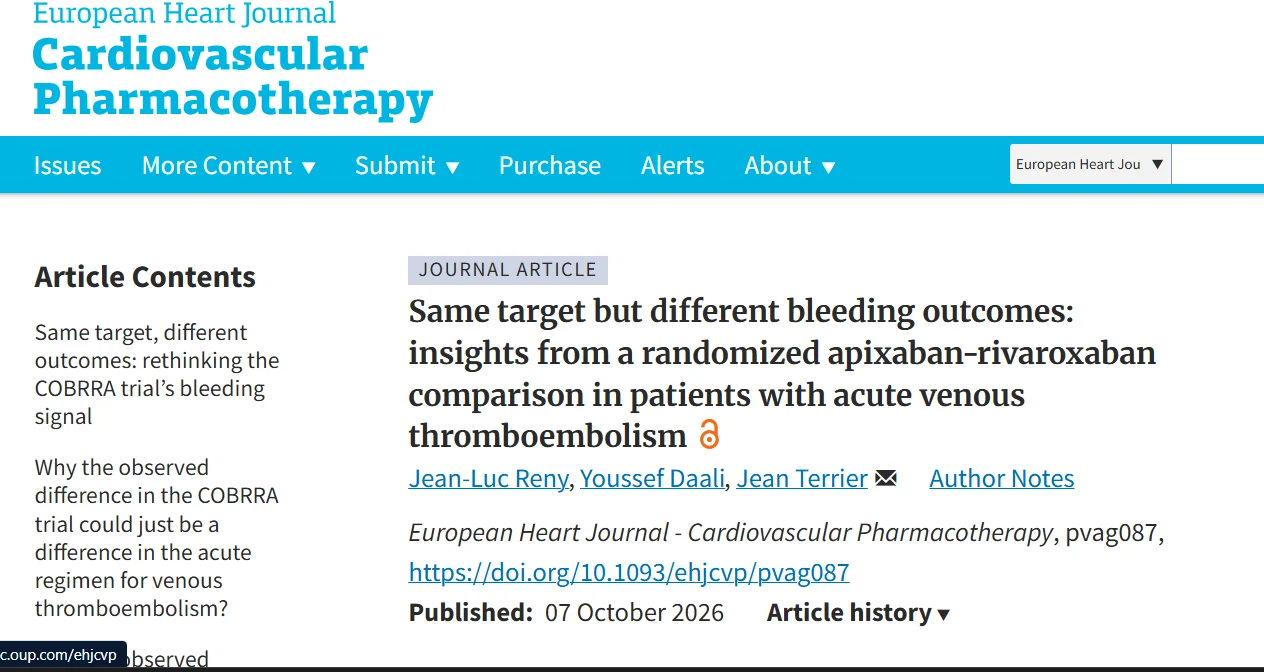
Title: Same target but different bleeding outcomes: insights from a randomized apixaban-rivaroxaban comparison in patients with acute venous thromboembolism
Authors: Jean-Luc Reny, Youssef Daali, Jean Terrier
Other posts featuring Joseph R. Shaw on Hemostasis Today.
-
Oct 31, 2026, 16:35Bhavna Daryani: Using Technology to Make Anemia Screening More Accessible and Non-Invasive
-
Oct 31, 2026, 16:33Greg Jackson: Key Insights from the 22nd Annual McMaster Hematology and Thromboembolism Update
-
Oct 31, 2026, 16:23Julia Schneider: Advancing Stroke Care Together on World Stroke Day
-
Oct 31, 2026, 16:19Gaurav Dixit: Understanding Bone Marrow and Its Essential Role in Hematopoiesis
-
Oct 31, 2026, 16:09E. A. Meigs: The Discovery of Blood Types and Its Lasting Impact on Modern Medicine
-
Oct 31, 2026, 16:09Alexandre Kauskot: Platelet Sialylation – Unlocking the Mystery of GNE Deficiency
-
Oct 31, 2026, 15:59Jitu Lal Meena: A Framework for Better Blood Utilisation and Safer Transfusion Practices
-
Oct 31, 2026, 15:58Ghazal Ahmed: Purpura Fulminans – When Thrombosis Turns Into Necrosis
-
Oct 31, 2026, 15:41Paul Healy: UK Expands Casgevy Access to Younger Children With Sickle Cell Disease and Beta-Thalassaemia