

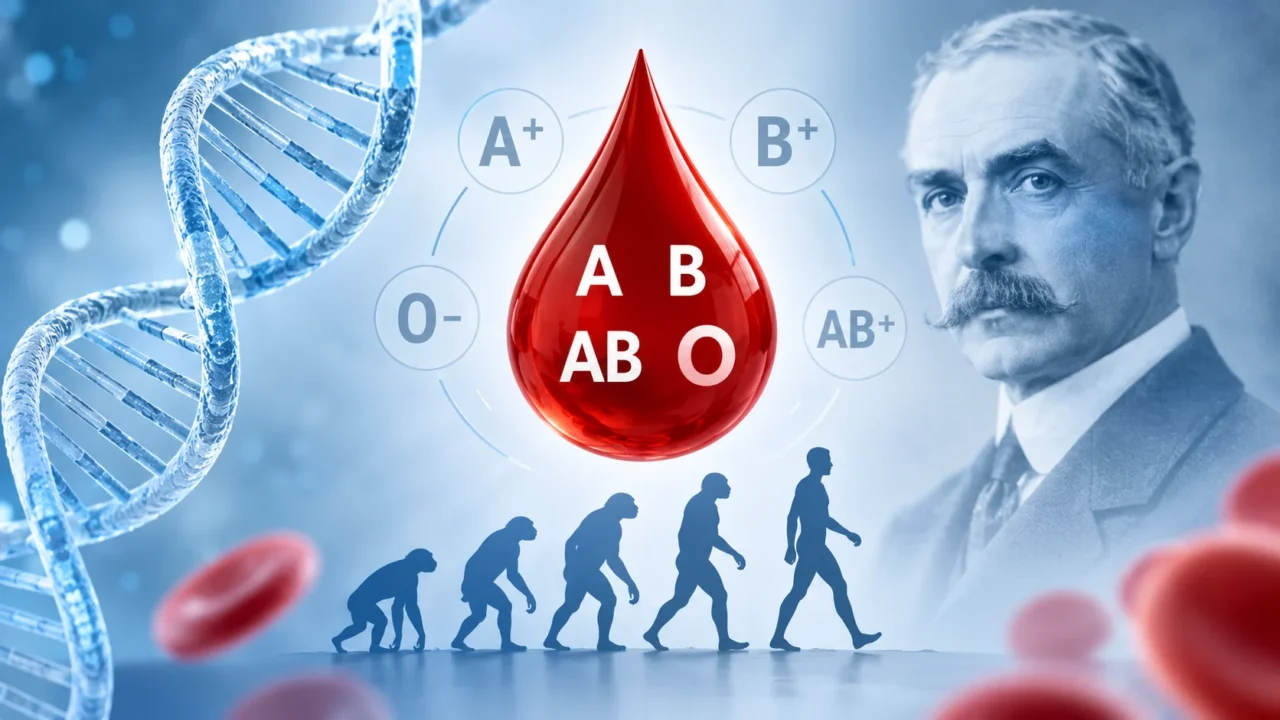
E. A. Meigs: The Discovery of Blood Types and Its Lasting Impact on Modern Medicine
E. A. Meigs, Author, Owner of Dreamer Literary Productions, shared a post on LinkedIn:
“One of the first things many of us learn about ourselves after a medical procedure or blood donation is our blood type.
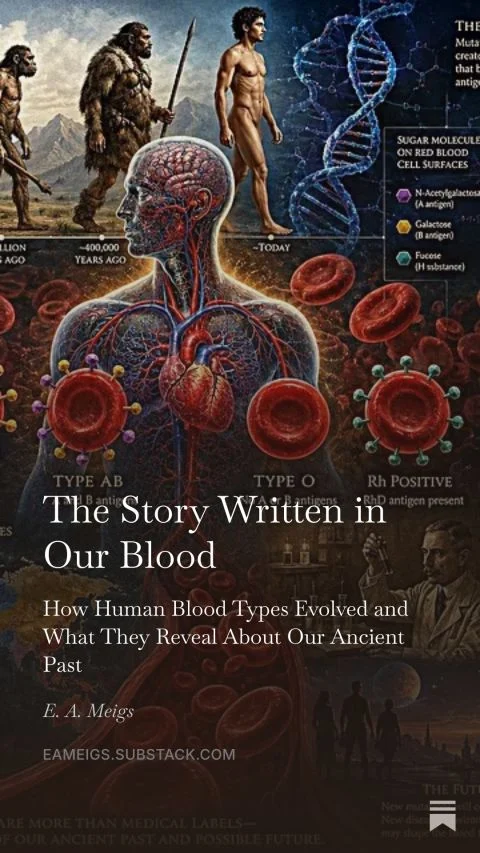
It seems like such a simple label—A, B, AB, or O, perhaps followed by a plus or minus sign—but behind those few letters lies a remarkable story spanning millions of years of evolution.
Our blood types are not arbitrary classifications invented by physicians.
They are inherited biological traits shaped by ancient mutations, disease, migration, and natural selection.
They provide fascinating clues about our evolutionary history while continuing to play a vital role in modern medicine.
The discovery of blood types at the beginning of the twentieth century transformed medicine.
Before then, blood transfusions were often dangerous because physicians did not understand why some patients recovered while others became gravely ill or died.
In 1901, Austrian physician Karl Landsteiner discovered that human blood could be divided into distinct groups based on molecules found on the surface of red blood cells.
This breakthrough earned him the Nobel Prize and laid the foundation for safe blood transfusions, organ transplantation, and much of modern immunology.
Today, most people are familiar with the ABO blood group and the Rh factor, but these represent only a small portion of human blood diversity…
Read more.”
Stay updated with Hemostasis Today.
-
Oct 31, 2026, 16:09Alexandre Kauskot: Platelet Sialylation – Unlocking the Mystery of GNE Deficiency
-
Oct 31, 2026, 15:59Jitu Lal Meena: A Framework for Better Blood Utilisation and Safer Transfusion Practices
-
Oct 31, 2026, 15:58Ghazal Ahmed: Purpura Fulminans – When Thrombosis Turns Into Necrosis
-
Oct 31, 2026, 15:41Paul Healy: UK Expands Casgevy Access to Younger Children With Sickle Cell Disease and Beta-Thalassaemia
-
Oct 31, 2026, 15:29Axay Tomar: The Hidden Challenges of Platelet Transfusion Refractoriness in India
-
Oct 31, 2026, 15:12Helen Papadaki: ASH 2026 Educational Program Focuses on Neutropenia
-
Oct 31, 2026, 14:10Mary Akua Ampomah: Academic Institutions Stand in Solidarity to End Stigma on World Inherited Blood Disorders Day
-
Oct 31, 2026, 14:01Konstantina Bolou: Investigating the Diagnostic Accuracy of Ultrasound Compared to MRI for Haemophilic Arthopathy
-
Oct 31, 2026, 13:40Mona Alfaraj: Speaking on Inherited Macrothrombocytopenia Diagnostics at the 2026 EHC Conference in Dammam