

Functional Iron Deficiency: From Iron Sequestration to Therapeutic Targeting
Iron deficiency is commonly understood as depletion of the body’s iron stores. This definition, however, does not fully explain anemia in patients with chronic inflammatory disorders.
In these settings, hemoglobin may fall while serum ferritin remains normal or elevated and TSAT is reduced. The apparent contradiction reflects a disturbance in iron distribution rather than a simple lack of iron.
Functional iron deficiency (FID) occurs when iron is present in storage compartments but is not sufficiently available for erythropoiesis.
It is a central feature of anemia of inflammation (AI), also known as anemia of chronic disease, and is encountered in chronic kidney disease (CKD), inflammatory bowel disease (IBD), autoimmune disorders, chronic infection, malignancy, and other persistent inflammatory conditions.
Hepcidin, a liver-derived peptide hormone, is the principal regulator of this process.
By controlling ferroportin, the only known cellular iron exporter in mammals, hepcidin determines whether stored and absorbed iron can enter the circulation. This pathway helps explain why oral iron may be ineffective during active inflammation and why therapies that modify hepcidin signaling are being investigated.
The clinical question is whether understanding this biology can improve diagnosis, treatment selection and patient outcomes.
The Hepcidin–Ferroportin Axis
Hepcidin is encoded by HAMP and is produced predominantly by hepatocytes. Its expression responds to iron status, inflammatory signaling, and erythropoietic demand.
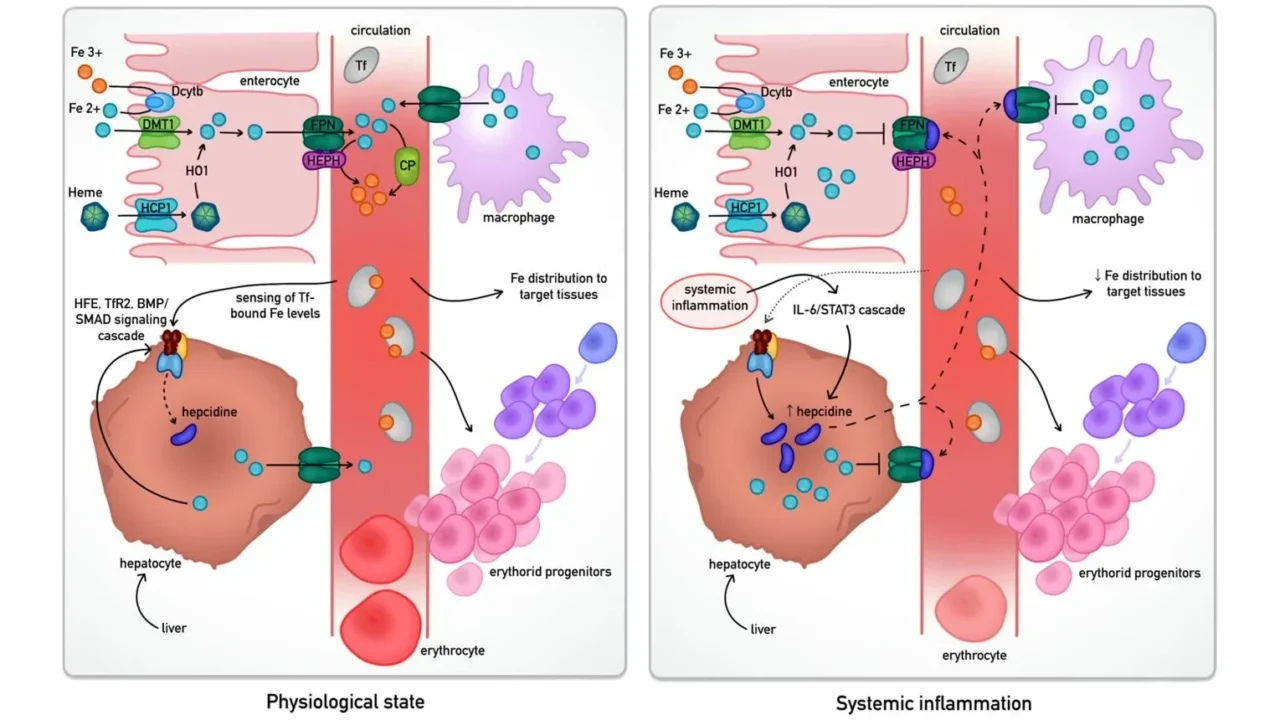
Iron loading activates the bone morphogenetic protein (BMP)–SMAD pathway, with hemojuvelin and the HFE/transferrin receptor 2 complex contributing to iron sensing. Inflammation, particularly interleukin-6 (IL-6), activates JAK–STAT3 signaling and promotes hepcidin transcription. Conversely, increased erythropoietic activity suppresses hepcidin, in part through erythroferrone.
Ferroportin is expressed on duodenal enterocytes, iron-recycling macrophages, and hepatocytes.
Under normal conditions, it exports absorbed dietary iron and releases recycled iron into plasma.
During inflammation, increased hepcidin binds ferroportin and triggers its internalization and lysosomal degradation. Intestinal iron transfer falls, while macrophage and hepatic iron release are restricted. Circulating iron and TSAT consequently decline despite preserved intracellular stores.
Macrophage iron recycling is particularly important because it supplies most of the iron used for daily erythropoiesis. Accordingly, reduced macrophage iron release is a major driver of inflammation-associated hypoferremia. In CKD, hepcidin may rise through both inflammation and reduced renal clearance, adding to iron restriction.
Iron sequestration is not the only mechanism of AI.
Inflammatory cytokines can also reduce erythropoietin production and responsiveness, inhibit erythroid progenitor activity, and shorten red-cell survival. Together, these effects produce a typically hypoproliferative anemia that is often normocytic and normochromic.
www.mdpi.com
Functional and Absolute Iron Deficiency
Absolute iron deficiency reflects depletion of total-body iron, commonly due to blood loss, inadequate intake, increased requirements, or malabsorption.
Ferritin and TSAT are usually reduced.
In FID, iron stores may be preserved or increased, but mobilization is impaired; ferritin may therefore remain normal or rise because it is also an acute-phase reactant.
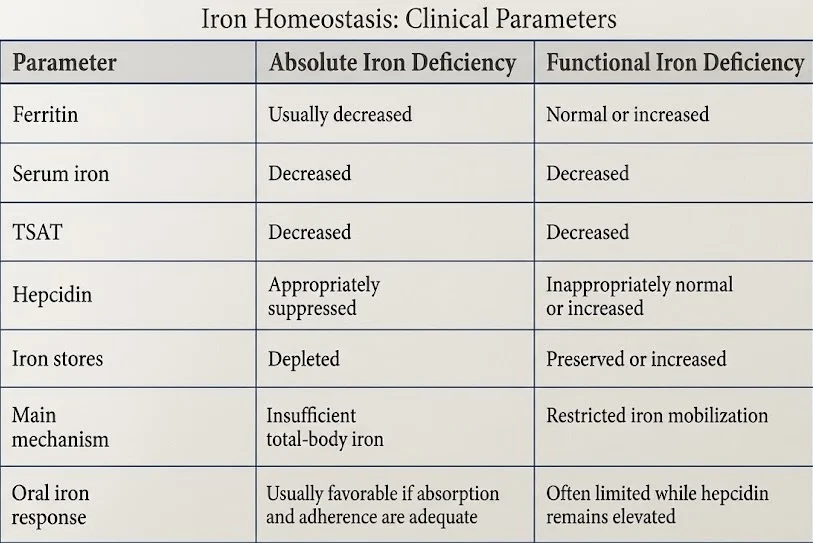
The distinction is not always clear-cut.
Absolute and functional deficiency can coexist, particularly in IBD with gastrointestinal blood loss, dialysis-dependent CKD, or heavy menstrual bleeding in patients with inflammatory disease.
Ferritin should therefore not be used in isolation to establish iron sufficiency in an inflamed patient.
Diagnosis: Interpreting Iron Studies in Inflammation
Ferritin is difficult to interpret during inflammation because cytokines, including IL-1, IL-6, and TNF, increase its production independently of iron stores.
The 2026 American Society of Hematology guideline emphasizes assessing ferritin together with TSAT in adults with anemia and inflammatory conditions. The supplied guideline summary identifies ferritin below 100 ng/mL or TSAT below 20% as supportive of iron deficiency in this context.
TSAT is affected by recent dietary intake and iron supplementation.
The guideline recommends obtaining the sample after a 5–9-hour fast and avoiding iron-containing supplements beforehand. Thresholds differ by population; the guideline summary describes separate ferritin cutoffs for adults, people with heavy menstrual bleeding or other risk factors, and young children. These thresholds should be applied to the population for which they were developed.
When ferritin and TSAT are discordant, additional tests may help:
- Soluble transferrin receptor (sTfR): Reflects cellular iron demand. An elevated sTfR, or an increased sTfR/log ferritin index, may support coexisting absolute deficiency.
- Reticulocyte hemoglobin (Ret-He or CHr): Reflects iron available to newly produced red cells over the preceding few days and can identify iron-restricted erythropoiesis.
- Percentage of hypochromic erythrocytes: Provides a longer-term measure of iron availability, although it changes more slowly.
- C-reactive protein (CRP): Helps establish the inflammatory context in which ferritin should be interpreted; it is not a stand-alone test for iron deficiency.
- Hepcidin: Mechanistically informative but not recommended for routine diagnosis. Assay methods and reference ranges are not standardized, and validated treatment thresholds are lacking.
Therapeutic implications
- Address the underlying inflammation
Control of the underlying inflammatory disease remains central to management.
Reducing inflammatory activity may lower IL-6-driven hepcidin expression and improve ferroportin-dependent iron mobilization. This may involve optimizing IBD treatment, controlling infection, or achieving remission of an inflammatory disorder.
The response is not guaranteed: inflammation may persist despite treatment, and some therapies can independently affect iron metabolism.
Hematologic parameters should be reassessed rather than assuming that disease control will correct anemia.
- Oral and intravenous iron
Oral iron may be poorly absorbed during active inflammation because elevated hepcidin reduces intestinal iron transfer.
Iron that enters enterocytes may also remain trapped when ferroportin is downregulated. Alternate-day dosing can improve fractional absorption in some iron-deficient states, but it does not remove the hepcidin-mediated block.
Intravenous iron bypasses intestinal absorption and can increase circulating iron availability. It is used in selected patients with CKD, IBD, heart failure, and perioperative iron deficiency.
However, intravenous administration does not fully overcome inflammation-driven iron sequestration: iron may still be taken up by macrophages and remain temporarily unavailable to the marrow.
Treatment decisions should therefore account for the underlying condition, iron indices, anemia severity, and evidence of clinical benefit.
- ESAs and HIF prolyl hydroxylase inhibitors
Erythropoiesis-stimulating agents (ESAs) address inadequate erythropoietic drive, particularly in CKD. Their effect may be blunted by inflammation, while restricted iron availability can limit the hematologic response. Iron status should be assessed and managed alongside ESA treatment.
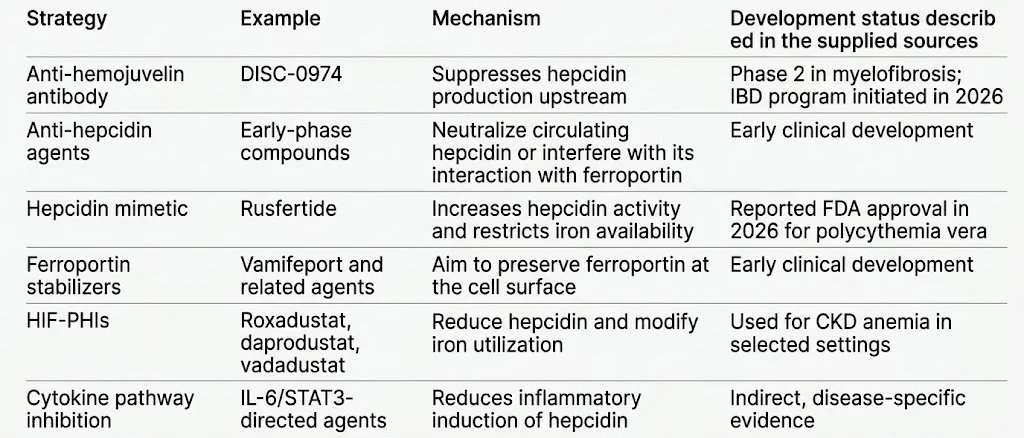
Hypoxia-inducible factor prolyl hydroxylase inhibitors (HIF-PHIs) influence iron metabolism by suppressing hepcidin and increasing iron absorption and utilization. They may reduce intravenous iron requirements in some patients with CKD. Because they can also expose or worsen iron deficiency, iron status requires monitoring.
The 2026 KDIGO guidance described in the supplied source favors ESAs over HIF-PHIs as first-line therapy for CKD anemia, reflecting continuing uncertainty about cardiovascular and thrombotic safety.
SGLT2 Inhibitors: An Emerging Approach to Iron–Erythropoietic Regulation
An emerging therapeutic perspective involves sodium–glucose cotransporter 2 (SGLT2) inhibitors, which have demonstrated consistent increases in hemoglobin and hematocrit across cardiovascular and renal outcome trials.
Although initially attributed to osmotic diuresis and subsequent hemoconcentration, accumulating evidence suggests that these hematologic effects also reflect increased erythropoietic activity.
A 2026 review by Abdulgayoom et al., published in the European Journal of Haematology, revisits anemia of chronic disease through an integrated framework of hepcidin dysregulation, impaired iron mobilization, and inflammatory suppression of erythropoietin (EPO) signaling.
The authors highlight several mechanisms through which SGLT2 inhibitors may influence iron metabolism and erythropoiesis, including reduced hepcidin expression, improved iron availability, increased endogenous EPO production, and attenuation of systemic inflammation.
At the renal level, SGLT2 inhibition alters proximal tubular sodium–glucose transport and oxygen consumption, potentially activating hypoxia-inducible signaling pathways involved in endogenous EPO production. Concurrent reductions in hepcidin may facilitate ferroportin-mediated iron export from macrophages, improving iron delivery to erythroid precursors. These complementary effects suggest that SGLT2 inhibitors may influence several components of anemia of inflammation rather than targeting iron deficiency alone.
Importantly, this approach differs from conventional ESA therapy. Rather than administering exogenous EPO to stimulate erythropoiesis, SGLT2 inhibitors may restore endogenous regulatory pathways involved in iron availability and red-cell production.
However, the clinical implications remain uncertain. No dedicated randomized trials have established SGLT2 inhibitors as treatment for anemia of inflammation.
Their hematologic effects should therefore be considered a potential adjunctive mechanism, not an established therapeutic indication. Further studies are needed to determine whether patients with hepcidin-associated functional iron deficiency derive meaningful hematologic benefit and to characterize the long-term safety of this approach.
Hepcidin as a Therapeutic Target
Hepcidin-directed treatment is an active area of investigation, but approaches that increase and decrease hepcidin have different – and sometimes opposite – clinical aims.
DISC-0974 and the Clinical Translation of Hepcidin Inhibition
DISC-0974 is an anti-hemojuvelin antibody designed to suppress hepcidin production by targeting an upstream component of BMP signaling. In the phase 2 RALLY-MF study reported at the 2026 European Hematology Association Congress, 54 adults with myelofibrosis-associated anemia received monthly subcutaneous treatment for up to six months.
The reported pharmacodynamic effects included an 87% reduction in mean hepcidin and a 150% increase in mean serum iron by day 15. Absolute reticulocyte counts increased by 110% by day 22. Major hematologic responses were reported across transfusion-dependence subgroups, although response rates varied by baseline transfusion burden. Improvements in hemoglobin were also associated with changes in fatigue and patient-reported global impression.
These findings provide an early clinical signal that reducing hepcidin can mobilize iron and improve anemia in myelofibrosis. However, the study was single-arm, involved a selected population, and does not establish efficacy in other causes of AI.
A controlled phase 3 study and results from the IBD program will be important in determining whether the approach can be translated to non-malignant inflammatory anemia.
Clinical Perspective: from Iron Stores to Iron Availability
Functional iron deficiency highlights a key limitation of conventional iron assessment: adequate iron stores do not guarantee adequate iron availability. Inflammation restricts iron mobilization through hepcidin while also suppressing erythropoiesis.
Hepcidin offers a mechanistic explanation and a potential therapeutic target, but assay variability and the lack of validated thresholds limit its routine clinical use. Ferritin and TSAT, interpreted alongside inflammatory markers and other available erythropoietic indices, remain the practical tools for assessment.
Hepcidin-targeted agents and SGLT2 inhibitors offer emerging therapeutic perspectives, but neither is an established treatment for inflammatory anemia.
The central challenge is not simply to replenish iron, but to make it available for effective erythropoiesis. Future studies must identify patients who may benefit from hepcidin modulation while preserving host defense and iron homeostasis.
Frequently Asked Questions
1. What is functional iron deficiency?
A condition in which iron stores are preserved, but insufficient iron is available for red blood cell production.
2. How does hepcidin cause anemia of inflammation?
Hepcidin degrades ferroportin, restricting intestinal iron absorption and iron release from macrophages.
3. What distinguishes functional from absolute iron deficiency?
Absolute deficiency reflects depleted iron stores; functional deficiency reflects impaired iron mobilization despite preserved stores.
4. Why can ferritin remain elevated despite iron deficiency?
Ferritin is an acute-phase reactant and increases during inflammation, potentially masking underlying iron deficiency.
5. Which laboratory tests help identify functional iron deficiency?
Ferritin and TSAT are primary tests. Reticulocyte hemoglobin and soluble transferrin receptor provide additional diagnostic information.
6. Why may oral iron be ineffective during inflammation?
Elevated hepcidin reduces intestinal iron absorption by suppressing ferroportin activity.
7. Does intravenous iron overcome functional iron deficiency?
It bypasses intestinal absorption but does not fully overcome inflammation-driven iron sequestration.
8. What is the role of ESAs in anemia of inflammation?
ESAs stimulate erythropoiesis, but their effectiveness may be limited by inflammation and insufficient iron availability.
9. Can SGLT2 inhibitors improve inflammatory anemia?
They may improve iron availability and erythropoiesis, but their efficacy in inflammatory anemia remains unproven.
10. Can hepcidin be targeted therapeutically?
Yes. Investigational agents such as DISC-0974 aim to reduce hepcidin and restore iron mobilization, with early clinical findings in myelofibrosis-associated anemia.
Written by Elen Avetisyan, MD.
Stay updated with Hemostasis Today.
-
Nov 2, 2026, 14:48Heghine Khachatryan: Vitamin B12 Replacement Choosing the Right Route for Each Patient
-
Nov 2, 2026, 14:28Anastasia Conti: ASH Global Research Award Backs New Directions in AML Research
-
Nov 2, 2026, 14:22Sara Zalghout: Linking Bacterial Virulence to NETosis and Thromboinflammation
-
Nov 2, 2026, 13:56Jan Terje Andersen: Albumin Engineering Opens New Routes for Erythropoietin Delivery
-
Nov 2, 2026, 13:44Rishiraj Sinha: Strengthening ISBT–AABB Collaboration in Transfusion Medicine
-
Nov 2, 2026, 13:28Jeremiah Morris: Why Blood Detection Reagents Work Better on Dry Bloodstains
-
Nov 2, 2026, 12:38Maria Τektonidou: Machine Learning – A New Approach to CVD Risk in SLE
-
Nov 2, 2026, 12:31Toby Richards: Screening for Iron Deficiency – Nearly 1 in 4 Women Anaemic
-
Nov 2, 2026, 12:22James P. Crowley: A New Adult Progenitor with Erythro-Myeloid Potential